

Year 10 Battlefields Trip
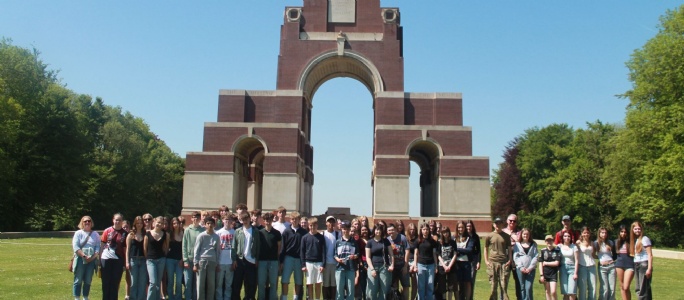
On 30 April, fifty two Year 10 students and five members of staff set off for a three-day tour of the Battlefields of World War 1, mainly with a focus of visiting sites that were related to the medicine in the historic environment section of Paper 1 of the History GCSE.
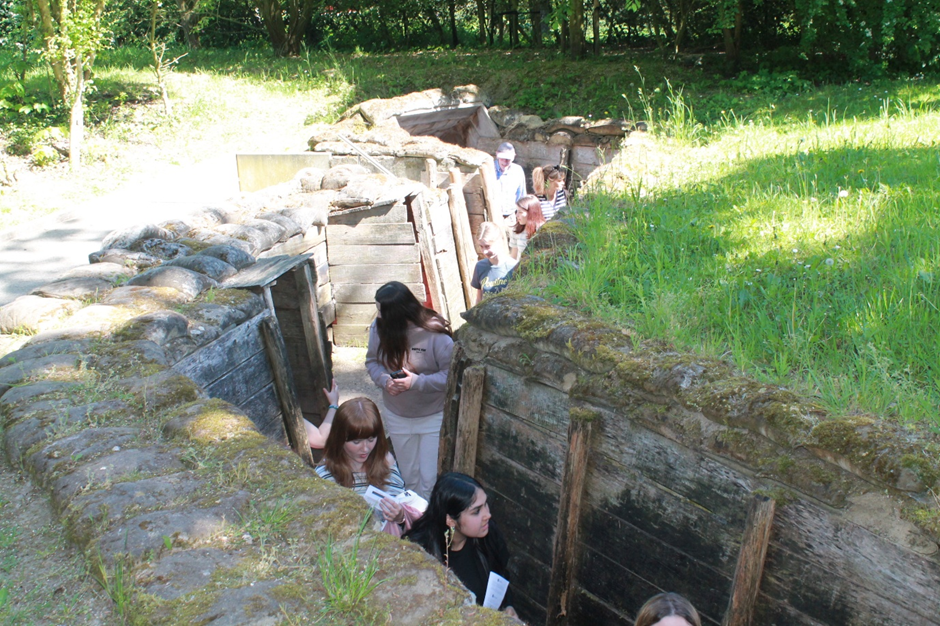 After a very early start, our first day was spent in and around Ypres.
Our first visit was to the Passchendaele Museum, where students were able to see artefacts from World War 1 as well as have their first experience of walking through the trenches.
From here we went to Tyne Cot Cemetery, the largest British Military Cemetery in the world, with the graves of 11,956 soldiers and a memorial which honours the names of 34,888 missing soldiers.
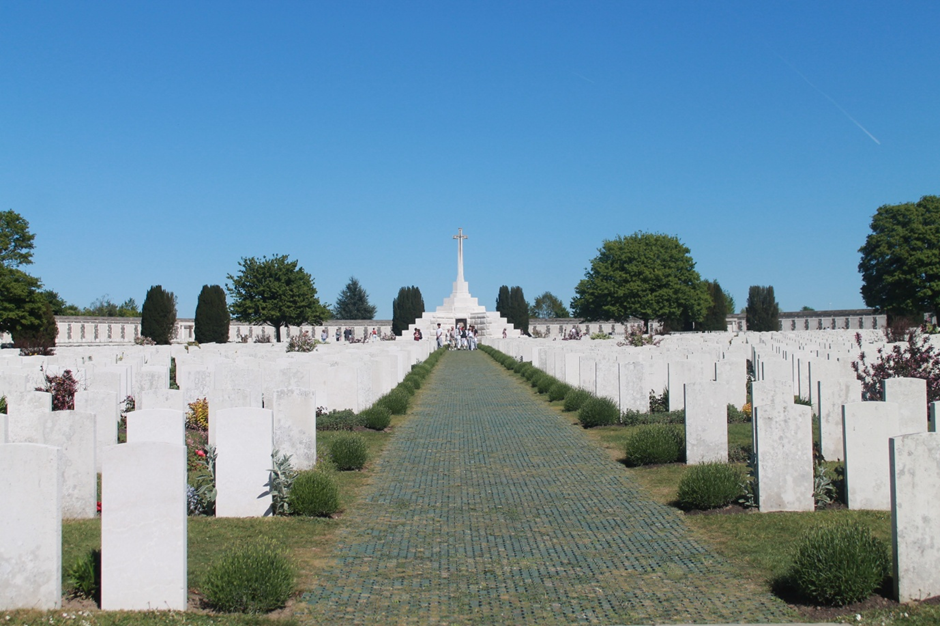
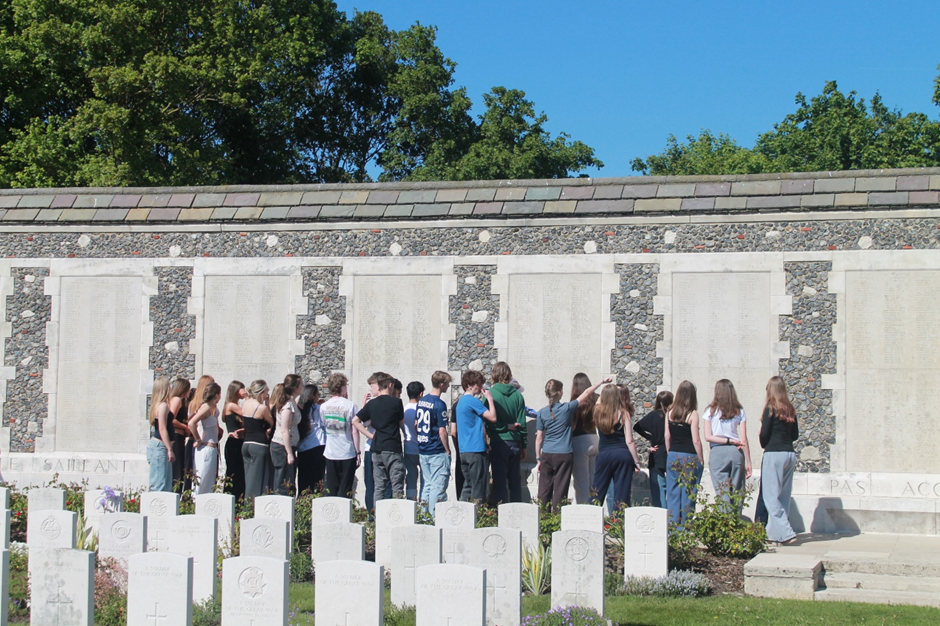
We laid a wreath here on behalf of North Leamington School to the Rainbow brothers, both of whom are also commemorated on a plaque in the courtyard at school.
From there we then visited Langemark German Cemetery. This is a very different type of cemetery to the British Commonwealth War Cemeteries. It is a sombre, foreboding place containing the graves of more than 40,000 German troops, over half of whom lie in a mass grave.
In the late afternoon of day one, we then went into Ypres itself, where the students were able to visit a chocolate shop, which was a very popular visit!
After dinner in a restaurant in the town square, we then attended the Last Post Ceremony at the Menin Gate in Ypres, where three of our students were able to represent the school by laying a wreath to the 54,896 soldiers of the British Empire who have no known grave.
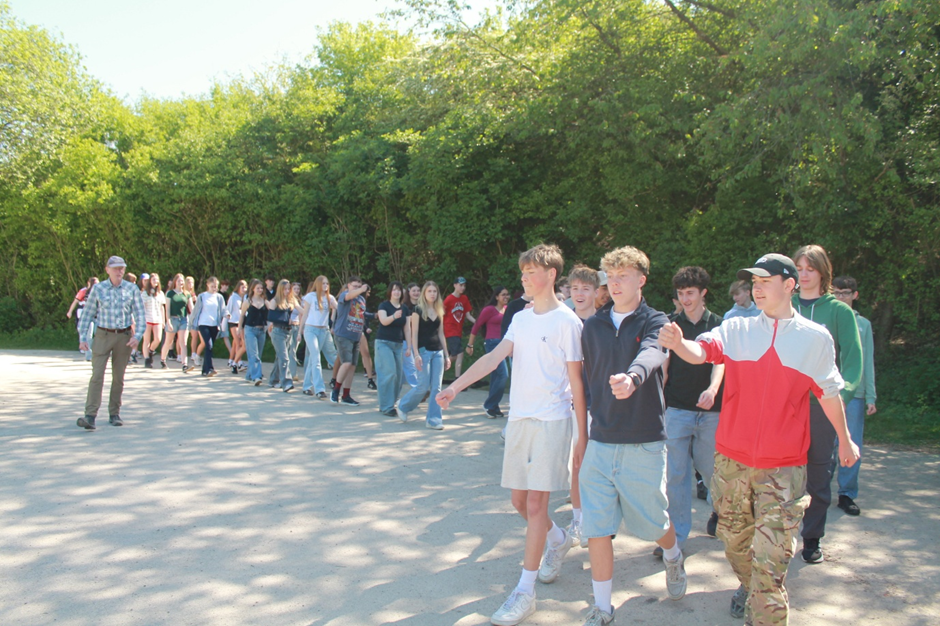 Day two saw us heading into France, where we visited the Somme.
Our first stop was at Lochnagar Crater. This crater was created by a large mine detonated beneath the German front line by the British Army’s 179th Tunnelling Company Royal Engineers, at 7:28am on July 1st, 1916.
The explosion marked the beginning of the Battle of the Somme and was the largest of 19 mines, placed beneath the German front line to assist the British infantry advance. It is the largest man-made mine crater from the First World War on the Western Front.
From there we headed to the Devonshire Trench near the village of Mametz, where the students saw the graves of officers and men buried together, all killed in the Battle of the Somme, many of which were killed on the first day.
From there we visited the Thiepval Memorial, the Memorial to the Missing of the Somme, which bears the names of more than 72,000 officers and men of the United Kingdom and South African forces who died in the Somme sector before 20 March 1918 and have no known grave.
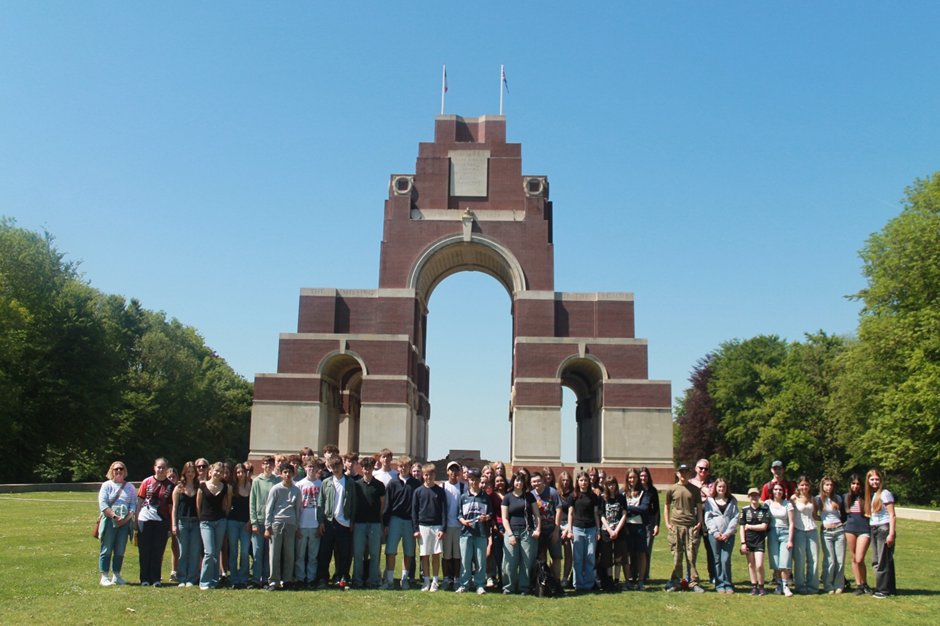
Over 90% of those commemorated died between July and November 1916.
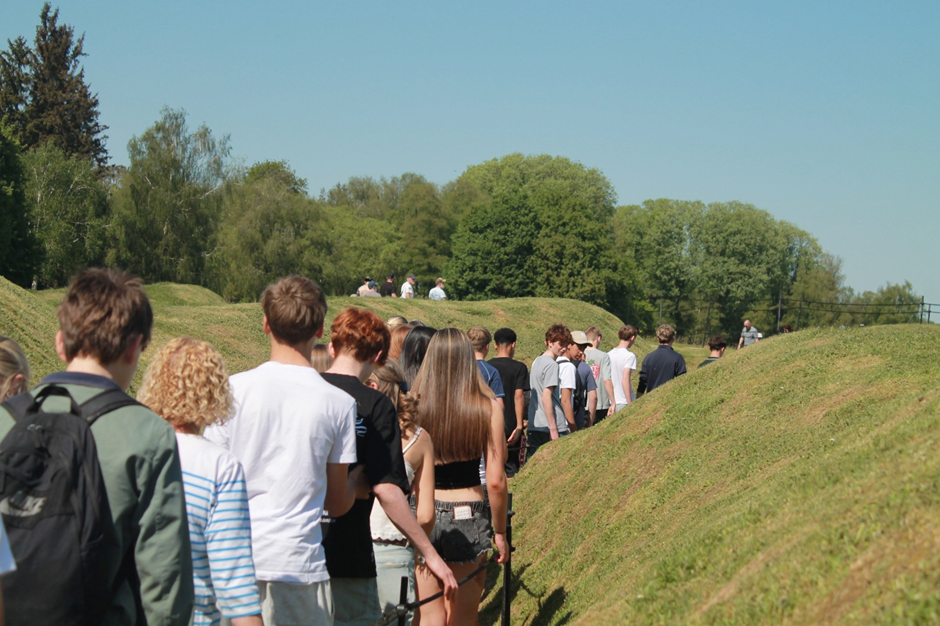
The students also visited Beaumont Hamel, where the students were able to walk through the trenches and see for themselves how the front line of the trenches changed during the course of the war.
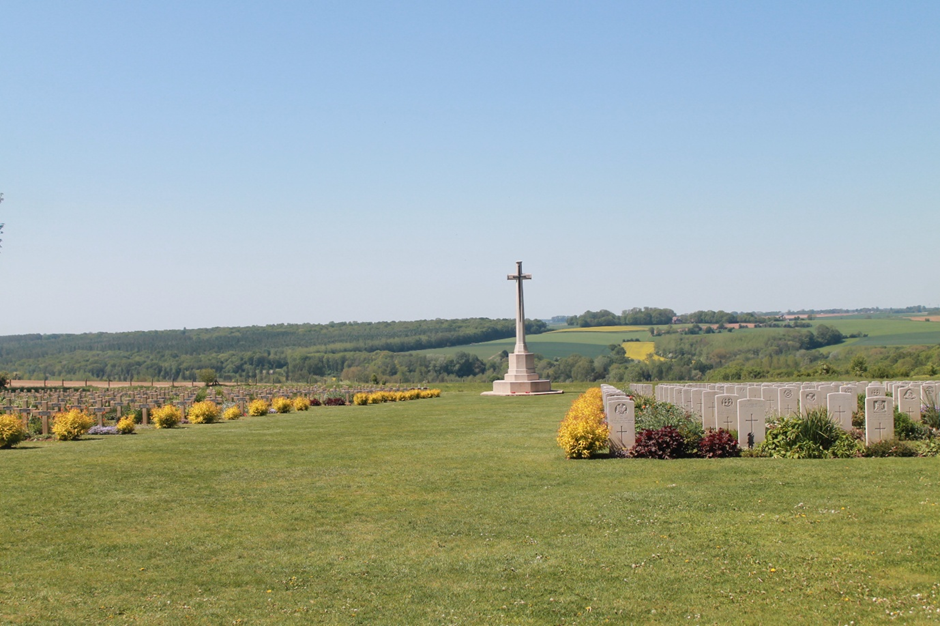 The final day of our trip was spent in Ypres where we visited Essex Farm Cemetery and Dressing Station.
This is most famous due to its connection with the Canadian poet and physician John McCrae, who wrote the poem ‘In Flanders Field’. The students were able to see the former British Front Line at the canal and also got to go into the dressing stations inside the bunkers there.
From there we went to Hill 60 and Caterpillar Crater, a site of desperate fighting between April and May of 1915. .
We then visited Hill 62 and Sanctuary Wood. Wellies were definitely needed at Sanctuary Wood as the trenches are preserved in their original condition with dug outs and tunnels to explore, which the students very much enjoyed.
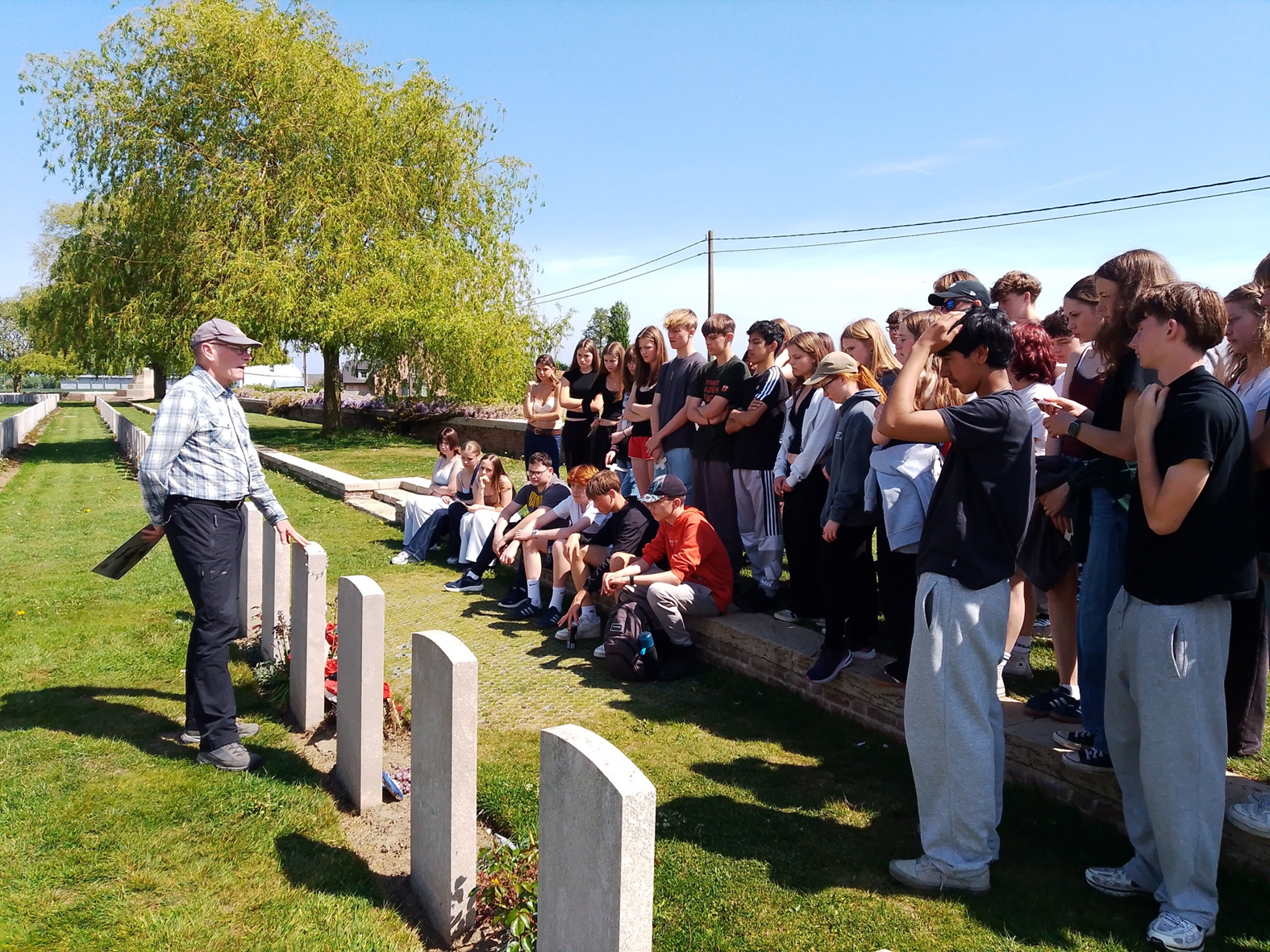
Our final visit was to Lijssenthoek Military Cemetery, which is the largest hospital cemetery in the Ypres Salient area, with over 11,000 soldiers buried there.
The students were able to lay their own memorial cross at a grave of their choice, many of the students used the cemetery register to find a soldier that shared their surname or birthday.
Throughout the trip we were led by a brilliant guide, John, whose passion and great knowledge inspired the students.
All the students, and staff, enjoyed the trip immensely and felt that it had brought what they had been studying in class to life.