|
Head Teacher's Message

Dear Parents and Carers,
As we reach the end of the first half of the Summer Term and prepare for the May half-term break, I would like to take this opportunity to thank you for your continued support and partnership with the school. This term has been another busy and highly productive one with so much to celebrate across our community.
Over recent weeks students have continued to demonstrate the qualities we value so highly: commitment, resilience, kindness and ambition. Whether in classrooms, on the sports field, through the arts, in enrichment activities or within wider life of the school, our young people have represented both themselves and the school exceptionally well. We are incredibly proud of their achievements and the positive manner in which they continue to approach school life.
This bulletin captures just some of the many highlights from the term, including key updates from subject areas, examples of excellent student learning, curriculum developments, educational visits, enrichment opportunities and the many successes achieved by our students both in and beyond the classroom. I hope you enjoy reading and celebrating these with us.
I would also like to particularly acknowledge our students currently undertaking public examinations. Years 10, 11 and 13 students have approached this important period with maturity and determination, and I have been extremely impressed by the calm and focused atmosphere around school. Examinations can be demanding and we recognise the commitment shown not only by the students themselves, but also by families in supporting revision, routines and wellbeing during this time. We wish all of our students the very best as examinations continue after the break.
As always, thank you for the encouragement, guidance and support you provide to your children and to the wider school community. Strong partnerships between home and school make an enormous difference and we greatly value the positive relationships we share with our families.
The half-term break provides an important opportunity for rest and time together before we begin the final half of the academic year which promises to be another exciting and successful period for the school.
On behalf of everyone at the school, I wish all students, parents, carers and families a safe, restful and enjoyable half term.
Mike Lowdell
Head Teacher
|
|
|
.jpeg)
|
21 May 2026
On Wednesday this week, students from our first two Gold Award cohorts were welcomed to Buckingham Palace for a special reception recognising their achievements and the tremendous effort required to complete the prestigious award. Held in the stunning palace gardens, the Gold Award Celebration...
|
|
11 May 2026
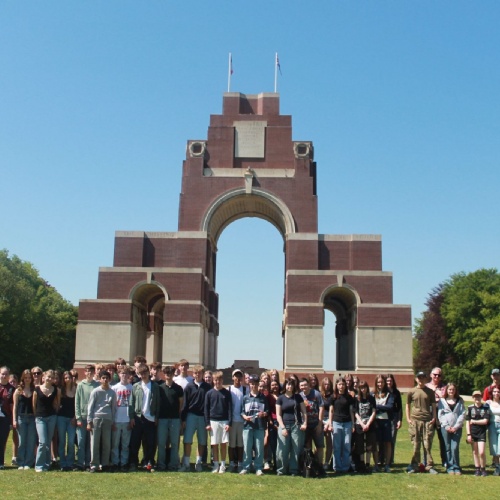
On 30 April, fifty two Year 10 students and five members of staff set off for a three-day tour of the Battlefields of World War 1, mainly with a focus of visiting sites that were related to the medicine in the historic environment section of Paper 1 of the History GCSE.
After a very early s...
|
|
08 May 2026
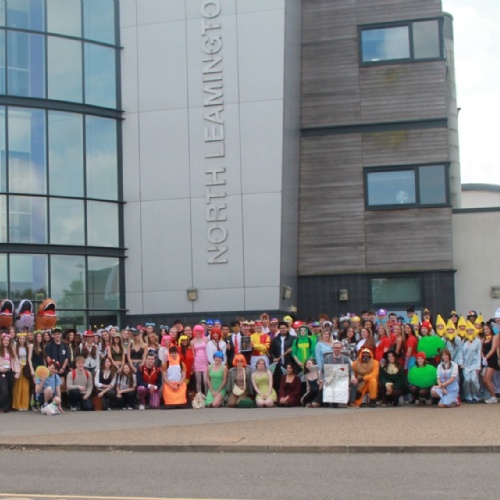
Our year 13 students celebrated their last formal day here at North Leamington School Sixth Form as they start their study leave.
With a now-established fancy dress theme of famous characters, we celebrated all the things our students have achieved during their time with us and all the many wonde...
|
|
29 Apr 2026
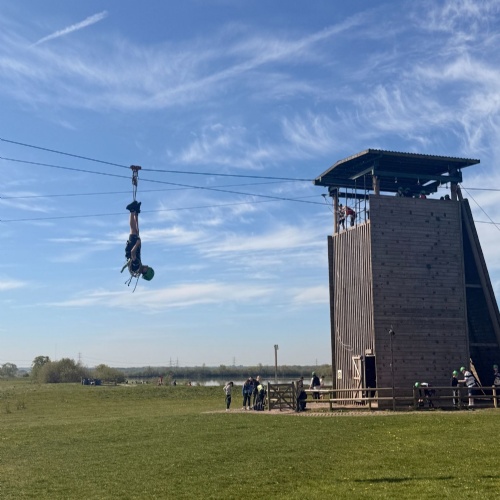
The recent Year 7 residential visit to Whitemoor Lakes during the weekend of April 24 was a resounding success. Students represented the school with impeccable behaviour throughout. Staff were incredibly proud of how positively students conducted themselves, demonstrating maturity, respect...
|
|
|
|
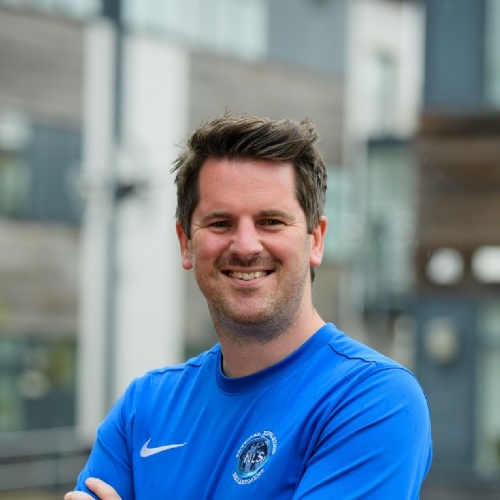 |
07 May 2026
This term has been another extremely positive one for Year 7, and I would like to thank students for the mature and determined attitude they continue to show each day. It has been fantastic to see the excellent progress being made across subjects, with students demonstrating resilience, commitment a...
|
|
|
 |
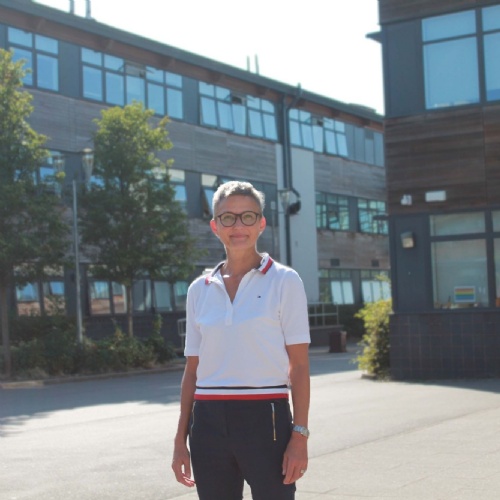
07 May 2026
Year 8 have once again had a busy and productive half term and it is a pleasure to be able to share all of that with you.
Tutor Time Curriculum
In Tutor Time, this half term began with the students having the opportunity to reflect on their Data 2 reports and set themselves sensible, attainabl...
|
|
|
 |
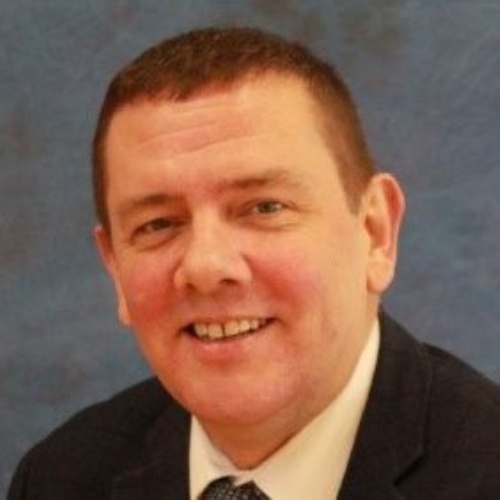
07 May 2026
As we began the final term of Key Stage 3, it has been fantastic to see students make such a positive start. The majority of students conducted themselves in a mature and respectful manner during their first mock RE examination on May 6th, demonstrating both resilience and a growing readiness for th...
|
|
|
 |
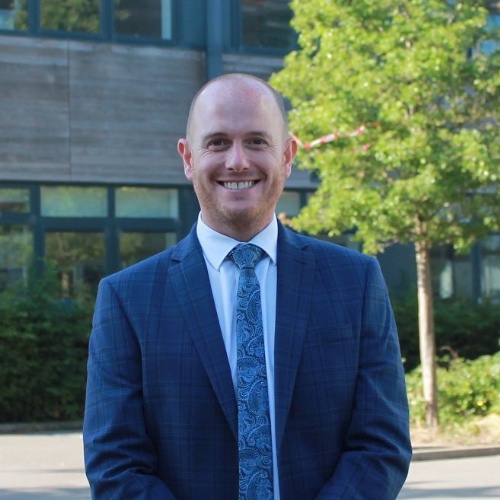
07 May 2026
Year 10 have had an incredibly productive and positive half term. Following the Easter break, students returned to school with a strong sense of purpose and enthusiasm. The recent History trip was a real highlight and was thoroughly enjoyed by all who took part. A huge thank you and congratulations...
|
|
|
 |
07 May 2026
As we approach the end of Year 11’s journey at NLS, I honestly cannot believe that the time has come for me to say goodbye to such a remarkable group of young people.
Being the first horizontal year group to arrive at NLS with a dedicated Head of Year has been an absolute privilege, and to...
|
|
|
 |
07 May 2026
I hope you are well and are looking forward to this Whitsun break! This term was of course marked by the onset of Exam Season and the start of our goodbyes to the outgoing Year 13…
Year 13 Leavers’ Day
On Friday 8 May, our year 13 students celebrated their last formal da...
|
|
|
|
NLS College Cup
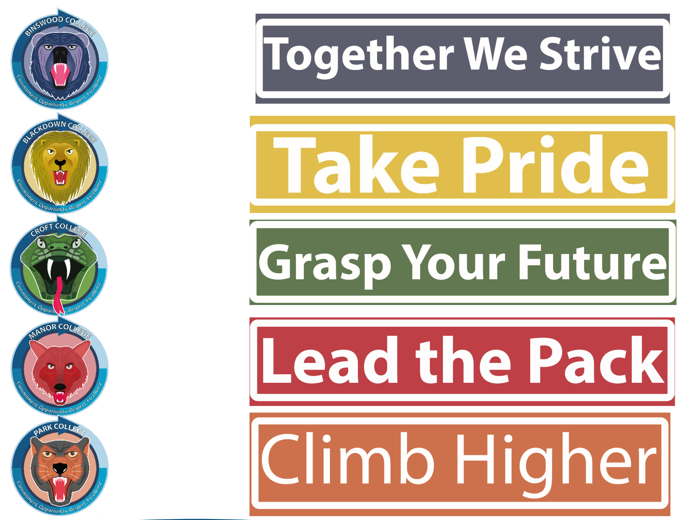
This half term has seen the launch of our brand-new inaugural College Cup competition. All year groups have had the NLS College Cup introduced to them through assemblies and tutor time.
The College Cup is simply the most prestigious College competition in school because it encompasses all of the College events and scoring systems that we run. It is designed to celebrate and reward positive contribution, teamwork, and our CORE values across a wide range of areas including rewards, attendance, punctuality, charity events, competitions, Sports Day, Maths Bees, and more. Students have fed back to us that they want to feel even more involved in their Colleges, and now the College Cup gives them the perfect opportunity to do so. With so many ways to contribute, every student can play a part — the big question is: which College win the very first College Cup?
NLS Attendance World Cup 2026
 Next term we look forward to the NLS Attendance World Cup 2026 competition inspired by this summer’s international football tournament. Next term we look forward to the NLS Attendance World Cup 2026 competition inspired by this summer’s international football tournament.
Building on the success of our Winning Streak initiative, we want to keep the momentum going and continue celebrating excellent attendance across the school.
The challenge is designed to encourage strong routines and consistent attendance throughout the term, whilst adding a fun and competitive element linked to the excitement of the World Cup.
Fuller details are in each year lead update and we look forward to sharing news of the winning tutor groups with you.
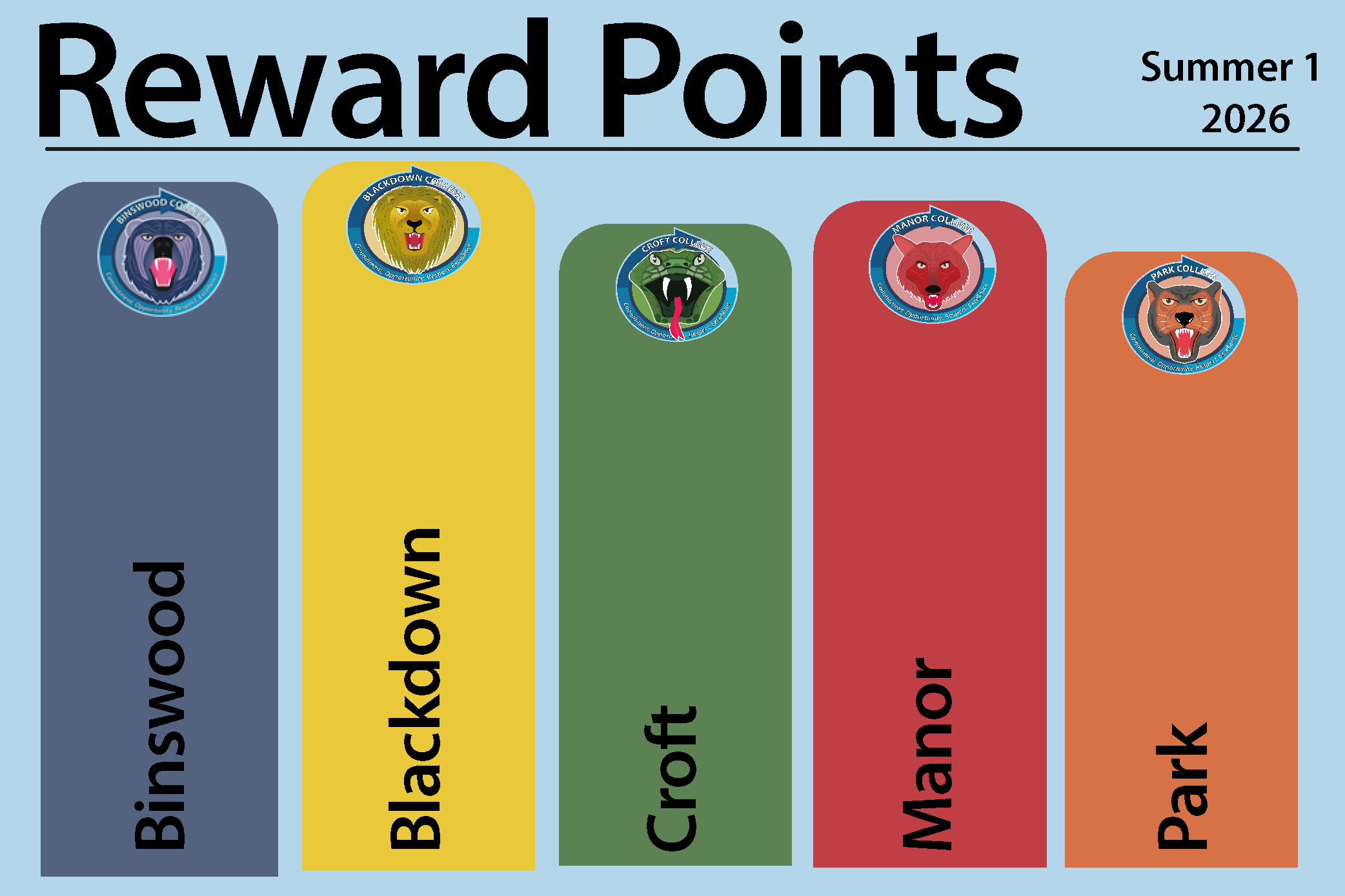
Well done to Blackdown who have accumulated the most reward points this term.
|
|
|
Congratulations to Claudia and David, who have been appointed as our new Senior Student Leaders.
Our Senior Student Leaders have many key responsibilities. They represent the student body at whole school events, chair student cabinet meetings and meet with the Head Teacher each term to discuss ideas for school improvement.
We would also like to congratulate all students who have successfully secured positions as Assistant Senior Student Leaders.
ASSL Careers –
ASSL Charity & Community –
ASSL Diversity & Equality -
ASSL Eco and International –
ASSL Sports –
ASSL Transition -
Student Leadership opportunities are also available across year groups and in early June students will be offered the opportunity to apply for a number of roles which include:
- Year 10 - Sports and Careers
- Year 9 - Charity and Community and Equality and Diversity
- Year 8 - Marketing and International
Appointments will be confirmed in September for the start of the new term along with Year 12 Student College Leaders and Year 11 Deputy College Leaders.
Our Year 7 Transition leaders, appointed earlier this year, have done a super job so far in their role supporting the transition for those joining us in Year 7 in September.
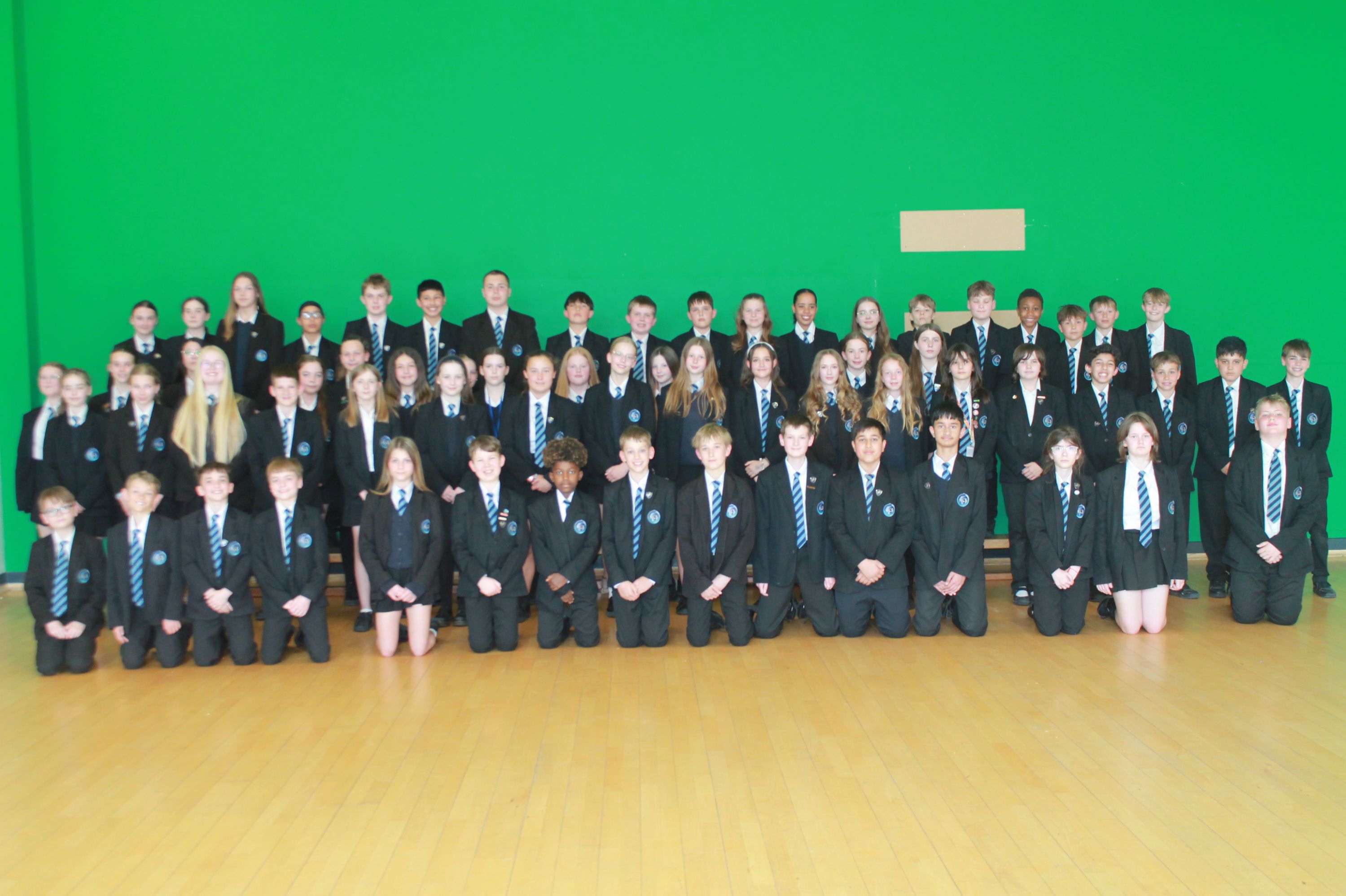
We wish students the very best of luck with their applications and encourage everyone to get involved. We hope all our Student Leaders enjoy a successful year and we look forward to their achievements.
|
|
|
|
Year 10 students have enjoyed the challenge of understanding the economy and international trade. For fast approaching summer progression exams, it is imperative that they continue to make detailed revision notes on each topic. The revision should be completed on a weekly basis as part of the Homeleaning.
Students can access the workbook (Pearsons Edexcel GSCE) in class and on the Digital learningHub. It provides plenty of opportunities to complete questions and practise application. After school intervention is in place for students to access support in developing their analytical skills; students should take full advantage of this support.
Congratulations to all of our Year 11 Business students on completing their GCSE Business exams this month.
Throughout the course, students demonstrated dedication, resilience, and a strong commitment to their learning. They developed valuable skills in analysis, problem-solving, and decision-making, and should feel proud of the effort and determination they showed during the examination period.
We would like to thank parents and carers for their continued support throughout the students’ GCSE journey. We are incredibly proud of everything the students have achieved and wish them every success for the future as they move on to their next steps.
Year 12
Our Year 12 students are demonstrating their entrepreneurial skills by creating a business plan as part of Theme 1.5 Enterprise. The challenge was to create a street food pop-up business. The students have enjoyed researching realistic costs in order to produce a cash-flow forecast and marketing mix plans. We are looking forward to hearing them pitch their ideas at the end of term.
Year 12 should also be focusing on the progression exams. Paper 1 will cover Theme 1 Marketing and People, Paper 2 will cover Theme 2 Managing Business Activities. Students should be consolidating all revision notes on both themes and developing their balanced chains of arguments. All topic PowerPoints, exam questions and gap tasks are on the Digital Learning Hub. If students need any support with either exam technique, revision methods, or they have questions over content, there are sessions available after school on Wednesday.
Well done to Year 13s who have completed paper one and two of their A level exam. Paper three, Investigating a Business in a Competitive Environment is in early June where they will answer questions on case studies from the Music industry. This Paper will cover Theme 1 to Theme 4. So for the final push carry on completing practice questions in preparation.
Throughout their studies, year 13 Business students showed commitment, maturity, and resilience, and they should be extremely proud of all they have achieved. We would also like to thank parents and carers for their ongoing support during this important stage of their education. We wish all of our Year 13 students every success and happiness in their future pathways.
|
|
|
Year 7
Year 7 have been developing their own web pages using HTML. We have been using the CSUK coder+ website to support their learning and students can access this to extend their learning. The Raspberry Pi foundation also offer some self-guided learning projects that students can work on at home.
Year 8
Year 8 students have been developing their understanding of the binary number system and exploring how computers represent different types of data digitally, including text, images and sound. Students have investigated why computers use binary and how combinations of 0s and 1s can be used to store and process information.
As part of their learning, students have practised converting denary numbers to binary and binary numbers back to denary, building both confidence and accuracy with these important foundational skills in Computer Science. They have also explored how colour values, character codes and sound samples are stored within digital devices.
To support their learning outside the classroom, students can continue practising their binary conversion skills using the online “Binary Breakout” game, which provides a fun and interactive way to reinforce the techniques covered in lessons.
Cyber Explorers

The following students have been awarded an SCQF Level 4 by the director of Cyber Security at Department for Science, Innovation and Technology: Alex, Archie B, Ben, Emily, Franny, Fraser, Haris, Hayden, Jack B, Jacob M, Jacob, Jude, Kristina, Lexi D, Mason, Max P, Max W, Seth and Syawaiz.
This is a great achievement, well done!
Year 9
Having successfully completed the online Cyber Explorers missions, Year 9 students have continued to build their digital skills by learning how websites are created from the ground up. Over the past few weeks, students have been developing their own web pages using HTML and CSS — the core languages used to structure and style websites across the internet.
The work has also helped students gain a deeper understanding of how modern websites function, linking directly to the cyber security and digital literacy themes introduced through the Cyber Explorers programme. It has been excellent to see students showing resilience, independence and creativity as they develop practical coding skills that are increasingly valuable in today’s digital world.
Key stage 3 support
There is a wide range of support available to help students with their computer science work. Most of these are available from home or on mobile devices. We have recently published a summary of these support options – it can be found on the Digital Learning Hub. These support options range from videos explaining the lesson content to screen readers to support learners with reading text on the screen. These support measures allow students to build up their confidence – particularly with their literacy skills.
Key Stage 4
Year 10 – GCSE Computer Science
Students have explored a range of operating systems and utility software, covering areas such as user interfaces, memory and file management, device drivers, multitasking, encryption, defragmentation, and data compression. They have also examined the key issues affecting the use of technology, including ethical, legal, cultural, environmental, and privacy considerations. Students will move on to learning about databases and writing SQL statements to manipulate and query data in a database.
Year 10 Additional Support
Please take a look at the curriculum overview available on the school website. It provides a summary of the topics that will be covered throughout the course, and the optional homework and literacy sections are particularly valuable. These areas contain a range of resources to support your child in developing their independent learning at home.
We would especially recommend the Oak National Academy resources, which are created by teachers and act as excellent online tutoring materials. They include lessons, videos, worksheets, and interactive activities. There is also a link to NGfL, a website specifically designed to support programming skills and help students develop techniques through interactive learning activities.
Please also encourage your child to continue to complete their weekly goals on the SmartRevise platform. This has been purchased for them to aid recall, develop their literacy of key terminology and exam question technique. Furthermore, the system provides bespoke feedback on the topics they need to focus on in order to close their gaps in knowledge; it links them to videos and resources to assist them with this.
Year 11 – GCSE Computer Science
Students have now completed their examinations and all I can say from here is good luck to every one of them on results day in August … well done!
Key Stage 5
Year 12 – A Level Computer Science
Students have covered a large amount of content this half term, including data types and binary including adding, subtracting, fixed and floating point. They moved onto data structures and Boolean algebra and then finished the term with Algorithms such as searching and sorting. In the new term students will finish looking at the cultural, legal, ethical and environmental impacts of technology and will start developing their ideas and analysis for their independent project which they should work on over the summer ready to focus entirely on this in the first term of year 13.
Year 13 – A Level Computer Science
Students are now preparing for their terminal examinations. Should they require support then they are welcome to attend lessons during the normal timetables lesson times.
Extra Support – GCSE and A Level
For all our GCSE & A Level students there is a continued promotion of using the SmartRevise platform to develop and enhance student’s ability to recall information and facts plus improve their use of literacy and keywords around the subject. Your support by encouraging your child to engage with this at home on a regular basis is much appreciated. Each student has their own personal login and can access the platform on any device through a web browser.
iDEA Award
We encourage all students to at least complete the Bronze award for iDEA. This is something students can access at home as well as in class, students have their own individual logins for these.
This half term we have seen James M,
Holly S, Mabel M, Anya M, Holly E, Jake N, Ada M, Emma W, Lydia P and Jude P achieve their Bronze certificate, and Molly T, Alexia R and James W achieve their Silver certificate … well done!
These certificates are an invaluable addition to CV’s, references, College, University applications plus apprenticeships and are nationally recognised as evidence of IT literacy competency in the workplace.
Supporting Students At All Levels
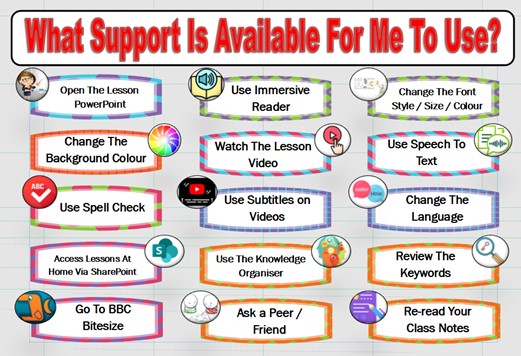
We are currently promoting independence in computer science and have a variety of support mechanisms students can access during their lesson or even at home through the Digital Learning Hub. Some of these strategies are outlined in the image below:
|
|
|
Year 7 Drama
Performing Text: The Grimm Tales
This term, students focused on developing collaboration skills and working effectively as part of a group. They explored a script from The Grimm Tales (Hansel and Gretel), developing their line learning and interpretation skills through the use of narration, physical theatre, chorus, puppetry, and props.
Year 8 Drama
Documentary Theatre: Saw it in the Papers
Students have built on their collaborative skills while exploring how theatre can communicate powerful messages and influence an audience’s thoughts and feelings. Drawing on the poem Saw it in the Papers, students devised and performed their own pieces using narration, direct address, chorus, and placards. Their final performances encouraged audiences to reflect on significant social issues through the use of rhetorical questioning.
Year 9 Drama
Exploring DNA by Dennis Kelly
Students developed their collaborative and interpretative skills through the study of extracts from DNA. They explored monologues, duologues, and group scenes, focusing on line learning and performance through physical theatre, chorus work, and the effective use of props.
Year 10 GCSE Drama
Students focused on preparing for the Live Theatre Evaluation section of their written exam. They produced detailed notes on a live production of Blood Brothers, supporting their ability to analyse and evaluate performance in line with GCSE expectations.
Alongside this, students began exploring An Inspector Calls from both a performer and director’s perspective. They also practised a range of exam-style questions, helping to build confidence and establish a strong foundation for the written paper.
Year 11 GCSE Drama
Students completed their Drama examination on Friday 8 May. We wish them every success with their results this summer.
In preparation for the exam, students revised key aspects of the play, including plot, character, themes, and context (1912 setting and 1945 first performance). They developed their understanding of how to respond as performers, directors, and designers, using targeted checklists and practising exam-style questions.
For the Live Theatre Evaluation, students created detailed notes on a live production of Romeo and Juliet, which they attended at The Belgrade Theatre, to support their revision.
Enrichment in Drama
RSC Ambassadors Playmakers Festival: King Lear
Students involved in the RSC Playmakers Festival have made excellent progress in rehearsals. They explored character relationships, themes, and staging through energetic and collaborative sessions, experimenting with physical theatre and vocal techniques. We look forward to their performance at the Warwickshire Playmakers Festival on Monday 6 July 2026.
VIBE Drama Summer Production
Students in VIBE Drama Club have been working hard in rehearsals for their upcoming summer production, The Girl Who Loved Books, inspired by Matilda by Roald Dahl.
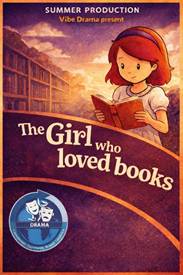
This original piece tells the story of a young girl who discovers the transformative power of stories, courage, and imagination in a world where adults seek to limit her potential. The production promises to be a heart-warming and imaginative performance. Rehearsals take place on Wednesdays after school.
The performance will take place on Wednesday 1 July. Tickets are free of charge and can be reserved via ParentPay.
We look forward to welcoming you to what promises to be a vibrant and creative performance.
|
|
|
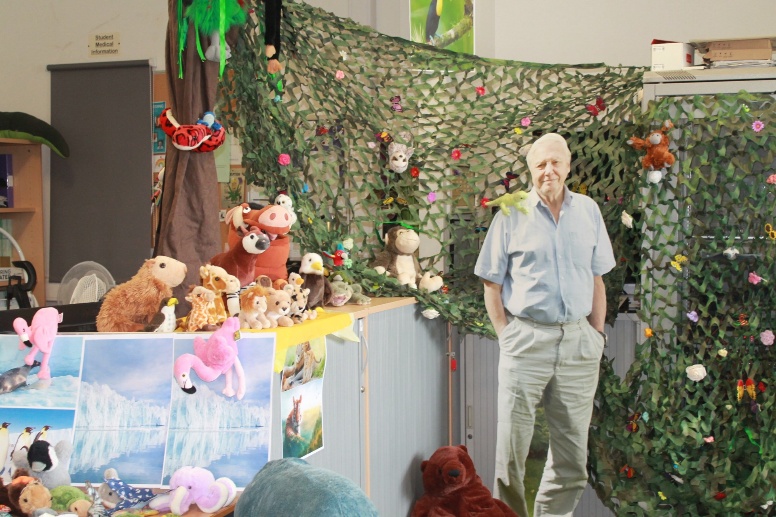 It’s been a busy half-term in English, with our KS3 students starting new schemes, our English student leaders creating a lovely and well-thought-out celebration of David Attenborough’s 100th birthday through KS3 lessons and preparing students for their last few assessments before the end of the academic year. It’s been a busy half-term in English, with our KS3 students starting new schemes, our English student leaders creating a lovely and well-thought-out celebration of David Attenborough’s 100th birthday through KS3 lessons and preparing students for their last few assessments before the end of the academic year.
Our KS4 students have continued their studies of both English Literature and Language, with our Y11 and Y13’s successfully completing the majority of exams, with the final few occurring after May Half Term – we wish them all the best of luck!
Year 7
Building on the analytical confidence they developed earlier this year, Year 7 began their Identity and Culture unit by exploring the ideas, experiences and values that shape both individuals and wider communities. Students started by reflecting on their own identities and cultural backgrounds, considering how personal experiences, traditions and beliefs contribute to who they are. Alongside this, they were introduced to key British values, which prompted thoughtful discussion around respect, tolerance, democracy and individual liberty, and how these principles can be seen both in school life and in the wider world.
Through poetry, students applied their growing analytical skills to texts including Island Man by Grace Nichols, Not My Business by Niyi Osundare and Blessing by Imtiaz Dharker.
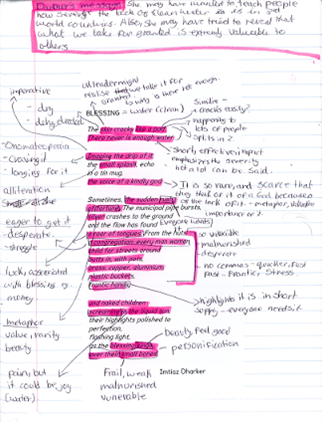 These poems prompted meaningful conversations about belonging, power, inequality and perspective, while also allowing students to continue practising quotation selection, language analysis and the exploration of writer’s methods with increasing independence. These poems prompted meaningful conversations about belonging, power, inequality and perspective, while also allowing students to continue practising quotation selection, language analysis and the exploration of writer’s methods with increasing independence.
Alongside their classwork, students also engaged enthusiastically with the popular Peri-o-Metre homework, which helped to foster positive reading habits by bridging the gap between literary study and reading for pleasure.
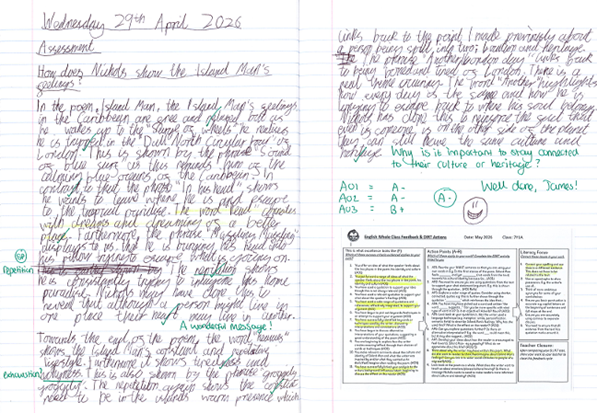
Next half term, students will build on their understanding of identity, place and perspective by moving into travel writing. Drawing inspiration from the themes explored this term, they will begin crafting persuasive pieces using a range of rhetorical and descriptive devices to engage, influence and entertain their readers.
Year 8
Continuing their analytical journey, Year 8 began their study of our Minority Voices scheme with the central text Long Way Down by Jason Reynolds. Through this powerful and thought-provoking text, students explored key themes including morality, crime, violence and peer pressure, engaging in mature discussions about the difficult choices young people can face and the wider social influences that can shape decision-making.
Alongside their reading, students recapped previously studied poetic devices while also being introduced to more sophisticated techniques to support their growing confidence as literary analysts. In their recent assessments, students applied these skills by analysing Reynolds’ use of language and structure, demonstrating an increasing ability to move beyond identifying methods to exploring how and why writers craft meaning. Their written responses showed thoughtful engagement with both the text’s themes and its distinctive style.
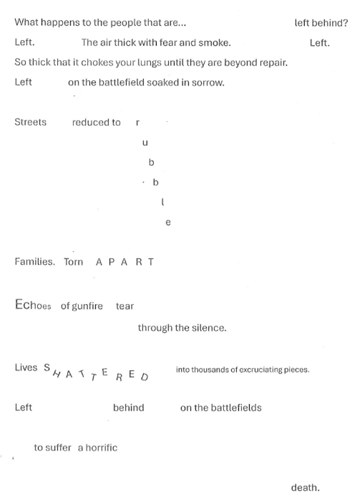
Next half term, students will use their study of Long Way Down as inspiration for their own transactional writing, crafting speeches on important social issues such as homelessness, race and violence. This unit will allow them to combine their analytical understanding with persuasive writing skills, encouraging them to develop clear viewpoints and communicate them with confidence and purpose.
Year 9
Year 9 began their study of An Inspector Calls, marking an exciting milestone as students were introduced to their first GCSE English Literature text. Through their reading of the play, students explored key characters, themes and dramatic methods, beginning to understand how writers construct meaning and communicate ideas to an audience.
Alongside this, students widened their understanding of the AQA GCSE English Literature assessment objectives, becoming increasingly familiar with the expectations of GCSE-style analysis.
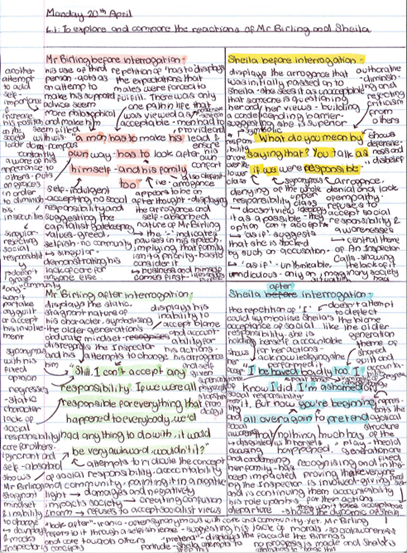
They explored Priestley’s intentions in crafting the play as a morality text, considering how he used characters and events to communicate messages about responsibility, class and social change.
In their assessments, students developed thoughtful interpretations of both Mr Birling and Sheila, demonstrating growing confidence in analysing character development and writer’s methods with greater precision and detail.
During the last week of the term, students also made a strong start on their GCSE English Language Spoken Language endorsement, preparing to deliver speeches on a wide range of engaging topics, from gender in sport to the death penalty. This provides an excellent opportunity for students to develop their confidence in public speaking while refining their ability to structure and communicate a clear viewpoint. After the break, students will continue this element of the course, editing, performing and recording their speeches, before returning to Literature to begin studying unseen poetry and the Power and Conflict anthology, both of which are central components of the GCSE curriculum.
Year 10
It has been a busy and productive half term for Year 10, who completed their study of Macbeth by exploring key themes such as ambition, kingship and power, and applying these ideas to the play’s central characters. Throughout the unit, students worked hard to annotate key extracts, closely analyse significant quotations and develop insightful interpretations which they then applied to a range of exam-style questions. This has helped to strengthen both their confidence and familiarity with the expectations of GCSE Literature responses.
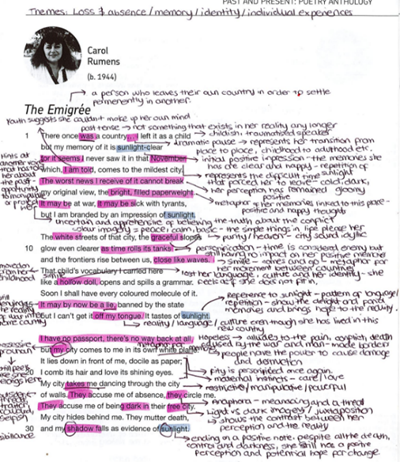 Students moved on to completing their study of the Power and Conflict poetry anthology, focusing on the section of the collection centred around identity and personal experience. Through poems such as Tissue by Imtiaz Dharker, Checking Out Me History by John Agard and The Émigrée by Carol Rumens, students continued to develop their comparative analysis skills while exploring ideas surrounding culture, memory, belonging and identity. Students moved on to completing their study of the Power and Conflict poetry anthology, focusing on the section of the collection centred around identity and personal experience. Through poems such as Tissue by Imtiaz Dharker, Checking Out Me History by John Agard and The Émigrée by Carol Rumens, students continued to develop their comparative analysis skills while exploring ideas surrounding culture, memory, belonging and identity.
To conclude the half term, students returned to their study of GCSE English Language Paper 1, revisiting the demands of each question, consolidating their understanding of the relevant assessment objectives and producing model responses based on exam-style extracts. This work has all served as important preparation for their first English progression exam, in June.
As Year 11 approached their final examinations, students focused on targeted revision designed to strengthen both confidence and subject knowledge across English Language and English Literature. Using teacher feedback, assessment data and identified areas for development, students completed personalised revision plans tailored to their individual strengths and weaknesses. This allowed them to approach revision in a more structured and purposeful way, ensuring their time was spent consolidating key knowledge while also addressing areas requiring further practice.
Across both Language and Literature, students revisited a range of core skills, including textual analysis, essay planning, quotation recall, transactional writing and exam technique. This personalised approach encouraged students to take increasing ownership over their revision while refining the specific skills needed for success in their final GCSE assessments.
We wish all students the very best of luck for their remaining examinations, with one final English exam still to complete after May half term. We are incredibly proud of the commitment and resilience they have shown throughout the year and look forward to seeing them put their hard work into practice in their final papers.
Year 12 English Literature
Year 12 worked through poems from Owen Sheers’ collection Skirrid Hill this half term, exploring a range of complex themes including masculinity, national identity and relationships. Through close analysis and class discussion, students developed their ability to interpret how writers present personal and social experiences, while also strengthening their understanding of wider contextual influences and authorial intention.
Alongside this, Thursday lessons continued to focus on preparation for students’ NEAs (Non-Exam Assessments), which are centred around independently selected texts. Students refined their understanding of the coursework requirements, developed their ideas and began planning more detailed analytical responses. In the final two weeks of half term, students made an excellent start on writing their first drafts, marking an important stage in their independent study and coursework development.
Year 12 also returned to the Pre-1900 poetry anthology this half term to complete their study of the 14 poems explored as part of the Love Through the Ages unit. Through this, students developed their understanding of how love has been presented across different time periods, considering changing attitudes, values and literary methods while continuing to strengthen their analytical and comparative skills.
Having completed their study of The Great Gatsby, students then focused on deepening their understanding by making thoughtful connections between the presentation of love in the novel and across the anthology poems. This comparative work supported students in preparing for their end-of-year assessment, which will require them to draw on both texts in response to a synoptic essay question. Following this assessment, students will move on to studying unseen poetry, applying their analytical skills and developing a more historicist approach when interpreting unfamiliar texts.
Year 12 English Lang/Literature
Year 12 focused this half term on consolidating their understanding of key texts and building increasingly independent revision habits in preparation for their summer assessments.
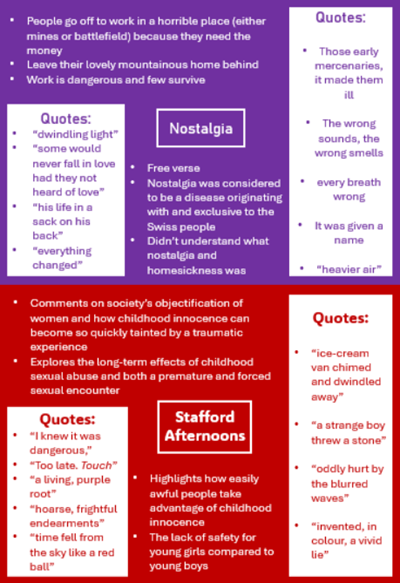 Students worked on creating their own personalised revision resources to help them make meaningful links across Carol Ann Duffy’s poetry, drawing connections between recurring themes, methods and contextual ideas while strengthening their confidence in comparative analysis. Students worked on creating their own personalised revision resources to help them make meaningful links across Carol Ann Duffy’s poetry, drawing connections between recurring themes, methods and contextual ideas while strengthening their confidence in comparative analysis.
Alongside this, students delivered a series of thoughtful and engaging presentations, demonstrating both their growing subject knowledge and their ability to communicate interpretations clearly and confidently. These presentations showcased careful preparation and strong analytical thinking across the class.
As the half term progressed, students turned their attention towards preparing for their summer progression examinations, revisiting core content and refining the exam skills needed for success.
Year 13 English Literature
Year 13 students have been busily preparing for their examinations throughout this term. In lessons, students have shown determination to hone their essay writing skills and make sure their arguments are clearly articulated. Coursework has now been sent off to AQA exam board and whilst we cannot share examples of student work, we would like to take the opportunity to say how hard students have worked on their literary comparisons and strived to aim for those higher marks. We wish good luck to students in their upcoming exams.
Year 13 English Lang/Literature
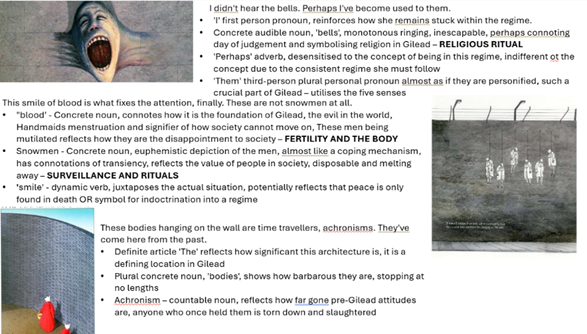
As Year 13 prepared for their final English Language and Literature examinations, students focused on targeted revision across both components of the course, consolidating their understanding of key texts, critical concepts and exam techniques. Alongside more traditional revision methods, students were encouraged to approach their learning creatively, using homework tasks involving music, art and visual responses to engage with their texts from different perspectives and deepen their understanding of themes, methods and contextual ideas.
Students applied these creative approaches to core texts such as The Handmaid’s Tale and The Kite Runner, helping them revisit complex concepts and interpretations in memorable and thought-provoking ways. Across the term, revision was also shaped by student voice, with personalised revision sessions planned in response to the areas students identified as requiring further support across both English Language and Literature. This tailored approach helped students feel increasingly confident and well prepared as they approached their final assessments.
|
|
|
Year 10 have continued developing their understanding of Media Studies this half term through their work on Component 2, where students explored the intentions behind media products such as Justin Bieber texts and Taylor Swift’s The Man. Through these case studies, students analysed key concepts including representation, intertextuality and media theory, considering how artists construct meaning, target audiences and communicate messages through visual and linguistic choices.
Alongside their theoretical study, students also made strong progress in their coursework lessons by developing the practical skills needed for their NEA projects. They worked on refining their blurb writing, planning and taking original photographs, and independently using Adobe InDesign to create coherent and professional media products. Students began designing DVD covers and promotional posters for either spy or romance film briefs, applying their knowledge of genre conventions and audience expectations to their own creations.
Students will continue developing these projects next half term, with the aim of completing a strong first draft of their coursework by the end of the academic year.
Year 11 have been studying hard for their GCSE exams. In lessons, students have been reflecting on their areas for strengths and development across both exam papers which has helped them target their revision more carefully. The revision sessions, running since February, have been well attended. Students’ coursework has been sent to the Eduqas (our exam board) and whilst we are unable to share examples of student work, we would like to take the opportunity to congratulate our students on some very creative, and industry-standard DVD templates and film posters. We wish good luck to students in their upcoming exams.
Year 13 Media students have been working hard this term to plug any last-minute gaps in learning to support revision. Our cohort have submitted their coursework, and we have been very impressed by the experimental nature of the content that has been produced. Students chose to complete a wide variety of tasks from music videos, websites, podcasts and print media campaigns. It is clear that, should they wish to, some of our students would excel in media-based profession. We wish good luck to students in their upcoming exams.
|
|
|
Our Year 7s have had a fantastic half term exploring different environments. They have explored polar environments learning all about Captain Scott's adventures and how to survive in the Arctic. They excelled at writing and performing a monologue from the perspective of an Inuit person and it really helped them develop their oracy and presentation skills.
Our Year 8s have developed their geographical thinking making links across topics exploring plate tectonics and tourism. They have now moved onto Changing Nations and are beginning to learn about the Geography of many different Countries and how they are changing and adapting. They have loved learning about different places and cultures.
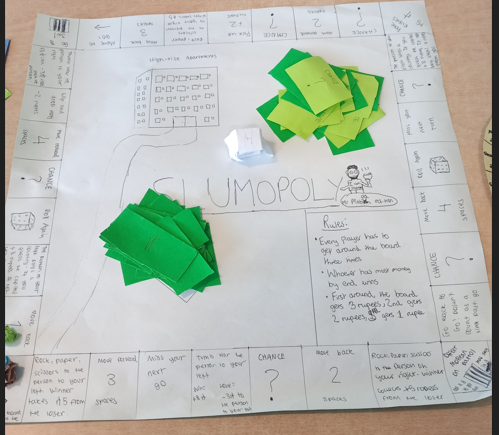
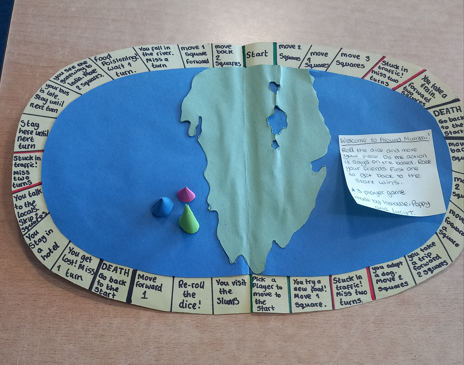
Year 9s have learnt all about different urban environments. They have explored how Mumbai is similar and different to the UK. They have leant all about the different opportunities and challenges in a growing city where one person every minute migrates to Mumbai. This has tied in really well with our links we have with our partner school in Mumbai.
They have all enjoyed making and then playing board games that reflect life in Mumbai, there were some really creative games created.
Year 10 have been exploring the beautiful coastal areas of the UK and investigating the different ecosystems of the world. They will be carrying out fieldwork in the final half term linked to ecosystems in the local area.
Year 11 have been busy looking at a pre-release booklet sent by the exam board all about water needs in the UK and a proposal to build a new reservoir in Lincolnshire. We wish them all the very best in their remaining exams.
Year 12 are now in their final stages of planning the NEA for Geography and are looking forward to a three-day residential fieldtrip to Southwold in June.
Year 13 have had a very productive half term preparing for their final exams and were able to see all the synoptic links between all the topics they have covered in A Level Geography, it has been an absolute pleasure guiding them through A Level Geography and we wish them all the very best in their future adventures.
|
|
|
Year 11 travel and tourism students worked extremely well during the half term in preparing for their component 3 exam. They produced excellent revision resources and approached the exam with maturity.
|
|
|
Year 10 Health and Social Care students completed their first component of the Level 1/2 BTEC Tech Award and began studying Component 2, which focuses on how individuals access and use health and social care services.
Students have developed their understanding of the structure of the healthcare system by learning to distinguish between primary, secondary and tertiary care. They explored how these services work together to support individuals with a wide range of illnesses, conditions and care needs.
As part of this topic, students examined the roles of different healthcare professionals and how coordinated care supports positive outcomes for patients. For example, they studied how a person living with dementia may initially receive support from a GP within primary care before being referred to a neurologist in secondary care for specialist assessment and treatment.
Students have also considered how referrals are made, the importance of communication between professionals and the ways services are tailored to meet individual needs. This has encouraged students to think critically about how effective healthcare systems support people throughout different stages of life.
The course continues to provide students with valuable insight into real-world health and social care settings while developing their analytical, communication and problem-solving skills. We are pleased with the maturity and engagement students have shown so far this half-term and look forward to seeing their continued progress throughout the component.
Year 11 students have successfully completed their Level 1/2 BTEC Tech Award course, finishing with the final Component 3: Health and Wellbeing examination. We are incredibly proud of the commitment, resilience and maturity students have shown throughout the course and during the exam period.
Over the two years, students have explored a wide range of important and engaging topics linked to health, social care and early years sectors. In Component 1, students investigated human lifespan development, learning about the physical, intellectual, emotional and social changes people experience from infancy through to later adulthood. They examined factors that can affect growth and development, including life events and lifestyle choices.
In Component 2, students developed practical skills linked to health and social care services and values. This included effective communication, demonstrating empathy, maintaining confidentiality and understanding how professionals meet the needs of individuals. Students completed coursework where they applied their knowledge to realistic case studies and care scenarios.
Finally, Component 3 focused on health and wellbeing, where students studied how lifestyle factors, health indicators and support services can impact a person’s overall wellbeing. They explored how to interpret health data, recommend improvements and create person-centred health and wellbeing plans.
We would like to congratulate all students on completing the course and thank parents and carers for their continued support throughout their studies.
Year 12 have successfully completed their Unit 1 examination. In preparation they worked diligently to strengthen their exam technique, with a particular focus on 9-mark questions, accurate use of specialist terminology, and secure understanding of key life stages, especially early childhood. Students also completed full past papers both in class and at home, allowing them to practise working under timed conditions and to build confidence in applying their knowledge effectively.
Alongside this, students have been studying Unit 2, where they have explored the musculoskeletal system, as well as the immune, lymphatic, and reproductive systems. They have also developed their understanding of a range of related disorders, including breast cancer and bowel cancer, analysing their causes, primary effects, and secondary effects. In preparation for assessment, lessons have focused on the requirements of different question types, with particular emphasis on structuring strong 9-mark responses that demonstrate clear understanding of body system disorders. Students have completed their Unit 2 examination.
Moving forward, students will be progressing onto Unit 3: Principles in Health and Social Care. This unit introduces key underpinning knowledge and understanding of core principles within health and social care settings. Students will explore topics such as equality, diversity and rights, communication, safeguarding, and the roles and responsibilities of those working in health and social care environments. This unit provides an important foundation for future learning and helps students understand how principles are applied in real-world care settings.
Year 13 Health and Social Care students returned from the Easter break with a fantastic attitude towards revision and examination preparation. They have worked exceptionally hard in lessons, demonstrating maturity, resilience and a strong commitment to achieving their best outcomes.
As a close-knit and supportive group, students have collaborated brilliantly during revision sessions, building confidence across the full range of examination questions and skills. They practised answering 2, 4, 6 and 8 mark questions from across the specification and have made excellent progress in applying their knowledge accurately and effectively. A key focus area identified earlier in the year was the use of subject-specific terminology and making clearer links to the scenarios provided within examination questions. It has been extremely pleasing to see the significant improvement students have made in both of these areas, with responses now showing much greater precision, detail and analytical skill.
In addition to their examination preparation, students successfully completed the Unit 5 coursework for the BTEC National Extended Certificate in Health and Social Care, including making final amendments and refinements to their written assignments. They should be extremely proud of the dedication, perseverance and independence they have shown throughout the course.
Their final examination took place on Friday 15 May, and we to wish all students the very best of luck for both their examination results and their future endeavours. We are incredibly proud of everything they have achieved.
|
|
|
Year 7 have been working on the problems faced by medieval Kings, including the Black Death and the Peasants Revolt, which challenged the dominance of the feudal system, established by William the Conqueror in 1066. This followed work on King John and Magna Carta, which saw the English barons impose limits n monarchical power.
Year 8 have begun looking at the social and political reform of the industrial period from 1750 to 1900. We begun with the transatlantic slave trade and how this provided the financial basis for the early years of industrialisation and the expansion of the British Empire. We are currently working on an assessment looking at the reasons for the abolition of the slave trade.
Year 9 have been looking at key events from World War II, such as the retreat from Dunkirk, the impact of evacuation and the Blitz with a focus on Coventry. We are currently working on an assessment looking at the arguments for and against the use of the atomic bomb to force a Japanese surrender.
Year 10 continue to work through Paper 2 of their GCSE this year. We have finished Early Elizabethan England, 1558-88 and are working on International Relations and the Cold War, which completes the second half of Paper 2. Our focus is on the causes of the hostility between the USA and the USSR. Year 10 have just returned from a very successful trip to the trenches, museums and memorials of World War I in France and Belgium. This supports section A of Paper 1, looking at medical provision in the trenches during World War I.
Good luck to Year 11 who began their History GCSE with Paper 1 on May 15, then have Paper 2 on June 4 and Paper 3 on June 9. This term we have been focused on revision for all three papers, preparing students to be successful in their final examinations. If students need any support during this period, their teachers will be available either in their classrooms or via email.
Year 12 historians have continued working through Paper 1 and 2 – Britain, 1918-97 and the USA, 1955-92 – which is their focus for the year.
Good luck to Year 13 historians who began their A level History with Paper 1 on May 19, then have Paper 2 on June 2 and Paper 3 on June 11.
If students need any support during this period their teachers will be available either in their classrooms or via email.
|
|
|
Year 12 Politics students are working through Paper 1 and Paper 2 – British Politics and British Government – which is their focus for the year. It is important that students keep abreast of contemporary political events by reading broadsheet newspapers, following politics programmes on TV and radio and listening to the podcasts that have been suggested to them in class.
The same applies to year 13 to enable them to comment on contemporary events in their June exams, even if the information they read is published on the same day as the exam. On that note, good luck to the Year 13 Politics students who began their A level Politics with Paper 1 on May 13, Paper 2 on May 21 and then Paper 3 on June 16. If students need any support during this period their teachers will be available either in their classrooms or via email.
|
|
|
Year 7
We are absolutely delighted with the progress our Year 7 students have made this year — they should be incredibly proud of themselves! The classroom has been buzzing with energy, curiosity, and a genuine love of learning. Students have tackled some exciting and challenging topics, including functions and graphs and ratio and proportion, showing real mathematical growth along the way. It has been a joy to see so many students arriving eager to learn, fully engaged, and consistently embodying the CORE school values — a true reflection of their wonderful character.
As we approach the end of the year, our students have a fantastic opportunity to showcase just how much they have grown. The end of year assessments will take place in the first week back after half term:
- X half — Tuesday (02/06) & Thursday (04/06)
- Y half — Wednesday (03/06) & Thursday (04/06)
To help every student shine and reach their full potential, revision lists with SPARX Maths codes are available on G4S. We warmly encourage parents and carers to support their child by helping them set aside a little time for revision alongside their regular homework and any additional tasks set by their class teacher. Every bit of effort now will really pay off!
Thank you so much for your continued support — it truly makes a difference. We can't wait to celebrate what our Year 7 students achieve!
Year 8
What a fantastic term it has been for our Year 8 students! We are incredibly proud of the positive attitude and consistent effort they have brought to their Maths lessons — and it really shows. Their hard work has already been reflected in some great results across the three module assessments completed so far this year, and that is something every student should feel really good about!
This term, students have been getting to grips with some really important and rewarding topics — ratio and proportion and measures and mensuration — building on the strong foundations they have developed throughout the year. Looking ahead to next term, we have some exciting learning in store, including functions and graphs, a key stepping stone on their GCSE journey, before rounding off the year with a deep dive into statistics. There is so much to look forward to!
Before then, our Year 8 students have a brilliant opportunity to demonstrate just how much they have grown this year. The end of year assessments will take place in the week commencing 8 June:
- X half — Monday 8 June & Tuesday 9 June
- Y half — Monday 8 June & Wednesday 10 June
We kindly encourage all parents and carers to help their child prepare and give themselves the best possible chance to shine. Revision materials and resources will be made available, and we ask that students set aside some time alongside their regular homework and any additional tasks set by their class teacher to revisit and consolidate their learning. A little consistent effort now can make a huge difference on the day!
Thank you for your continued support throughout the year — it is very much appreciated. We are excited to see our Year 8 students finish the year on a high!
Year 9 students continue to make strong progress in their Maths lessons and have now successfully completed six GCSE modules: Number, Geometry, Fractions, Decimals and Percentages, Algebra, Probability and Mensuration. Throughout these modules, students have continued to build a wide range of mathematical skills and develop confidence in problem-solving. Many students have shown positive engagement in lessons and a readiness to challenge themselves, demonstrating the school values of Commitment and Excellence. The curriculum has also given students opportunities to strengthen and extend their understanding across different areas of mathematics.
As we approach the end of the academic year, students are encouraged to complete their weekly homework regularly and make use of their personalised learning checklists to support revision and help close any gaps in understanding. In the lead up to the end-of-year assessments, teachers will be delivering a structured revision programme that revisits and deepens learning from all six modules studied this year, with a particular focus on applying knowledge to exam-style questions.
End of year assessments will take place on Tuesday 16 June and Wednesday 17 June. Students will sit two papers; Paper 1 (Non-Calculator), and Paper 2 a calculator Paper, and all students must bring a scientific calculator to the lesson. Revision lists that include videos, practice questions, and solutions have been uploaded to G4S to help students prepare effectively. Parents are encouraged to support students by ensuring they complete revision at home alongside their homework so that they are fully prepared and able to reach their full potential in the end of year assessments.
Year 10
Year 10 students have continued to work hard this term and are making positive progress in their Maths lessons. They have now completed a range of modules, including Mensuration and Calculations, Inequalities and Equations, Measures and Accuracy, Ratio and Proportion, Statistics and Geometry, and Algebra Graphs, developing a broad range of mathematical knowledge and problem-solving skills across these topics. Their positive engagement and consistent effort reflect our CORE school values, while the curriculum continues to provide valuable opportunities to deepen and extend their understanding.
We are now nearing the end of the taught content for this academic year and will shortly move into a focused revision phase in preparation for the end of year Maths examination. This will allow students to revisit key topics, strengthen understanding, and practise applying their knowledge to exam-style questions.
We would like to thank all parents who attended the recent Parent Session on how to support children in revising for Maths. We hope you found this useful and now feel more equipped to support your children further in their learning and preparation for exams.
At home, parents are encouraged to support students by ensuring they complete their weekly homework and regularly revise areas for improvement identified in their personalised learning checklists, which can be found on the front page of their assessments. Revision lists have been uploaded to G4S for students to help prioritise their revision. Regular revision, little and often, will help students to build confidence and continue striving for Excellence in Mathematics. Useful revision resources include Maths Genie, Corbett Maths, and the school’s Digital Learning Hub, all of which provide additional support, videos, and practice questions across a wide range of topics.
The whole maths team wish Year 11 the very best of luck with their GCSE exams! We want all students to know that we are still here to support them and will be available to help them if they come into school during study leave in their usual maths lessons. This will continue all the way to their final maths exam.
After the students have completed their second maths paper we will send them a further practice paper from the 1stclassmaths website which will test students on the remaining topics yet to be examined. Very useful! This will be sent via Go4Schools so please keep monitoring Go4Schools to get them.
Once again – we wish all students the best of luck. It has been a pleasure to teach them, and thank you parents for all your support.
Year 12 have now completed the AS course and have started year 13 content. They have sat a full AS paper in class and are working towards the progression exams, which should, based on efforts in class, show a clear step forwards from the mocks.
Revision materials are available on the Digital Learning Hub as well as textbooks and websites such as MadasMaths, to help support learning further over the holidays and leading to the exams.
Year 13 are welcome to come and see us during their lesson times if they need support with anything. They have shown great progress since their mocks and we hope their efforts will be rewarded in the real exams. Year 13 have shown good initiative in finding revision materials as well as using the ones we have provided for them.
Overall, they have progressed really well as mathematicians and we will miss teaching them. However, we also hope to celebrate successes with them when the results day happens in August as they deserve. Many thanks for all of your support, and best of luck going forward from the Maths department!
|
|
|
 French French
Year 7 students have been learning to talk about sports and free-time activities in French. They now understand the difference between activities that use je joue and je fais, and many students can confidently use both singular and plural third-person forms. Students are also able to discuss activities they enjoy doing on their mobile phones, using a range of opinions and justifications to give more detailed responses. Throughout the module, students have worked hard to learn and apply key vocabulary related to sports and leisure activities. Their growing confidence and effort should be reflected positively in their assessments after the May half-term break.
Year 8 students have been learning about holidays this term and have made excellent progress in using the perfect tense in French. For the first time, they have practised both regular and irregular forms to describe where they went on holiday and what they did. Students explored the story of Phileas Fogg to help develop their understanding of travel and past events, while also expanding their cultural knowledge. They are now increasingly confident in using the perfect tense independently, including when describing disastrous holiday experiences. Students have worked hard throughout the topic and are becoming much more accurate and detailed in their spoken and written French.
Year 9 students have been studying the module Le Sport en Direct, focusing on sports, hobbies, what it takes to become a champion athlete, and how to describe injuries and illnesses in French. Throughout the module, students have developed both their vocabulary and grammatical knowledge through a range of speaking, reading, writing, and listening activities. They have successfully practised several important grammatical structures, including on peut + infinitive, comparisons and superlatives, il faut, j’ai mal + body part, je me suis blessé + body part, and depuis with the present tense. Students have worked hard this term and are becoming increasingly confident and accurate in their use of French.
Year 10 students have successfully completed Module 4 of the GCSE French specification, which focused on healthy living and wellbeing. Throughout the module, students learnt how to discuss mealtimes, mental health, illnesses, and the healthy changes they plan to make in their lives. They have developed their understanding of key grammatical structures, including the imperative, modal verbs, and both the near and simple future tenses. Students are now able to express future intentions and give advice with increasing confidence and accuracy. After the half-term break, Year 10 will begin their Progression examination season, completing reading, listening, and writing papers. Given their hard work and dedication this year, they are well-prepared for success.
Before beginning study leave, Year 11 students completed their French speaking examinations. Throughout the preparation process, students demonstrated exceptional dedication, resilience, and hard work, all of which was evident during their examinations. Every student should feel incredibly proud of the effort and commitment they have shown. Their positive attitude and determination have been a real credit to the department, and we are confident this same approach will continue throughout the remainder of the exam season. We would like to congratulate Year 11 on all they have achieved so far and wish them every success in their future studies and beyond.
 German German
Year 7 German students have made really pleasing progress and have studied the topic of free-time. They have become confident with various verb forms in the present tense and are able to express opinions as well as reasons. They have worked well this term, and we are pleased with their efforts in the end of year listening assessment. Our students followed the advice of creating flashcards to learn their vocabulary and this method has definitely paid off. We had some amazing results and the students should really feel proud of their successes. Well done, we are really looking forward to seeing them progress further next term.
Year 8 students have studied the holiday topic and the imperfect and perfect tense in German. They have developed their listening, reading and writing skills. We have been so proud of our students and many have been so active in the lessons during the games and transactional tasks. We were so pleased with the commitment shown with vocabulary learning for the assessments. They created ind-maps and flashcards to revise the vocabulary relating to the holiday topic. Well done to Year 8 and we are looking forward to continuing this progress.
Year 9 have studied the topic of being abroad at a youth hostel, understanding directions and being at a festival. They have really understood different tenses and have made such pleasing progress. They have continued to support each other and have been active in class in the many speaking games to reinforce our grammar rules. Well done Year 9. They have achieved fantastic scores in the end of year listening assessment. We have spent time practising these skills to avoid the distractors. Our students have shown real dedication to regularly revising vocabulary and have had a great attitude to learning. We were so pleased that many students value the German language and have realised the importance of a second language for future careers.
This term, Year 10 German students have studied the topic of healthy living. We have been extremely pleased with the effort and progress our students have made and look forward to seeing them go from strength to strength. Alongside the topics studied, we have looked at exam skills and techniques in preparation for the end of year progress examinations. We also completed a research project on sporting activities in German-speaking countries. We look forward to further progress next term. Well done!
Year 11 have completed their GCSE speaking exam and we are so proud of the efforts made. They followed advice from previous feedback and have shown real dedication and commitment to using complexity in their spoken answers. They have also sat the listening and reading exams. Well done! Just the written paper to complete – you can do this!
|
|
|
Year 7: Keyboard Skills and Rhythm in Music
Keyboard Skills
This unit of work focuses on performing written music. Students have developed their practical music-making and keyboard skills alongside their understanding of notated parts. Notated music challenges students to consider note placement, duration and pitch to reproduce famous musical melodies, whilst developing their keyboard and collaborative skills. Students were encouraged to perform to the class for assessments and build confidence through shared music-making experiences. Resources provided to offer students of all musical ability the opportunity to access the curriculum and develop musical understanding.
Rhythm in Music
This unit of work focuses on performing percussive Samba-style rhythms using a variety of percussion instruments. Students have developed knowledge about Samba Batucada alongside their practical music-making, collaborative and listening skills. They have performed ‘class samba’ compositions and created their own rhythmic pieces in small groups. Students were encouraged to perform to the class for assessments and build confidence through shared music-making experiences. Resources provided offer students of all musical ability the opportunity to access the curriculum and develop musical understanding.
Year 8: Keyboard Duets
This unit of work focuses on performing written music. Students develop their collaborative music-making skills and keyboard skills. Notated music in two parts challenges students to consider the importance of listening, timing and note placement to reproduce famous musical melodies and harmonies with their partner. Students are encouraged to perform to the class for assessments and build confidence through shared music-making experiences. Resources provided offer students of all musical ability the opportunity to access the curriculum and develop musical understanding.
Year 8: EDM – Dance Music
This unit of work focuses on students composing and sequencing electronic dance music. Students have been exploring the use of musical devices and approaches used to create electronic music over the past 60 years and how to apply these to their own music. They have listened to examples of EDM to encourage music appreciation of the genre, analysing the musical and stylistic features associated with the genre and sub-genres. There has been an emphasis on students producing music that reflects a specific style of EDM and being able to justify their musical and creative choices.
Year 9: Popular Music
Performing/Composing/Sequencing
Composing & Sequencing
This unit of work focuses on students collaborating in pairs or small groups to compose and reproduce popular music to produce examples that demonstrate an understanding of the key features associated with their chosen piece(s). Students have been using their knowledge of sequencing software to compose and record their popular song choices. Students were tasked with composing their own popular music examples, provided with resources to support the writing of chord sequences and melodies. To broaden their understanding of the instrumentation, composition techniques, structure and features associated with different types of music, students have been encouraged to analyse a range of pieces through listening tasks, identifying the key terms and musical devices used to create music in a certain style.
Performing
This unit of work focuses on students collaborating in pairs or small groups to perform examples of popular music. Students were encouraged to develop independence, locating the appropriate music and resources to support their musical choices. They are challenged to develop their practical, technical and collaborative performance skills, practising and performing using a variety of printed or online resources to aid their progress. They have also been encouraged to consider their musical strengths and to apply genre-specific stylistic or musical features to their recreations and to demonstrate a disciplined approach, review their work, monitor progress and identify areas for development.
Year 10: BTEC Music Level 2: Component 1
Students have been working towards the completion of Component 1 of their course. During these components, students have been learning about a range of musical styles and tasked with performing, reproducing and composing pieces to demonstrate their performing, composing and sequencing skills. Alongside their practical work students have produced written analysis and reviews to demonstrate their historical, contextual and theoretical knowledge, producing comprehensive guides and musical examples of Rock ‘n’ Roll, Reggae, Latin styles and Film Music.
Year 11: BTEC Music Level 2: Component 3
Students have completed their work for Component 3 PSA. This unit has focused on students developing and demonstrating their music performing, composing and sequencing skills using a combination of music software tools, live techniques and instrumental skills to explore, compose and realise their musical ideas. They were tasked with planning, preparing and recreating a popular piece of music in a contrasting style, providing written analysis/reviews to record their progress and demonstrate their knowledge, resulting in a creative array of reimagined music.
Year 12: BTEC Music Level 3: Unit 2
Students in Year 12 have been exploring job roles, careers and business plans in preparation for their Unit 2 examination. They have explored different areas of the music industry with the aim of building the knowledge and resources to support their delivery of a musical product. They have produced a detailed plan, budget, rationale and presentation to develop and demonstrate some of the professional skills required to develop and deliver a successful product in the music industry.
Year 13: BTEC Music Level 3: Units 3
Year 13 have completed their Unit 3 ensemble performances. Students were provided with a list of pieces and asked to choose three for a final performance. During this unit students were asked to demonstrate their collaborative and musical skills, providing video evidence of their contribution to the creative and rehearsal processes involved in reimagining their three choices. Over the course of the unit, students adapted and rehearsed ‘No One’s Watching Me’ by Ezra Collective and Olivia Dean, ‘Have I Told You Lately’ by Van Morrison, and ‘Here Comes the Rain Again’ by Eurythmics, culminating in a superb end-of-year performance.
Extra-Curricular
- Orchestra: Tuesdays 3:30pm – 4:30pm
- Music Club: Wednesdays 3:20pm – 4:20pm
- Steel Band: Wednesdays 3:30pm – 4:30pm
- Pop Choir: Thursdays 3:30pm – 4:30pm
- NLS Orchestra Performance
The NLS Orchestra performed at the ‘Showtime’ concert of music from Stage and Screen at Leamington Baptist Church on 28 March 2026. The orchestra performed alongside the ‘Village Voices’ to provide an evening of musical entertainment inspired by sounds created for theatre and film. We would like to express our thanks to Mr Howe for his commitment to providing our students with valuable opportunities to perform musical repertoire to audiences at events like this.
|
|
|
The Summer terms brings a change in activities in PE lessons, with boys in Key Stage 3 doing Cricket, Tennis, Softball and Athletics while the girls at Key Stage 3 do Rounders, Tennis, Volleyball and Athletics. At Key Stage 4 students have the chance to participate in Volleyball, Table tennis, Badminton, Softball, Rounders, Tennis and Athletics in either the performance or participation pathway.
The first summer term is a particular busy and important time for our students doing examination courses.
Our Year 13 A-level PE students travelled to Warwick School to take part in their external practical moderation day. Students performed in their sports under the watchful eye of the OCR moderator and staff from other schools to justify their practical performance scores which go towards their final grade.
NLS welcomed students and staff from Alcester Grammar School, Trinity Catholic School and Bloxham School for the GCSE PE moderation. Students performed at Badminton, Basketball, Cricket, Rugby and Netball.
All our examination students performed superbly under pressure and were a credit to the school and themselves.
Some of our Year 10 GCSE students helped out with some of the sessions and got a valuable opportunity to experience the situation ahead of their own moderation next year.
Year 13s have completed 30% of their final grade and Year 11s 40% of their course, we wish them well as they prepare for their final exams. Good luck to them all.
Our Year 11 BTEC Sport students have now taken their final component of their course, with the written exam.
The PE department would like to thank all the BTEC Dance, BTEC Sport, GCSE PE, A level PE students and all those who have represented the school teams during their time here. Thank you for all your hard work, good luck in all your exams and for the future,
With our extra curricular activities we have seen the Football, Rugby and Netball seasons draw to an end with the summer sports of rounders, cricket, athletics and tennis begin. Basketball has continued with the Year 8 team progressing to the knock-out stages of the Jr NBA competition.
The year 7, 8 and 10 Football teams’ seasons culminated in the semi-finals and the Year 11 and Year 9 teams with the finals of the District Cup, and the teams hoping to add to the trophy successes of the Netball, Basketball and Girls Football teams earlier this year.
The finals took place on Wednesday 15 April amid thunder, lightning, and torrential rain. The Year 11s put on a battling display against a strong Studley team to finish as runners up.
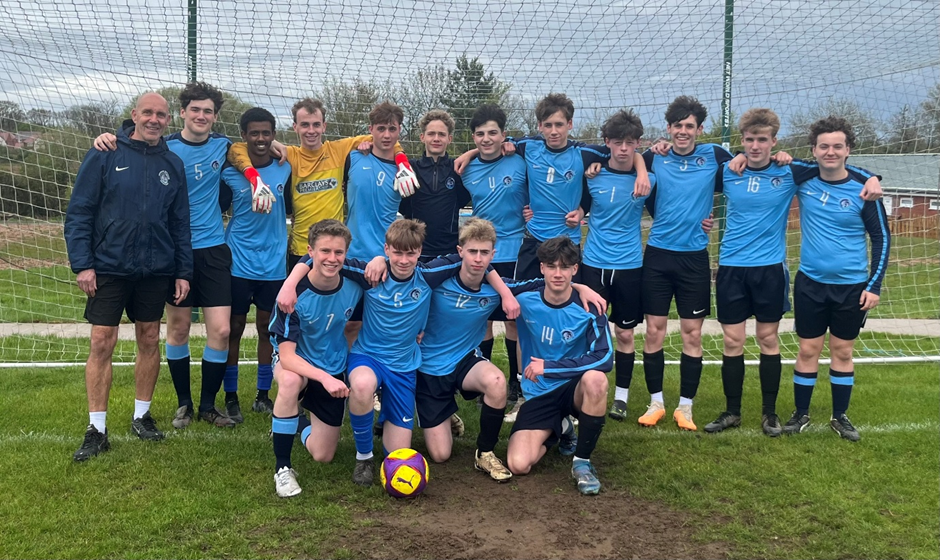
The year 9 team however, ran out 5 -2 winners against Alcester Grammar.
Further details about both finals can read in the latest news section on the website,
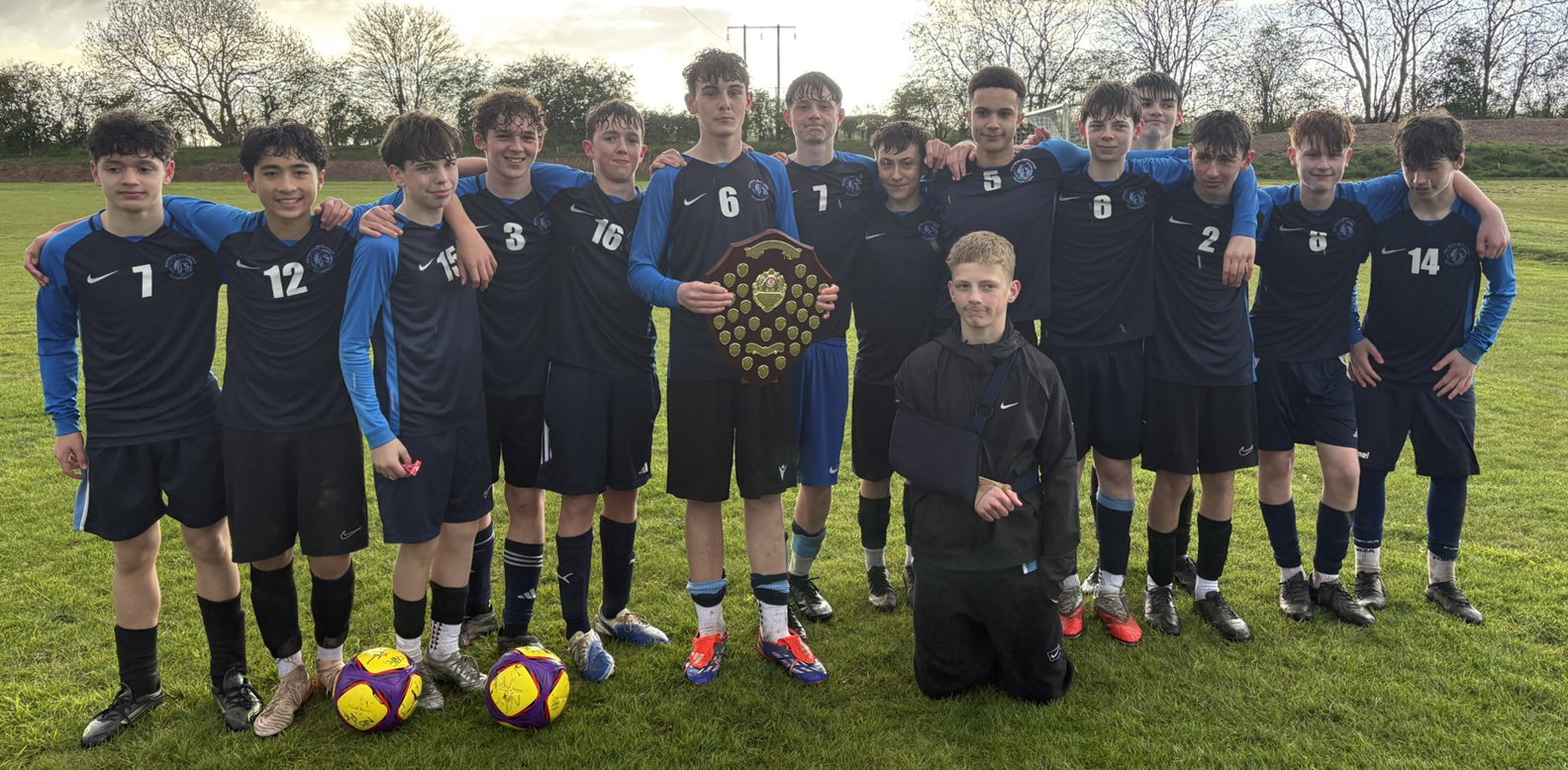
A huge well done to all the boys who played in the finals and well done to all who have represented the school teams at Football, Rugby, Basketball and Netball this year.
|
|
|
Year 7 have been exploring relationships including friendships, consent and boundaries and peer influence. Students have presented role plays on peer pressure with real maturity.
Year 8 have been studying healthy relationships. They have been very mature in their discussions on features of an unhealthy relationships and strategies for dealing with potentially difficult situations at home and beyond.
Year 9 have been focusing on the factors necessary for developing healthy romantic relationships and warning signs to be aware of when a relationship is becoming unhealthy and potentially abusive.
Year 10 have started to examine and discuss issues relating to extremism and radicalisation. This will continue next half term.
Year 11 have explored strategies for managing risk and keeping safe in new situations as their independence develops. We wish them lots of luck for the future as they approach their GSCEs.
Year 12 have been looking at making safe choices including safety in relation to travel and the pros and cons of being a young driver.
Year 13 have been looking at Politics here and abroad. It has been lovely to see them engaged in discussions and debates throughout the year during PSHE sessions. We will miss them and wish them well in their exams and beyond.
|
|
|
This term, Year 12 Psychology students have been exploring clinical psychology and developing valuable revision skills in preparation for their assessments. Students have shown fantastic engagement with complex topics, including phobias, depression, OCD, and how we explain and treat these conditions.
Egg Babies and Attachment Adventure
One of the term's highlights was the arrival of our Year 12 adorable egg babies!
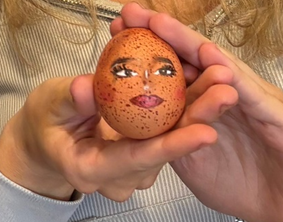 Students kept detailed diaries of their babies' first year, applying their knowledge from the Attachment topic to illustrate key concepts and theories about child development. Students kept detailed diaries of their babies' first year, applying their knowledge from the Attachment topic to illustrate key concepts and theories about child development.
Most egg babies thrived under their parents' care, enjoying fantastic experiences and making it through their critical period in one piece.
Sadly, a few egg babies faced challenges, with some experiencing maternal deprivation and others not surviving their first hour. Despite these hurdles, the project provided an invaluable and fun learning experience, doubling as a fantastic revision activity for their progression exams.
Next term, students will be starting their Biopsychology unit and preparing for their Year 12 Progression exams.
For reading ahead we suggest ‘The Man Who Mistook His Wife for a Hat’ by the famous Oliver Saks.
The progression exam will be a practice Paper 1, with Social Influence, Memory, Attachment and Clinical Psychology, with some Research Method’s scattered throughout, in line with the actual Paper 1 they will be sitting this time next year.
All revision resources can be found on our Digital Learning Hub.
Year 13 – farewell!
This term, we bid farewell to our fantastic year 13’s. “As psychologist William James once said, ‘Act as if what you do makes a difference. It does.’
Year 13, you should all be incredibly proud of yourselves. Over the last two years you have analysed behaviour, challenged ideas, survived research methods, and probably overused the phrase, ‘however, this study lacks ecological validity…’ more times than you can count.
More importantly, you have grown as people — showing resilience, curiosity, humour, and determination even during stressful moments. Whatever comes next, remember that psychology teaches us not just how people think, but how we can adapt, learn, and keep moving forward.
Be proud of how far you’ve come, trust in your abilities, and don’t forget: your brain is capable of far more than your stress levels have convinced you this exam season. Good luck with everything ahead.
|
|
|
Year 13:
We are incredibly proud of our lovely group of Year 13 RE students and we wish them the best of luck for their final exams. Please remind students that we will be available to support during their timetabled lessons right up until the final Ethics paper. We are also offering after school sessions on a Tuesday if students require them and students have the schedule. Please encourage them to make contact with us if they need anything.
Year 12:
Students are almost half way through the course content now in Philosophy, Ethics and Christianity. It is really important they are reviewing their notes outside of the lesson and are creating revision resources for each topic as this is the best way to secure knowledge and prepare for the Progression exams and future assessments.
Year 10:
We couldn’t be more proud of our Year 10 students who have been working exceptionally hard in lessons and at home revising for their final GCSE RE exams. We continue to support them as they prepare for Paper 3 on Monday 1 June. Please continue to encourage your children to revise over half term and to check for additional revision resources on Go4Schools.
Year 9:
We are extremely proud of how our Year 9 students prepared for their first GCSE RE mock exam and we hope they are rewarded for their hard work. In lessons we have been working on Paper 3 (Islam). Students have been focusing on key beliefs and teachings and how they impact the lives of religious believers. We have been very impressed by the thoughtful discussions students have engaged in on the afterlife, freewill and predestination.
Year 8:
Year 8 students have been studying Judaism this half term. They have particularly enjoyed recreating the Passover meal in lessons through tasting the different elements and discussing the meaning behind this.
Year 7:
Year 7 students have been exploring the foundations of Christianity. We have been fortunate to have Cross Teach in to share their experiences of Christianity with our students. We have had some very interesting discussions on miracles and it has been lovely hearing the students talk about their personal experiences of ‘miracles.’ Watching students write and perform modern day parables has been a real highlight.
|
|
|
Year 7 - Light
 This term, Year 7 have been exploring the topic of light. They have been learning how light travels in straight lines, how it reflects off surfaces, and how we see objects around us. This term, Year 7 have been exploring the topic of light. They have been learning how light travels in straight lines, how it reflects off surfaces, and how we see objects around us.
Through experiments, students investigated mirrors, shadows, and the way light behaves when it passes through different materials such as water and glass.
 A particular highlight has been their work on the spectrum of light, where students discovered how white light can be split into a range of colours using prisms. They also explored how the human eye detects light and how this connects to everyday experiences like rainbows and reflections. A particular highlight has been their work on the spectrum of light, where students discovered how white light can be split into a range of colours using prisms. They also explored how the human eye detects light and how this connects to everyday experiences like rainbows and reflections.
These lessons have encouraged critical thinking, with students asking thoughtful questions and making predictions. It has been wonderful to see their enthusiasm grow as they connect scientific ideas about light to the world around them.
Year 7 - Law of Conservation of Mass
This term Year 7 have been exploring the Law of Conservation of Mass—a fundamental principle that states that mass cannot be created or destroyed in a chemical reaction. To bring this concept to life, students conducted an experiment involving magnesium reacting with oxygen.
Students heated magnesium in a crucible to observe how it reacts with oxygen from the air to form magnesium oxide. By carefully measuring the mass of the system before and after the reaction, they discovered that the total mass increased, demonstrating that the oxygen from the air contributed to the increase mass of the final product.
Through their observations, students learnt how to connect theory to practice. They noted the bright white light produced during the reaction, the formation of a white powder (magnesium oxide), and how the mass increased due to the oxygen combining with magnesium. These observations helped them understand not only the concept of mass conservation but also the importance of accurate measurements and systematic experimentation in science.
Year 8 students have taken part in a materials engineering challenge where they designed and created standard bricks before progressing to the development of composite bricks reinforced with metal rods to improve structural strength. Working together, students developed valuable team-building and communication skills while practising and applying key scientific terminology in a practical context. Through investigation, creativity, and problem-solving, students explored engineering concepts and deepened their understanding of composite materials. The activity concluded with a friendly competition to test which composite brick was the strongest, encouraging collaboration, and a healthy sense of achievement.
It was fantastic to see Year 8 students so actively engaged and committed throughout the lessons, embracing every opportunity to learn, experiment, and strive for excellence.
Year 9 students have been learning about the structure and function of the heart.
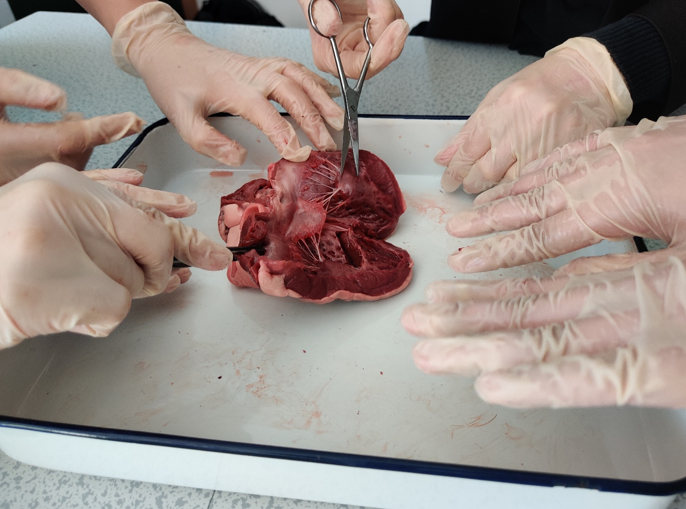 Students were given the opportunity to take part in a heart dissection, allowing them to explore the organ’s key features and connect theory to real anatomy. Students were given the opportunity to take part in a heart dissection, allowing them to explore the organ’s key features and connect theory to real anatomy.
The activity was carefully supervised and carried out with sensitivity, helping students to develop scientific skills, curiosity, and a greater appreciation of how the human body works.
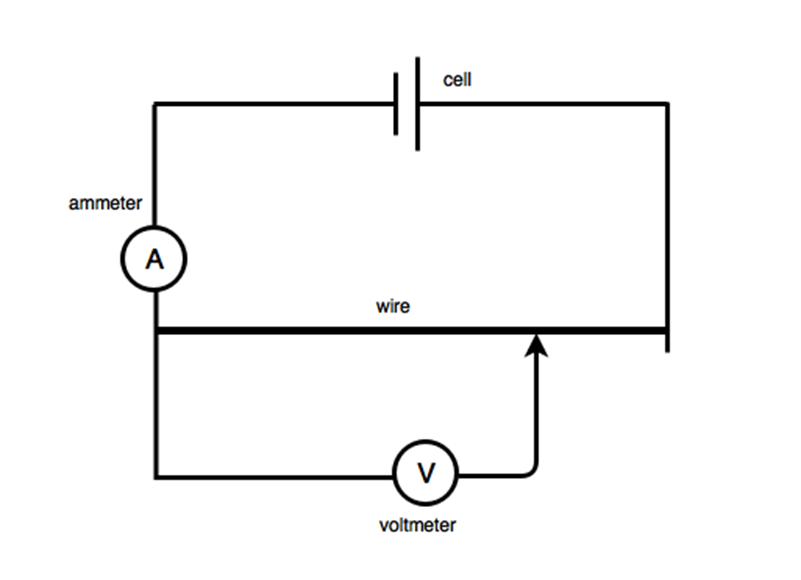 Year 9 have taken part in a physics practical to investigate the resistance of a wire. Year 9 have taken part in a physics practical to investigate the resistance of a wire.
Students set up an electrical circuit and measured how resistance changed when different lengths of wire were used.
This practical activity helped students link theoretical knowledge to real observations, while developing key skills such as accurate measurement, recording results and working safely with electrical equipment.
The investigation encouraged students to think scientifically by identifying variables, spotting patterns in their data and drawing clear conclusions. Working collaboratively, they showed good problem‑solving skills as they tested their ideas and evaluated their results. This practical forms an important foundation for future work on electricity and supports students’ understanding of how physics principles apply to everyday technology.
Questions parents could ask at home:
- What were you trying to find out in the experiment?
We were investigating how the length of a wire affects its resistance.
- What happened to the resistance as the wire got longer?
The resistance increased because the electric current had to travel through more material.
- What skills did you use during the practical?
We used measuring skills, worked safely with equipment, recorded results carefully and analysed our data to draw conclusions.
Year 9 have been developing their understanding of states of matter, particle models, density, and specific heat capacity. Through a range of theoretical and practical activities, students explored how substances behave under different conditions and how energy transfer affects materials.
Students completed a practical investigating the specific heat capacity of different metal blocks where they independently built electrical circuits using heaters, power supplies, thermometers, and ammeters/voltmeters to collect accurate measurements. They carefully recorded temperature changes, calculated the energy transferred, and analysed their results to determine the specific heat capacity values of the metals tested.
The practical helped students strengthen their investigative skills, including planning, measuring safely, handling equipment correctly, processing data, and evaluating the reliability of results. Students showed excellent commitment and teamwork throughout particularly when troubleshooting circuits and improving the accuracy of their measurements. It was very encouraging to see the high level of engagement and enthusiasm demonstrated across the year group.
Year 10 science – nuclear decay and half-life
Year 10 have been exploring the scientific concept of nuclear decay and half-life through an engaging practical activity using cubes to model radioactive decay to help students understand how unstable atoms decay over time and how scientists measure this process.
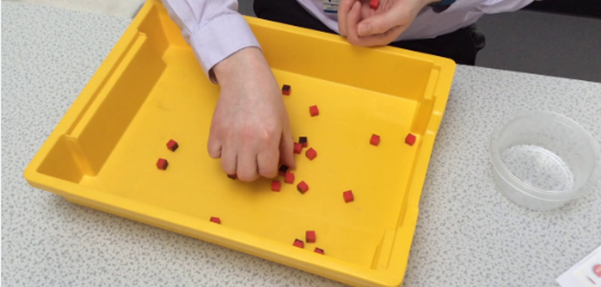 50 cubes in a cup were thrown randomly into a tray with the idea being the red side up have decayed and are removed & any others which have not decayed get put back into cup and reused. 50 cubes in a cup were thrown randomly into a tray with the idea being the red side up have decayed and are removed & any others which have not decayed get put back into cup and reused.
By doing this repeatedly, students simulated the process of radioactive decay and observed how the number of remaining “atoms” decreases over time. This hands-on approach supported students in linking mathematical patterns to real scientific phenomena.
During the activity, students developed important scientific skills which included: -
- collecting and recording data accurately,
- identifying patterns and trends,
- interpreting graphs and results,
- working collaboratively in groups.
Students demonstrated excellent teamwork and problem-solving throughout the lesson and demonstrated growing confidence in applying scientific vocabulary and analytical skills.
Physics Year 10
Year 10 arrived at one of the most exciting topics this term in the Physics curriculum, radioactivity! We are very fortunate at NLS to be equipped with radioactive sources which we use to demonstrate the nature of radioactivity to students, identifying properties of each type of radiation and how they can be detected. We looked at decay chains which allows students to explore the complexity of radioactivity and how unstable Uranium can decay into stable Lead, as shown below, before modelling the random nature of radioactivity and the concept of half-life. Triple Science students also get to explore nuclear fission and fusion and debate the future of the UK’s energy supply.
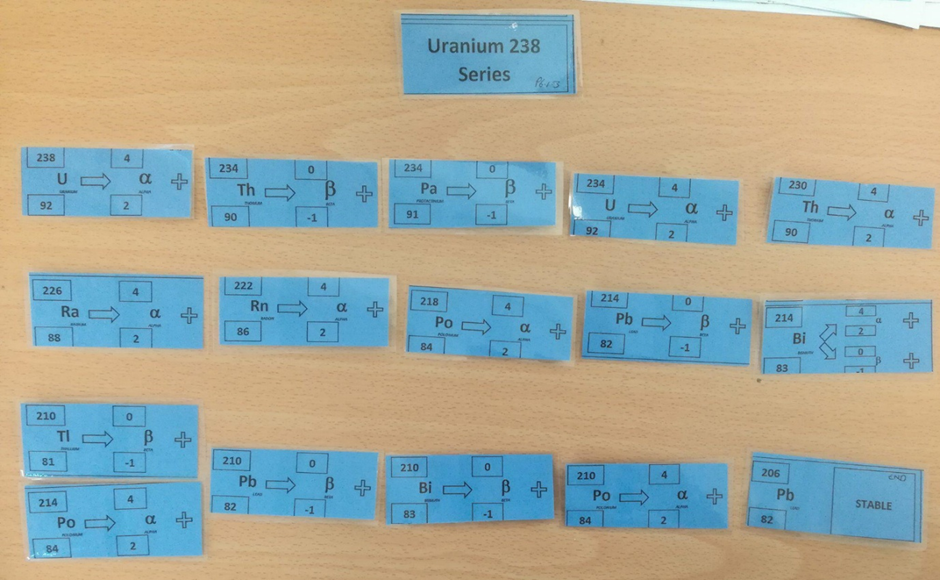
Chemistry
Year 10 Triple Scientists have been learning how to test and identify different types of substances. They have completed complex practical work to investigate the chemical tests for anions and cations, including flame tests and precipitation reaction.
They have been able to identify some common gases uses a range of different gas tests. This included the opportunity to learn about instrumental methods of analysis, such as gas chromatography, infrared spectroscopy and mass spectroscopy. Students are now able to analyse mass spectrums and use these to calculate a molecules relative formula mass.
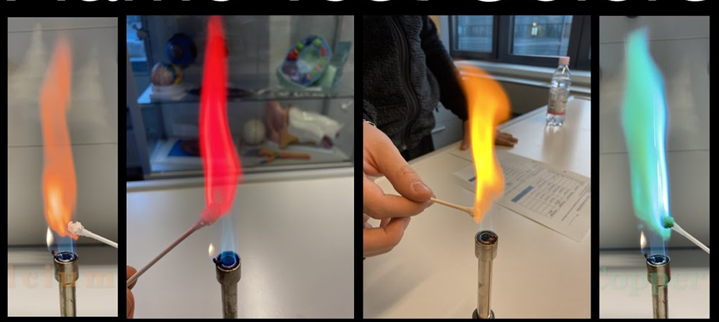
Year 10 have also looked at the factors that affect rates of reactions. They have carried out a number of experiments where they have collected data for changes in temperature, concentration, surface area and catalysts and used the particle model to explain why these changes impact the rate of a reaction.
We have also been using starter and plenary sessions to revisit Year 9 chemistry starting off with atomic structure. Students have been using white boards, and collaborative work to relearn and apply their knowledge and understanding to exam style questions.
Year 11
There has been a strong focus in lessons on further developing both scientific knowledge and effective exam technique in preparation for the GCSE Science exams. Students have worked hard revisiting key topics across Biology, Chemistry and Physics, ensuring they understand the core concepts needed for success in their exams.
Alongside subject content, teachers have been helping students refine the skills required to apply their knowledge confidently under exam conditions. This includes practising longer written responses, interpreting graphs and data, answering required practical questions, and developing strategies to maximise marks in multiple-choice and extended-answer questions.
Revision sessions and structured retrieval activities have continued to take place encouraging students to strengthen their memory and identify areas that may need additional attention.
We would like to thank parents and carers for their continued support at home.
We are proud of the commitment Year 11 students have shown and are confident that their hard work and determination will place them in a strong position for success in their GCSE Science exams.
Year 12 Organic Chemistry - From Ethanol to Ethanal: Bringing Oxidation to Life in the Lab
During this term, Year 12 Chemistry students thoroughly enjoyed their study of Organic Chemistry. They particularly embraced the problem-solving nature of the subject, relishing the challenge of applying their knowledge to unfamiliar scenarios and developing their analytical thinking skills.
A key highlight was gaining a deeper understanding of the mechanisms behind organic reactions. Students showed great enthusiasm in exploring how and why reactions occur, which strengthened both their conceptual understanding and confidence in tackling more complex material.
In addition, students successfully carried out Required Practical 5: the preparation of ethanal by the oxidation of ethanol, followed by distillation of the product from the reaction mixture. Using the quick-fit apparatus, they worked with increasing independence and precision, with many commenting that it made them “feel like proper chemists.” This experience was invaluable in bringing their theoretical learning to life and fostering a genuine appreciation for practical chemistry.
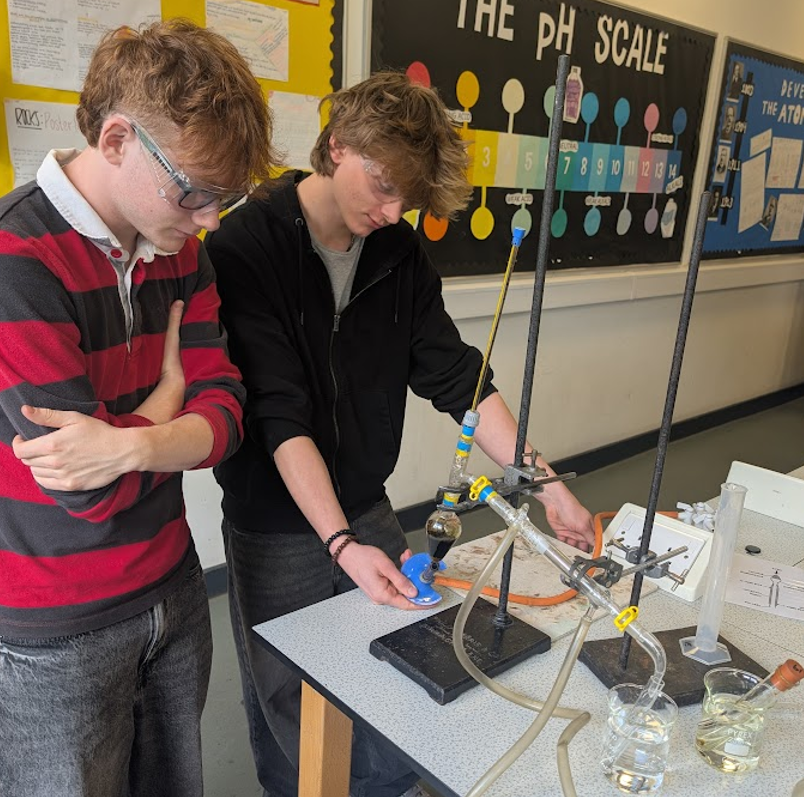 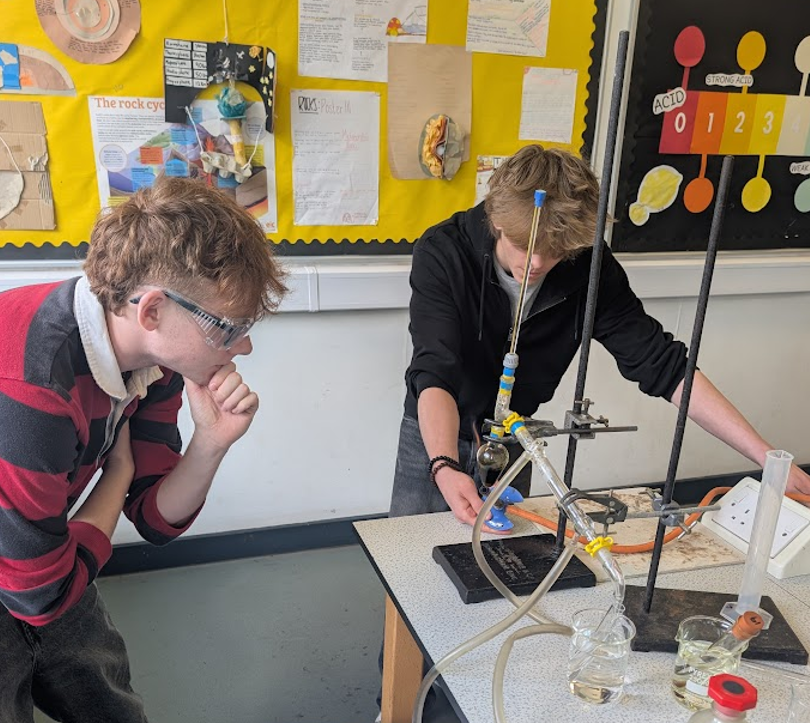
Year 13
Students have been working incredibly hard in preparation for their summer examinations. For example, in A-Level Biology, students are assessed on their ability to recall biological knowledge and their ability to apply, analyse, interpret and evaluate information in unfamiliar contexts and they have worked arduously during lesson time to develop these essential skills. They have matured into thoughtful, analytical and highly capable biologists who should be extremely proud of everything they have achieved. Now it is time for them to go and show the examiners everything they know. Year 13, have worked tirelessly, made incredible progress and should have every confidence in themselves.
Science Club
Students explored the structure and function of the heart. They created a 3D model of the heart to help identify the main chambers and blood vessels. They then carried out a lamb heart dissection, where they were able to observe the internal structures of the heart and develop their understanding of how it functions to pump blood around the body. They identified key features such as the ventricles, atria, valves, and major blood vessels, helping them to gain a deeper understanding of how the heart functions to pump blood around the body.
The students approached the activity with maturity, curiosity, and enthusiasm throughout. Well done to everyone for their bravery and excellent participation during the dissection.
|
|
|
Year 12 have now completed the Families and Households and Education and Research Methods topics. They have made a start on the ‘Crime and Deviance’ unit and will be starting a further new unit, on ‘Beliefs in Society’ after half term.
 Students could get ahead with some wider and contemporary links in these units, by reviewing some of the recommended reading or watching for Beliefs in Society (Amol goes to the Ganges – a great documentary about religious renewal and anti-secularisation) and Crime and Deviance. Students could get ahead with some wider and contemporary links in these units, by reviewing some of the recommended reading or watching for Beliefs in Society (Amol goes to the Ganges – a great documentary about religious renewal and anti-secularisation) and Crime and Deviance.
Students should also be preparing for their Progression exams in which they will answer 4, 6, 10 and 30 mark questions on Education (Paper 1), plus a 20-mark question on ‘Methods in Context. For Families and Households, they will be answering two ten-mark questions and one, 20-mark question. Students have been practising past exam questions in study periods and have study timetables to assist with their independent learning and preparation for this examination window. A reminder that there are many resources available to support on the Digital Learning Hub including past papers, past paper questions, all of the past booklets and lessons and links to wider reading and watching.
Year 13 have now completed their Sociology course! We had a sad farewell to the fantastic groups who have thrown themselves into the study of society. We have enjoyed many opportunities to broaden our knowledge over the last two years with external talks from Mr Lowdell on Educational Policy and Keith Trobe the author of our class text on skills techniques required for the exam. In addition, students have visited the local crown court to support their understanding of how the criminal justice system operates and talk with the head judge.
We will continue to work with the students to support them in the final weeks before their exams. An additional offer will be sprint finish revision sessions which will cover each paper once more, recapping both the skills and knowledge requirements. These sessions also address some of the common misconceptions and marginal gains that can be made to make all the difference. We are really looking forward to seeing the students for these sessions if they are able to attend. Please find dates below.
|
Week
|
Paper
|
Room
|
|
Monday 11 May
|
Paper 1: Education with Theory & Methods
|
P1, 2 & 3 H208
P4, Tu & 5 S203
|
|
Tuesday 19 May
|
Paper 2: Beliefs in Society
(Period 3-5)
|
P3, 4, Tu & 5 H115
|
|
Friday 22 May
|
P2- P5- Paper 2: Families & Households
|
P2, 3 & 4 H219
Tu H220
P5 H219
|
|
Wednesday 10 June
|
Paper 3: Crime & Deviance
|
P1, 2, & 3 H208
P4, TU & 5 C230
|
|
Thursday 11 June-
|
11:30-13:30- Paper 3: Theory & Methods
14:00- 15:30 Paper 3: Theory & Methods
|
P3 C227
P4 C228
|
|
|
|
|
It’s been a fantastic and busy half term in Art. Year 13 and 11 have completed their component 2 externally set task, creating a wealth of independent work in a variety of materials. Their final pieces demonstrate all the learning they have had over the last five or seven years and are wonderful pieces.
We cannot wait to share their pieces as soon as we are able to once the moderation period is over. We are delighted many are continuing their studies either here at university or here at NLS. We wish all year 11 and 13 students the very best in their creative pursuits.
Year 12 students have completed an outcome as part of their portfolio and component 1 coursework. Students have chosen their topic and planned for this final piece. They have tested their ability to use the materials and techniques of their chosen artist, producing interesting outcomes.
Year 10 students have been busy planning ideas for a second piece for component 1. With every student choosing a different artist, it is exciting seeing our students create and explore their own ideas. Most have completed a second photoshoot and drawings to develop into responses.

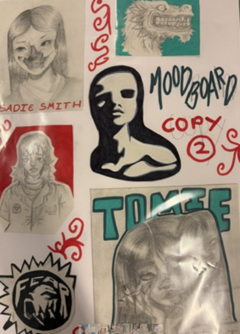 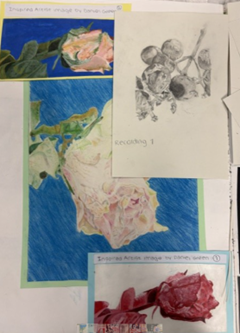
Year 9 students have been completing mixed media pieces of themselves using a photograph and a variety of materials. They needed to use circles, line, pattern and bold colours. These are some of the lovely outcomes they have created.
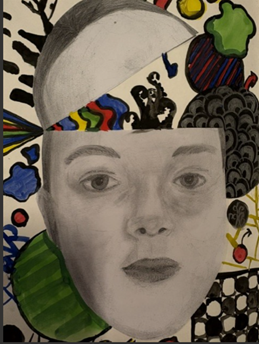 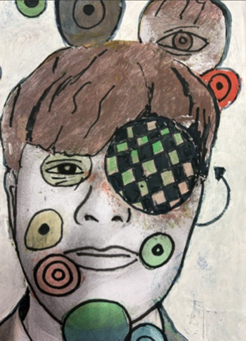 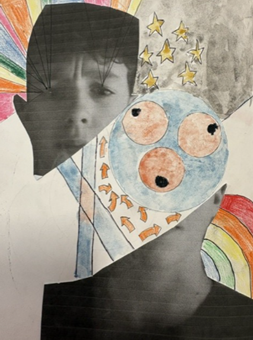
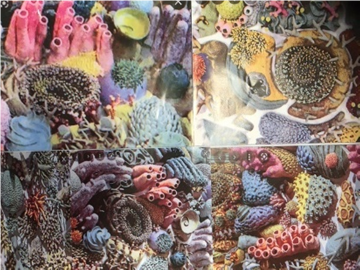 Year 8 students have been learning about the global warming issues of our oceans, having studied the ceramic work of environmental artist Courtney Mattison who has actively raised these issues through her impressive and large-scale ceramic instillations, some of which have taken years to make. Year 8 students have been learning about the global warming issues of our oceans, having studied the ceramic work of environmental artist Courtney Mattison who has actively raised these issues through her impressive and large-scale ceramic instillations, some of which have taken years to make.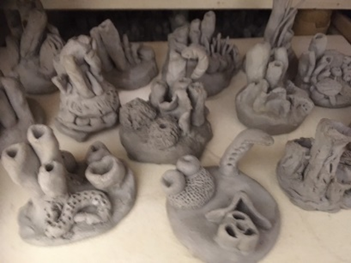
Students spent time recording coral and sea creatures in their sketchbooks and then created clay pieces. These are just a few of the clay pieces prior to firing and application of colour. Our students really love this project and have impressed us with their keenness and impeccable behaviour.
Year 7 students have been completing protest pieces and murals using their own characters. Below are some fantastic outcomes completed in paint and pencil crayons.
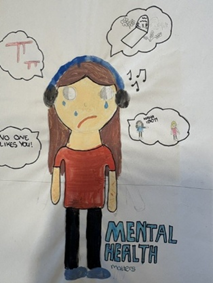 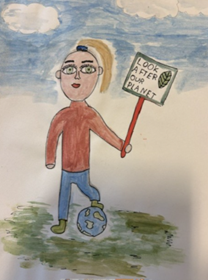 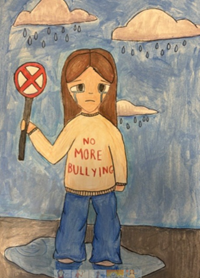 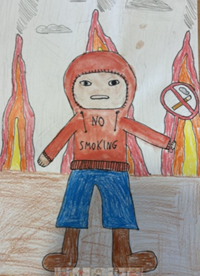
|
|
|
This is always an especially busy and exciting time of year within the department, as Year 11 and Year 13 students complete their terminal practical examinations and bring their courses to a close. We are incredibly proud of the commitment and creativity they have demonstrated throughout this final stage. Their work reflects a high level of skill, independence and thoughtful engagement with their chosen themes, resulting in a range of imaginative and visually striking outcomes. We look forward to celebrating their achievements further and sharing photographs from the forthcoming summer moderation exhibition in our next newsletter.
Meanwhile, our Year 9 students have been developing their understanding of tone and shadow through a series of engaging photographic projects. They have enjoyed opportunities to work outdoors and in the studio, experimenting with natural light to create striking shadow imagery, as well as exploring scale and character in more controlled studio environments. These activities have encouraged them to think creatively about composition, contrast and storytelling within their work.
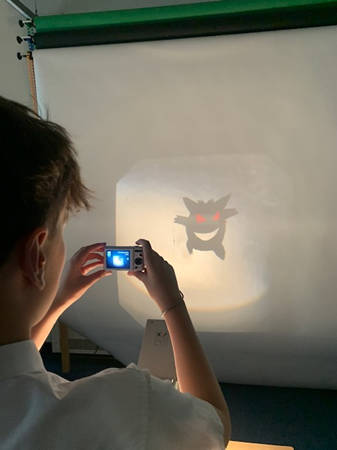 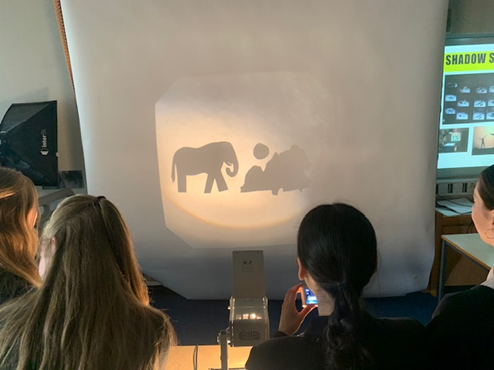
Year 10 students are making excellent progress on their Component 1 coursework projects. They have been exploring the work of a range of photographers and artists, using this research to inform and inspire the development of their own individual ideas. Alongside this, students have participated in practical workshops focusing on Photoshop techniques and studio lighting. These sessions are helping them to refine their technical skills and build confidence in using industry-standard tools and processes.
Our Year 12 students have completed their written research projects, producing thoughtful and insightful analyses of their chosen areas of interest. This marks an important milestone in their course, as they now move into the practical phase of their work. They have begun planning and carrying out their initial photoshoots, demonstrating enthusiasm and a growing independence as they start to establish their own creative direction.
 There is also an exciting competition opportunity for all students to take part in a Young Wild Photographer Competition. There is also an exciting competition opportunity for all students to take part in a Young Wild Photographer Competition.
Please see the website for more details.
Young Wild Photographer Competition Website
|
|
|
Well done to Year 13 and 11 students who completed their exam projects, with Year 11 sitting a two-day final piece exam and Year 13 a three-day final piece exam. They worked really hard and should be proud of all the work completed over the last two years! Wishing both year groups lots of luck for the rest of their exams!
Year 7 – students have been exploring their Pop Art theme looking at Roy Lichtenstein and Andy Warhol. They have also been working on developing their basic hand stitch skills ready for making pop-art-inspired final pieces.
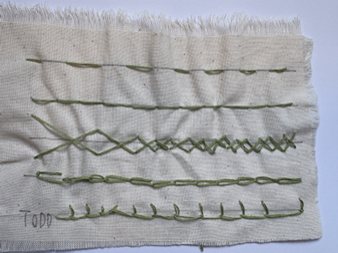 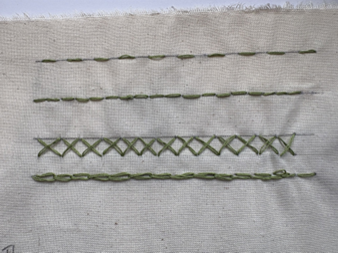
Year 8 – have been working on a cultural patterns project, creating aboriginal dot painted samples and Japanese repeat pattern press print samples.
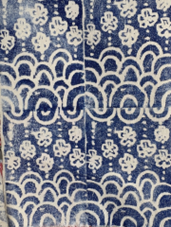 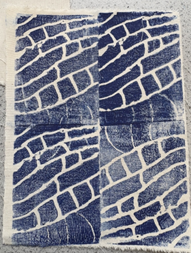
Year 9 – have been researching and creating work based on New York based artists: Keith Haring and Jean-Michel Basquiat, before moving onto their own inspired designs next term.
 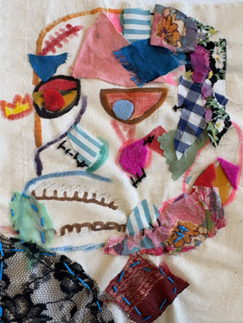
Year 10 have been working on artist 2 inspired samples for their coursework projects, using a wide range of techniques such as patchwork, print and embroidery and applique.
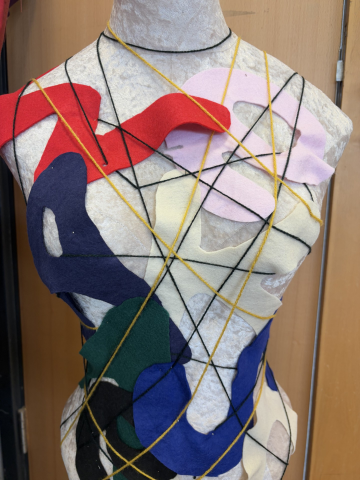 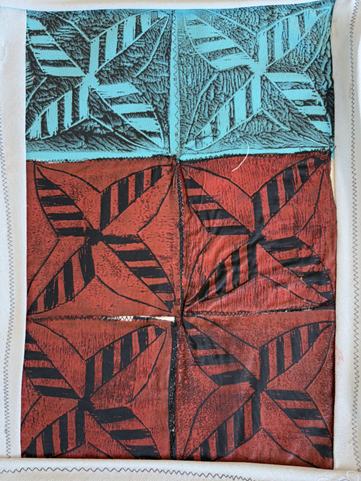
Year 12 have been busy working on ideas for their personal investigations, experimenting with a range of techniques such as print making, dyeing effects and machine embroidery.
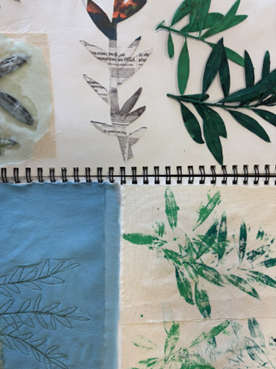 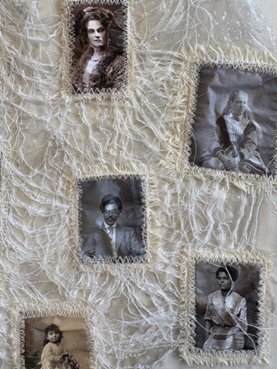
|
|
|
Year 7 and 8 and 9
As we end a very busy term for our KS3 classes I would like to thank parents for their ongoing support in providing ingredients for our fabulous students. We cannot run food practical lessons without your co-operation and it is truly a wonderful sight to see so many of our students truly engaged in learning.
Year 7 have been learning about nutrition and the importance of eating a balanced diet. We have some great examples of the work they have been doing.
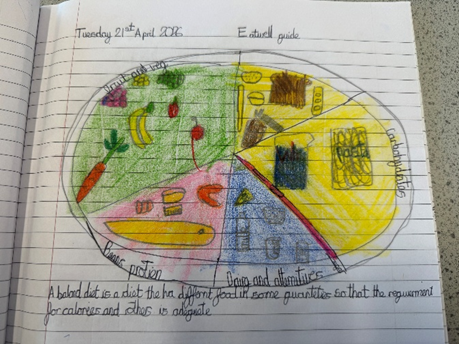 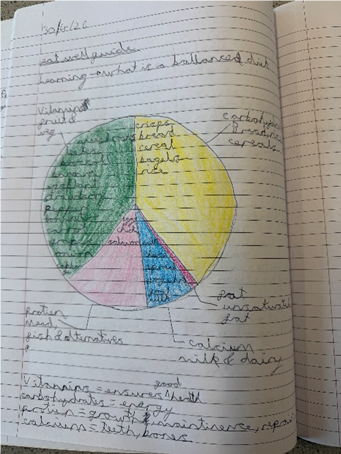
We hope that students and families at home have enjoyed seeing the wonderful practical items made in the food rooms this term.
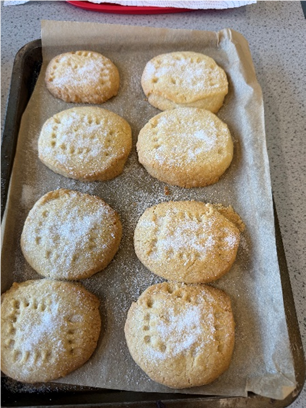 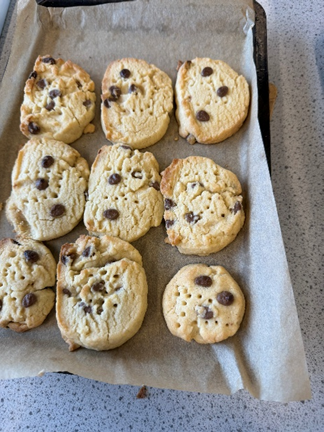
Year 8 have enjoyed making homemade bread and cinnamon rolls and learning about gluten formation through these practical tasks.
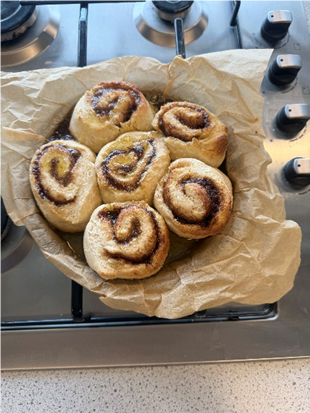 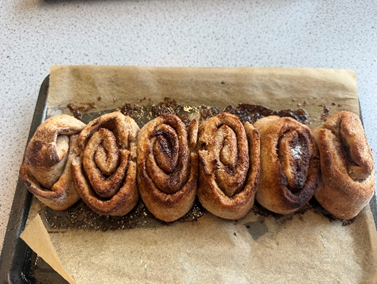
Year 9 have been making shortcrust pastry, calzone, iced fingers and jambalaya and learning about the food science behind the food.
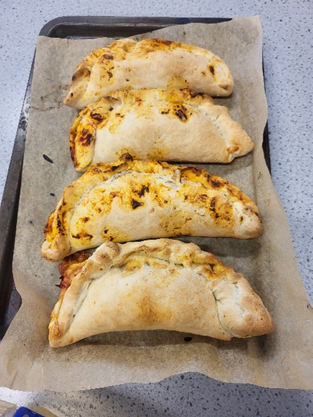 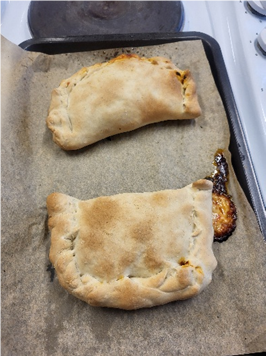
Enrichment Activity Opportunity
We will be offering an after school club next term for year 8 students. They will be making cheesecakes, burgers and homemade rolls and churros. More details will be through tutor time messages.
Year 10 Food
Students have been practising the Non-Examined Assessment (NEA) element of the course this term by choosing a dish suitable for a specific task. There will be two NEAs which, combined, is worth 50% of their GCSE so every mark can really make a difference to their overall grade next year.
Items made have included rough puff pastry for vanilla slices, butter chicken curry with homemade naan and Viennese whirls. All these dishes are really supporting the students in developing their skills needed for the GCSE
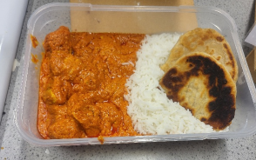 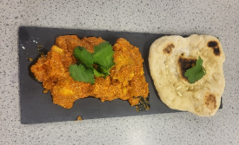
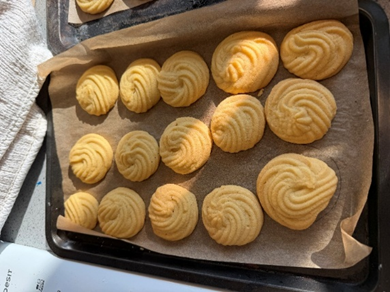 
Year 11 Food Preparation and Nutrition
Good luck to our Year 11s who we sadly said farewell to as study leave started. A reminder revision support is available on G4S and through our Digital Learning Hub.
Year 7 Design Technology students have been getting creative by designing and making their own personalised ID luggage tags for their school bags.
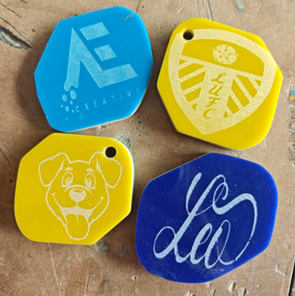 They’ve really enjoyed the hands-on experience and have grown in confidence using a variety of tools to mark out, shape, and finish their designs. They’ve really enjoyed the hands-on experience and have grown in confidence using a variety of tools to mark out, shape, and finish their designs.
They have also been introduced to exciting CAD/CAM technology, allowing them to digitally design and customise their tags with eye-catching images and text, bringing their ideas to life in a modern and professional way.
Year 8 Design Technology students have been putting their creativity and practical skills to the test in an exciting project—designing and making their own wooden pencil boxes. Blending modern technology with hands-on workshop experience, they began by using computers to personalise their designs with names, images, and bold patterns, ensuring each piece was completely unique.
In the workshop, students have grown in confidence as they used a range of tools and techniques, carefully measuring, cutting, and assembling their boxes with increasing accuracy and care. A real highlight of the project has been learning how to create a lap joint—a key woodworking skill that allows the sides of the box to fit together securely while showcasing real craftsmanship. It’s been fantastic to see their ideas come to life and their skills develop throughout the process.
This term, Year 9 students have taken their creativity and practical skills to the next level, producing an impressive range of design-and-make projects, including electric toothbrush holders, mobile phone stands, and, as a final challenge, a fully functional sweet dispenser.
Building on the joining techniques they developed in Year 8, students have created products that are not only strong and functional, but also carefully designed with real attention to detail and aesthetics. It has been fantastic to see their confidence, accuracy, and independence grow as they tackle increasingly complex challenges and refine their craftsmanship.
 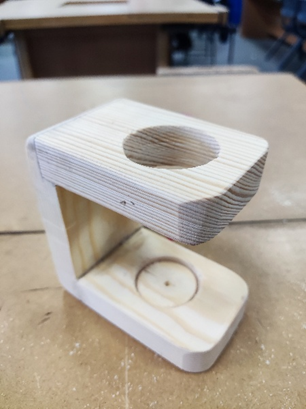
As the term progresses, it is especially exciting to see a growing number of students showing a genuine enthusiasm for continuing Design & Technology at GCSE. We look forward to seeing the innovative ideas, creativity, and high-quality work they will bring to future projects.
Year 10 students are in the final stages of their practical project, designing and making a bug hotel that can be used in the garden. This challenging and rewarding task is really testing their skills, as it incorporates a range of different wood joints and draws together all the knowledge and techniques they have developed so far.
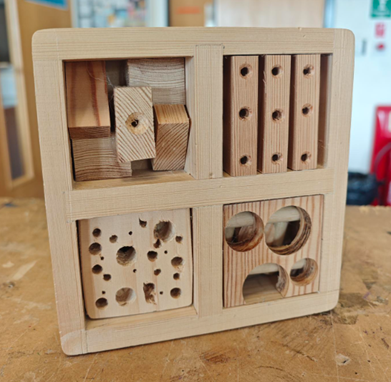
With the project nearly complete, students are preparing to begin their NEA coursework, where they will focus their efforts on developing an original design response to a chosen brief. The Design & Technology team are excited to see the creativity, problem-solving, and high-quality outcomes they will produce.
Year 11 students have now completed and submitted their NEA coursework, and we are extremely pleased with the results. They have worked exceptionally hard to produce a range of high-quality designs and manufactured products that successfully meet their client's needs and could be used in everyday life.
The creativity, dedication, and commitment shown throughout the project have been outstanding, and students should be very proud of what they have achieved. The focus then turned to in-depth revision in preparation for their final exam. We wish all students the very best of luck in their upcoming exams. Well done, Year 11!
Year 12 – Design Technology
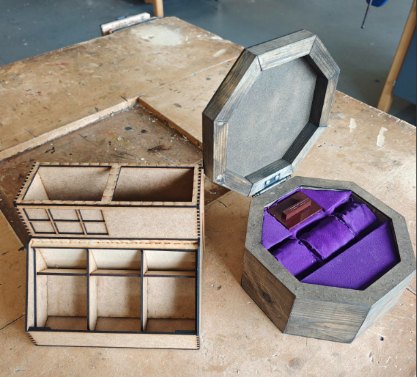 Year 12 students have been actively developing their ideas in the workshop, transforming detailed design drawings into tangible models. Year 12 students have been actively developing their ideas in the workshop, transforming detailed design drawings into tangible models.
Using a range of modelling techniques, they are bringing their concepts to life while strengthening both their practical skills and their understanding of how designs evolve from initial idea to finished product.
It has been fantastic to see their creativity, accuracy, and problem-solving skills in action as they carefully construct each piece, building strong foundations for more advanced and complex projects in the future.
Year 13 students have successfully completed and submitted their NEA coursework, and the results are something to be genuinely proud of.
They have demonstrated exceptional effort and resilience to produce a wide range of high-quality designs and manufactured products, all carefully developed to meet real client needs and solve everyday problems.
Throughout the project, students have shown impressive creativity, independence, and attention to detail, bringing their ideas to life with real precision and purpose.
The standard of work produced reflects their commitment and the progress they have made over the course of their studies.
With coursework complete, the focus shifted to in-depth revision in preparation for final examinations. We wish all students the very best of luck in their upcoming exams. Well done, Year 13
|
|
|
During our outdoor learning sessions this term, students have developed their communication and team-building skills. They have built confidence by sharing facts about themselves and engaged in group activities and discussions.
Students have explored the school grounds, identified and recorded facts about animals and trees, and developed their resilience and creativity in modelling clay sculptures. In addition, students have developed research and literacy skills leading to observations of the change in seasons.
All students achieved accreditation with an AQA unit award in developing confidence, animal fact files and designing, making and painting a clay model.
Mental Health and Wellbeing
This half term, we welcomed the Mental Health in Schools Team to NLS to deliver a Creating Calm workshop to a group of year 7 and year 8 students.
These workshops are aimed to build students’ understanding of mental health and wellbeing and focused on recognising healthy habits, reducing stigma, and exploring practical strategies—such as the 5 Ways to Wellbeing—to support positive mental health. Students learnt when and how to seek help, encouraging open conversations and proactive self-care.
All students involved engaged enthusiastically in the workshop which helps to build their resilience and encourage them to manage their worries and stresses.
Knit and Natter is an opportunity for students to showcase skills, learn new techniques and make new friends. This term we will be working towards AQA unit awards. These are nationally recognised qualifications and our students are looking forward to the challenge.
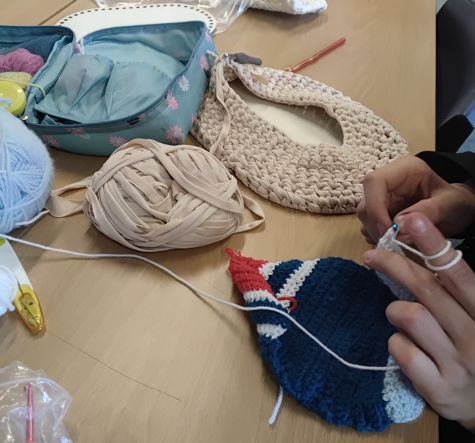 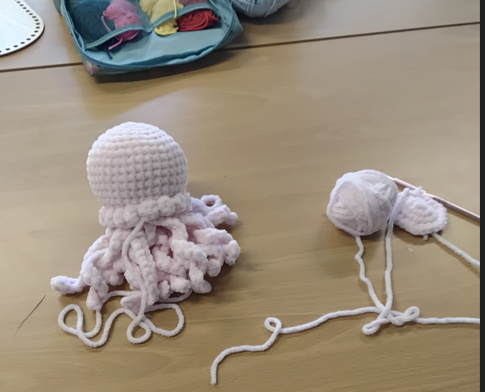
|
|
|
International Schools
One of the key elements of being an International School is working through the Sustainable Development Goals with our students. In tutor sessions students have investigated how we can live without causing harm to our planet and some tutor groups wrote letters to our partner school in India, encouraging them to do the same.
Our partner school are very committed to recycling and when we visited last year showed us lots of brilliant examples of upcycling, which we were very impressed with. Our Eco Leaders have relaunched the very successful pen recycling scheme and have been brilliant at collecting pens to save them from landfill.
Both our Eco and International Leaders are preparing for the Year 5 eco workshops next term, where student leaders help visiting Year 5 students to create hedgehog houses and explore our allotment.
|
|
|
 Students in Year 10 have completed a module on Sustainability this term and have been learning about the importance of physical activity, taking part in as many different activities as they and learning about the risks and benefits associated with each of them. Students in Year 10 have completed a module on Sustainability this term and have been learning about the importance of physical activity, taking part in as many different activities as they and learning about the risks and benefits associated with each of them.
Our Year 11 students have been working on their units for two years now (with many completing six units) and have all achieved their Level 1 Certificate or Award. We congratulate those students for all of their hard work and wish them well as they move forward, knowing that The King’s Trust will always be somewhere they can find support in their future careers.
If you wish to have any more information about The King’s Trust, please contact jbarrett@northleamington.co.uk
|
|
|
We have a range of Extra-Curricular clubs available and details can be found on the website - extra-curricular-activities , details are also on the digital screens around school.
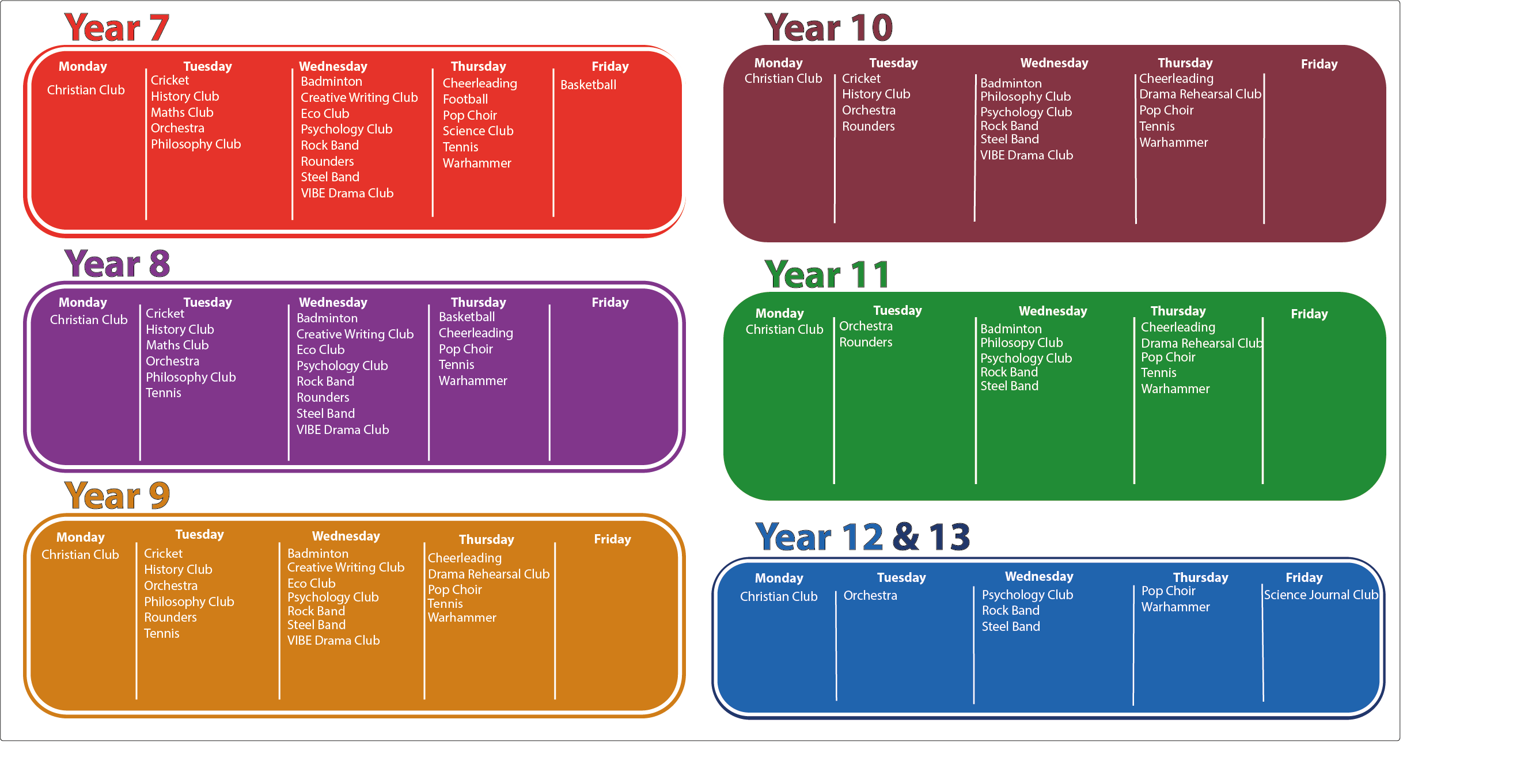
|
|
|
We start our Duke of Edinburgh update celebrating our 2026 and 2025 Gold cohorts and those who were able to attend the Gold ceremony at Buckingham Palace on Wednesday this week.
Students from our first two Gold Award cohorts were welcomed to Buckingham Palace for a special reception recognising both their achievements and the tremendous effort required to complete the prestigious award. Held in the stunning palace gardens, the Gold Award Celebration was a wonderfully formal occasion, filled with all of the grandeur and ceremony expected of a Royal occasion.
Those invited were welcomed with tea and cakes before enjoying speeches from HRH Edward, The Duke of Edinburgh, alongside inspiring words from amputee and racing driver Billy Monger and Ella-Mae Rayner (also known as Comet from Gladiators), among others.
It was a wonderful event that is the reward for every student who completed the DofE Award to the Gold standard. It was also a chance to reminisce about the students' own journeys: their challenges, trials and tribulations whilst undertaking the award; to share stories and catch-up with old teammates.
Our current Year 13 students who completed the award in 2026 and are pictured in the accompanying photograph are: Archie, Jess, Sophie, Lucy, Elissa and Lauren.
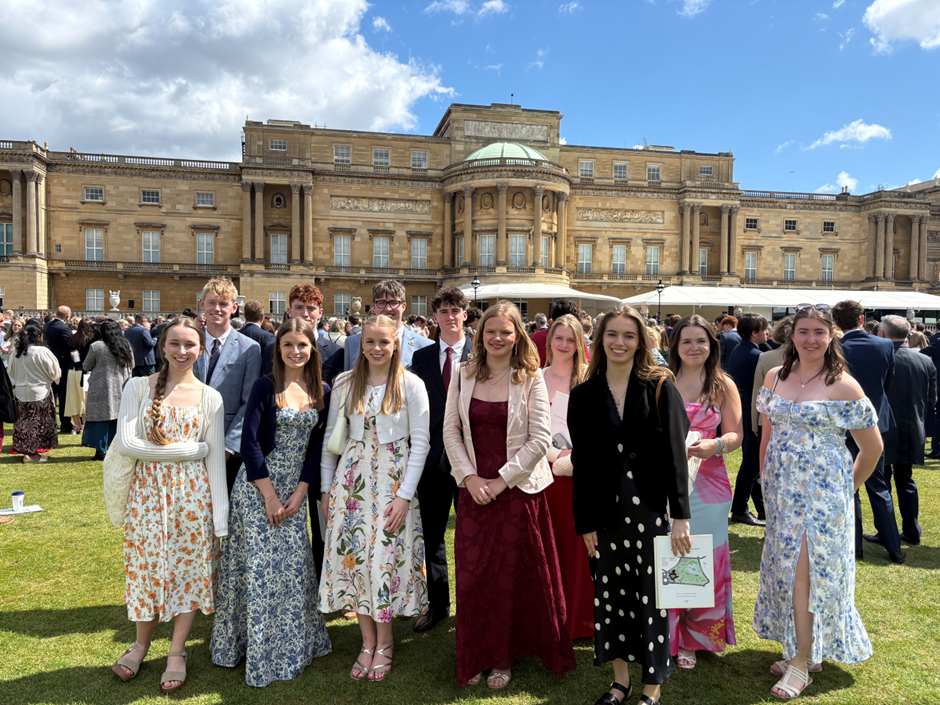
Additional Gold Award recipients include former students Will, Louis, Jacob, Ruby, Lexi and Abbie who completed their awards in 2025.
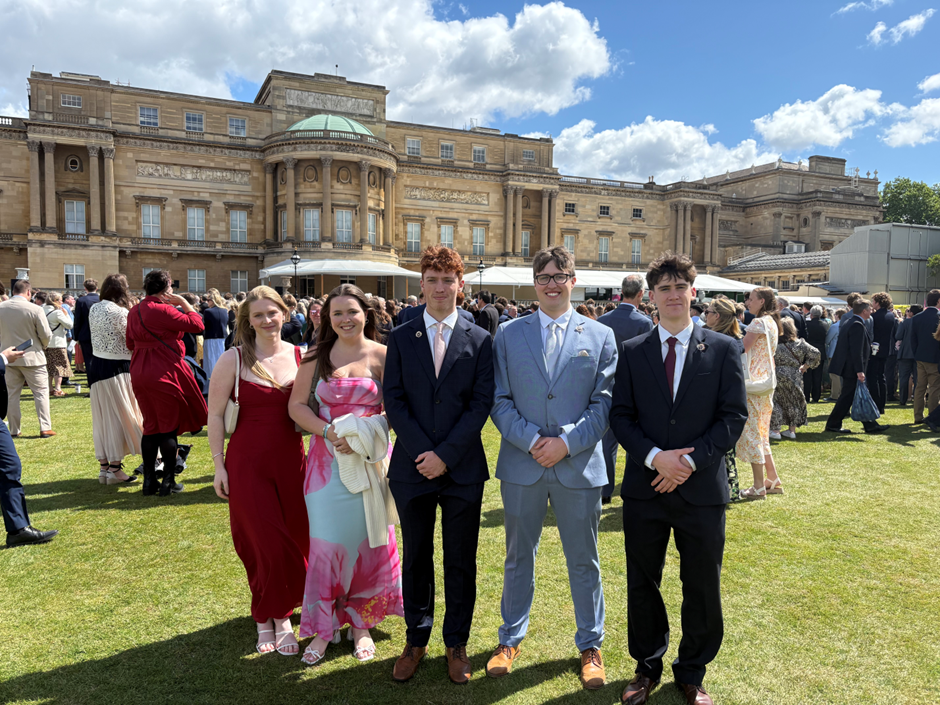
Unfortunately, a number of students from both cohorts were unable to attend the event due to examination and study commitments and will hopefully have the opportunity to attend next year.
Huge congratulations go to every student who has achieved this outstanding accomplishment.
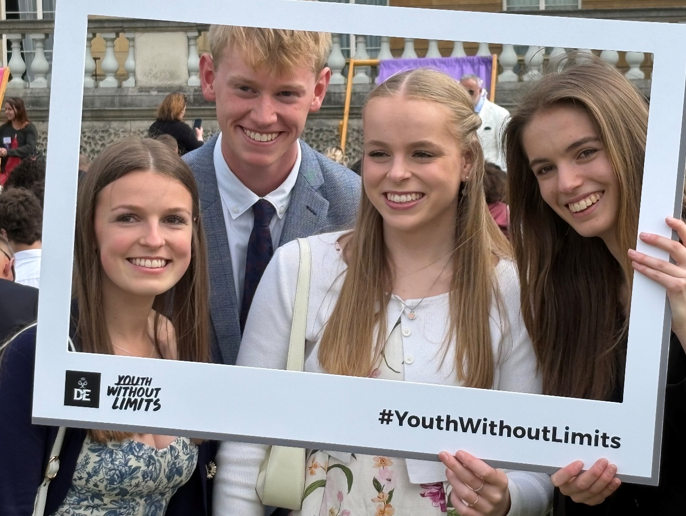
The school’s Duke of Edinburgh Award has had an incredibly successful year with record numbers completing their award over the last year and we are due to break those records again with 118 pupils in the process of completing their Bronze Award; 96 completing their Silver and 43 completing their Gold Award.
This makes us the largest state education DofE provider in Warwickshire and one of the leading providers in the country.
We also have one of the highest achievement rates in the country with 81% of students who sign up completing within two years – this is, according to the DofE themselves, “far above the DofE England average”.
We were also responsible for ensuring that 5, 538 hours were spent by our students volunteering in the local area which amounts to a staggering £35, 442 in terms of social value that North Leamington students are providing to their local communities.
Outside of the expeditions, our students also took part in physical activities – ensuring they undertook something for at least one hour per week and learned new skills, again ensuring they did this for one hour per week.
The NLS DofE Team has always had the vision of using our own students who have completed the awards to teach the younger ones and this year our second tier of DofE Young Leaders came with us on the expeditions. These are ex-students who, having completed their own awards, have the desire to impart this on to those with less experience.
Moving forward, we are continuing to grow with more ex-students wanting to join the team next year. This again shows the success of the DofE programme here at NLS as our students are eager to return and share their own successes with the next generations of students.
Students in Year 9 who are undertaking the Bronze Award have been completing their Skills, Volunteering and Physical sections since the start of the academic year and many are coming to the end of these. For Bronze students, their commitment to the award looks like this:
 Students in Year 9 who are undertaking the Bronze Award have been completing their Skills, Volunteering and Physical sections since the start of the academic year and many are coming to the end of these. For Bronze students, their commitment to the award looks like this: Students in Year 9 who are undertaking the Bronze Award have been completing their Skills, Volunteering and Physical sections since the start of the academic year and many are coming to the end of these. For Bronze students, their commitment to the award looks like this:
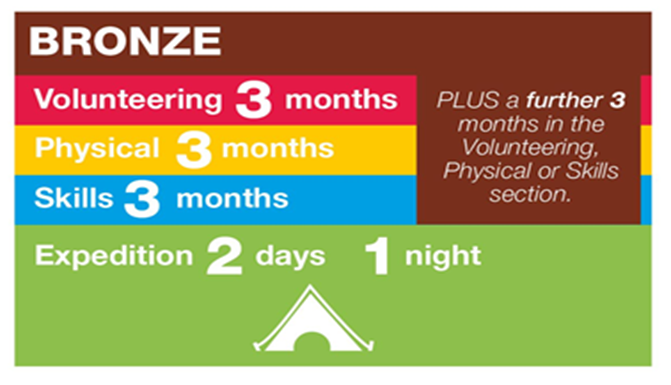
Last weekend, Year 9 Bronze students completed their Training in preparation for their Qualifying Expedition in July. It was a challenging weekend for the students being asked to immediately put into practise their newly taught navigation skills before camping over at our base, Napton Village Hall, and cooking themselves their dinner and their breakfasts.
Students successfully embraced all the challenge and unpredictability that comes with the expedition element. Alongside navigating routes and working as a team, students showed resilience and good humour in the face of everything from unblocking facilities and encountering stampeding cows, to even helping rescue a stranded lamb. These moments, while unexpected, are often where the most valuable learning takes place. Staff were hugely impressed by the students’ positivity, teamwork, and determination, and they should be commended for the way they rose to every challenge.
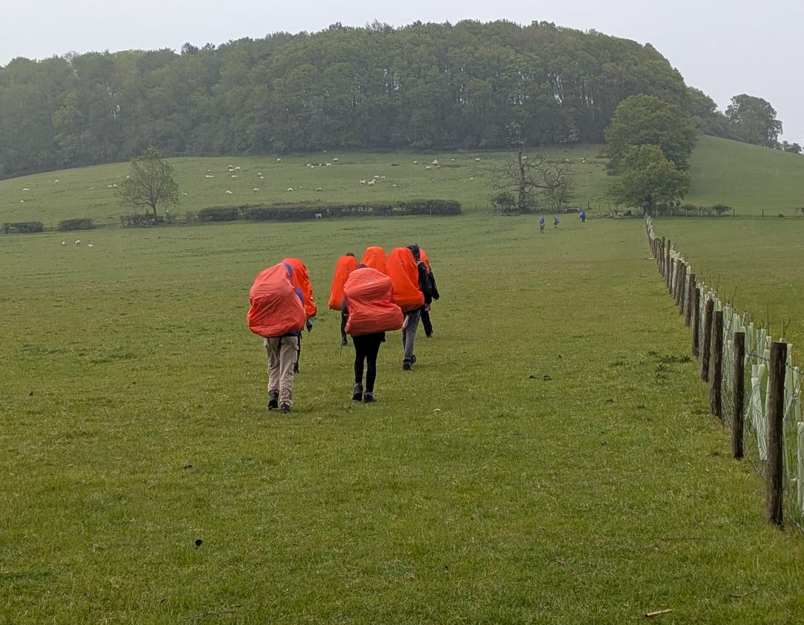 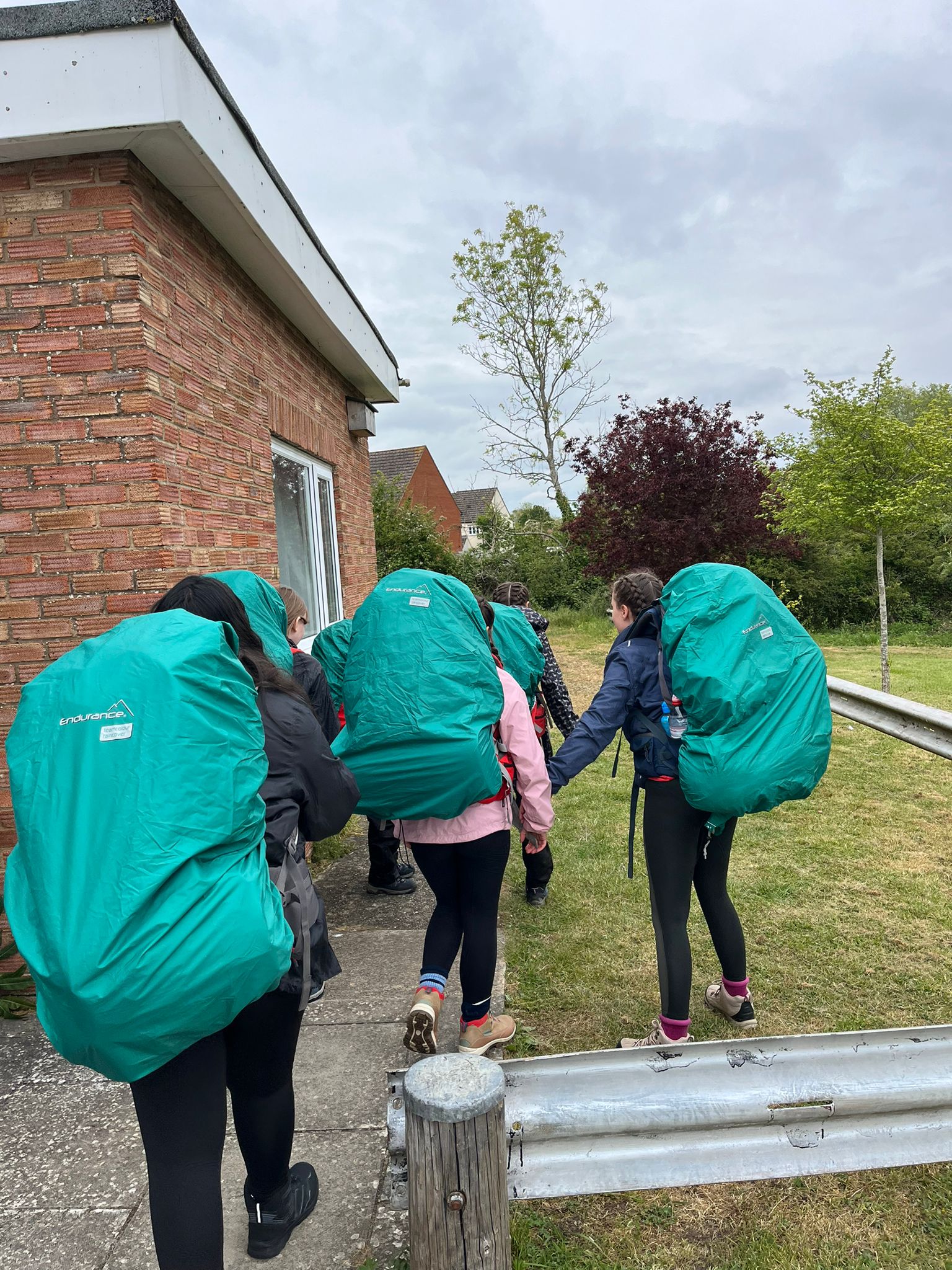
A huge thank you to the staff who gave their time up for this additional weekend. Those staff are: Mr Barrett, Miss Reed, Miss Checkley, Mr Cole, Miss Seers, Mr Bamber and our three ex-student volunteers: Lucy, Will and Mac.
The Bronze Qualifying Expedition will take place on 3 – 4 July with further details for parents and carers coming soon.
Some of the photos from the training weekend can be seen below. ADD
 Students in Year 10 who are undertaking the Silver Award have also been completing their Skills, Volunteering and Physical sections since the start of the academic year. For Silver the demand is a little more and students’ commitment to the Silver award looks like this Students in Year 10 who are undertaking the Silver Award have also been completing their Skills, Volunteering and Physical sections since the start of the academic year. For Silver the demand is a little more and students’ commitment to the Silver award looks like this
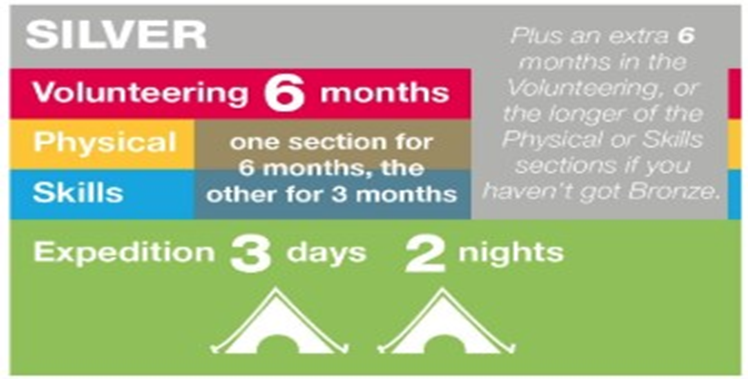
Our Silver participants have already completed their training and are preparing after half-term to complete their Practice Expedition in The Peak District on 4 – 6 June. Details for this have been released and students are reminded that they need to collect their kit for this expedition on Tuesday 2 June.
The Silver Qualifying Expedition will take place on 9 – 11 July and further details for parents and carers coming soon.
 Students in Year 12 undertaking the Gold Award have also been completing their Skills, Volunteering and Physical sections since the start of the academic year and many of them have also completed the additional Residential section that is required. For Gold the level of demand is higher still and students’ commitment to the Gold award looks like this: Students in Year 12 undertaking the Gold Award have also been completing their Skills, Volunteering and Physical sections since the start of the academic year and many of them have also completed the additional Residential section that is required. For Gold the level of demand is higher still and students’ commitment to the Gold award looks like this:
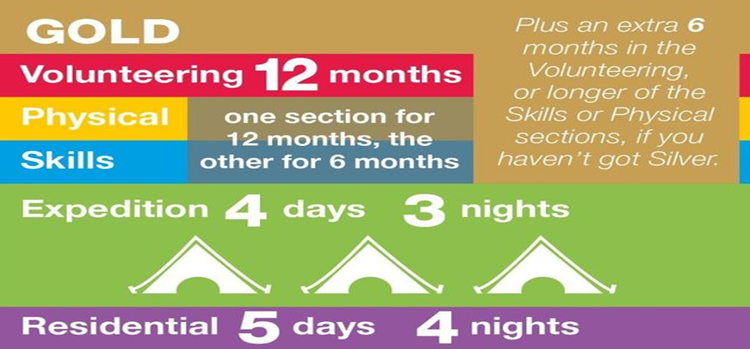
Training has been taking place every Wednesday since the start of the academic year.
On 15 – 18 April, Gold students undertook their Practice Expedition to the Brecon Beacons.
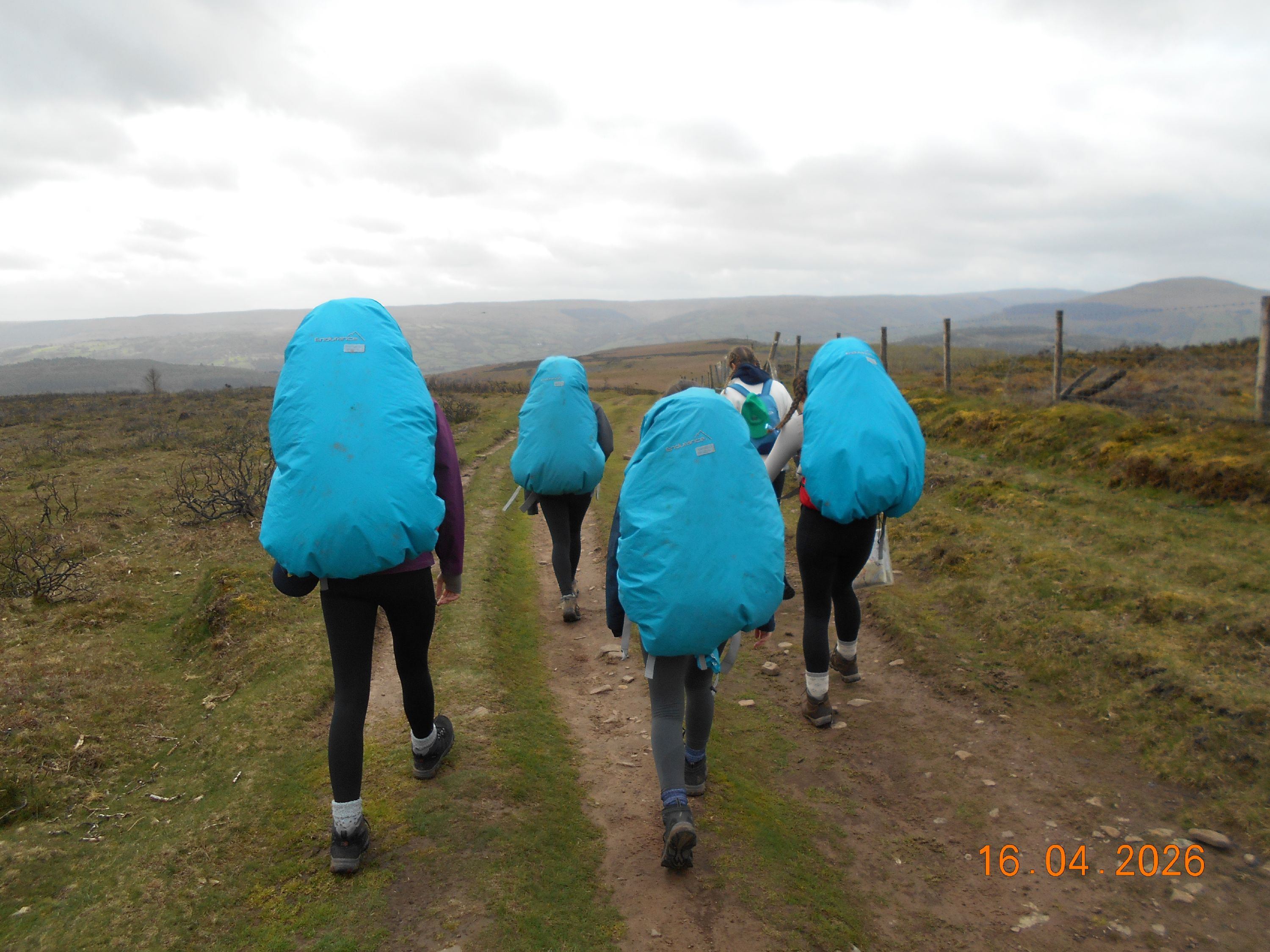 Considering the time of year, we were blessed by clement weather throughout. Some of the groups struggled with the step-up to Gold and the challenging mountainous terrain, but all came through with flying colours by the end of the weekend. . Considering the time of year, we were blessed by clement weather throughout. Some of the groups struggled with the step-up to Gold and the challenging mountainous terrain, but all came through with flying colours by the end of the weekend. .
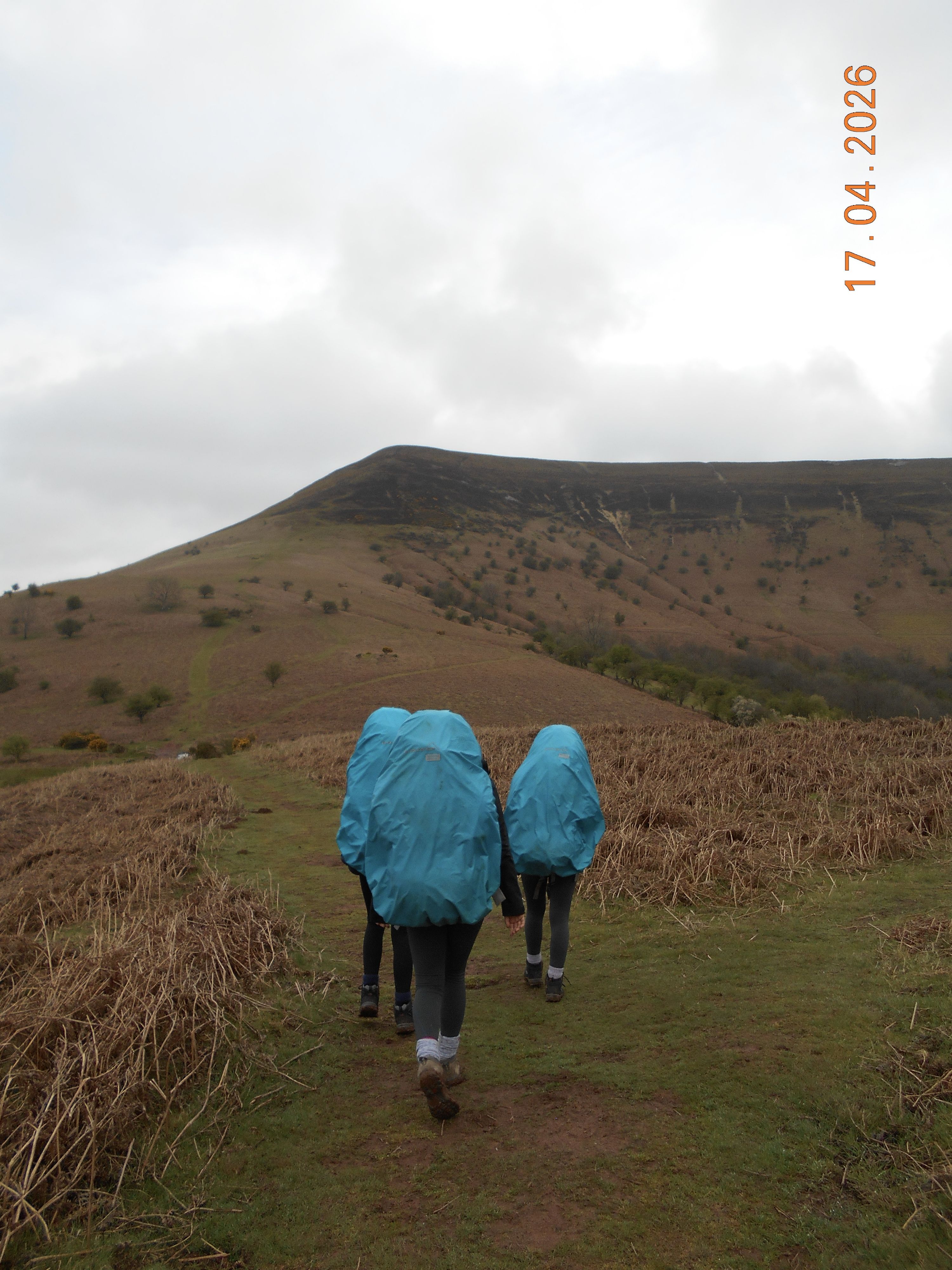 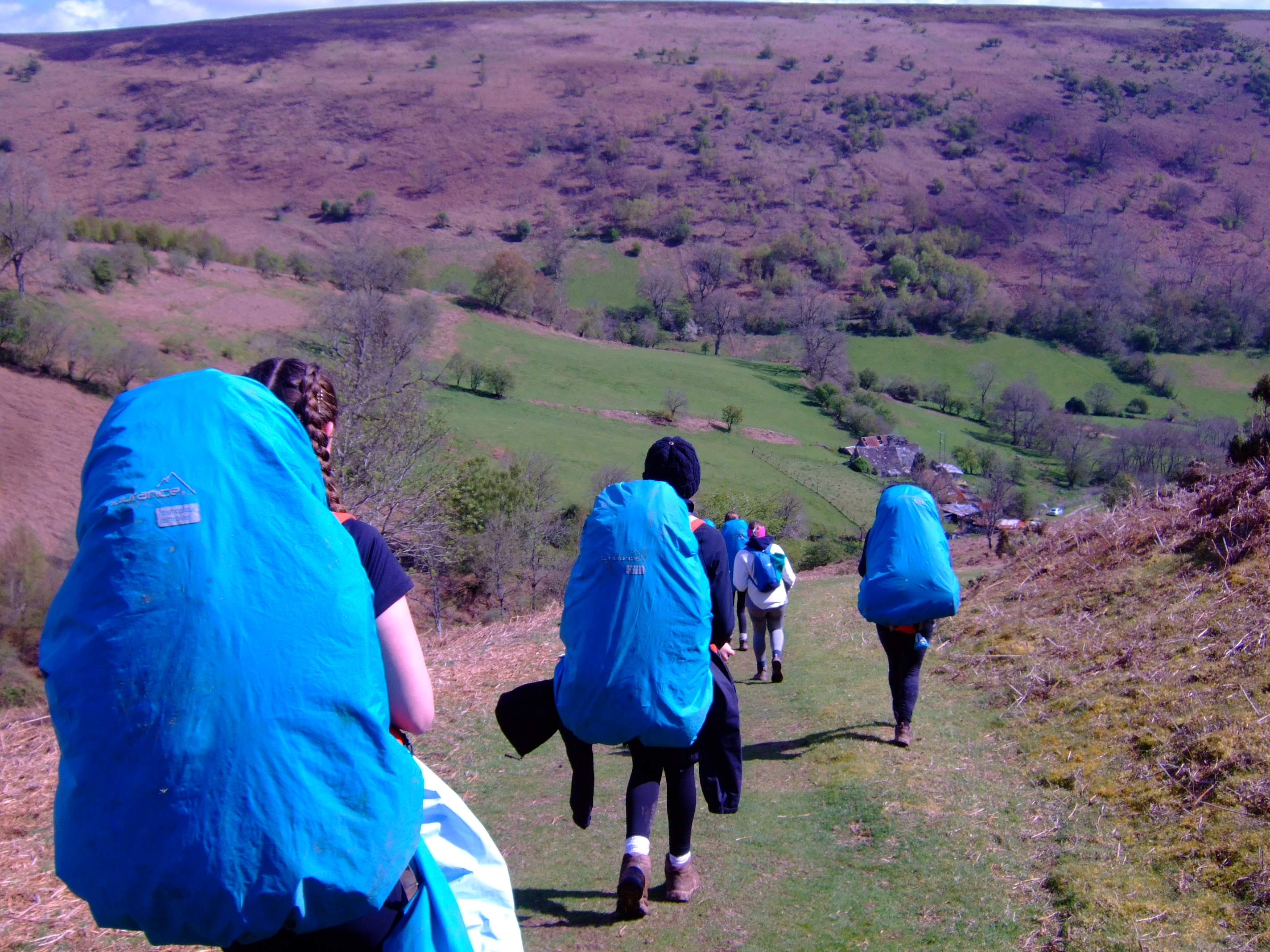
Following this, our students have begun planning their routes for four days of walking in Snowdonia National Park on 17 – 21 June and all are relishing the challenge that this undoubtedly will provide.
 If you wish to have any more information about The Duke of Edinburgh’s Award, please contact jbarrett@northleamignton.co.uk If you wish to have any more information about The Duke of Edinburgh’s Award, please contact jbarrett@northleamignton.co.uk
|
|
|
|
|