|
Head Teacher's Message

As we approach the Easter break, I would like to take a moment to thank you for your continued support throughout what has been another highly successful and purposeful term. The longer days and welcome signs of spring have brought a real sense of energy to the school, and it has been a pleasure to see our students engaging so positively in both their learning and the wider life of the school.
This term has been characterised by a strong sense of momentum across all year groups. Classrooms have remained purposeful and focused, with students continuing to demonstrate resilience, commitment and pride in their work. Beyond the classroom, a wide range of enrichment opportunities, performances and sporting successes have reflected the breadth of experience we are proud to offer.
As always at this time of year, our thoughts turn to our Year 11 and Year 13 students. With the examination period fast approaching, this Easter break provides a vital opportunity for focused revision and consolidation. We have already seen great maturity in how students are approaching their studies, and I am confident they will continue to apply themselves with determination in the weeks ahead.
We have completed our Sixth Form admissions process, and it is always a privilege to spend time with so many thoughtful, ambitious young people as they consider their next steps. Their aspirations and attitudes are a real credit to themselves and to the wider school community. Likewise, Year 9’s, today, completed their Options process for courses to study next year – another really exciting and important milestone as students start to refine their curriculum. All students, regardless of stage and year, continue to work hard – each day building successfully towards key milestones.
As ever, I would encourage you to take some time to read the articles within this term’s bulletin which capture just a snapshot of the many achievements and experiences taking place across the school. The Dance Recital was a great example of both real talent and significant effort that our students put into every day school life. Please also continue to refer to the school website and calendar for the most up-to-date information and key dates.
Thank you once again for your continued partnership and support.
I wish you and your family a restful and enjoyable Easter break.
Mike Lowdell
Head Teacher
|
|
|
|
20 Mar 2026
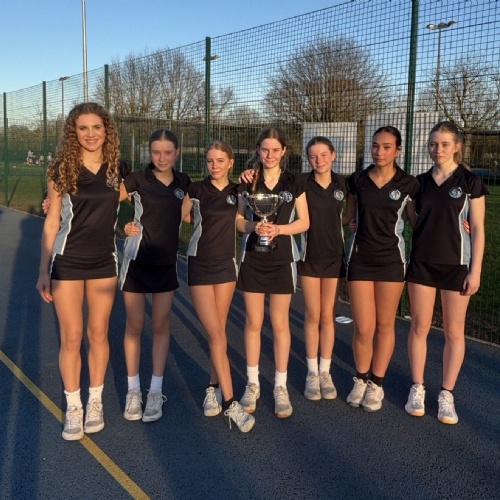
On Wednesday evening (March 18) our Year 7, Year 8 and Year 9 netball teams all competed in their respective League Cup Finals. It was fantastic to have North Leamington School represented in the finals across three year groups.
To reach the final, each team have played a series o...
|
.JPG)
|
20 Mar 2026
On Wednesday 18 March, 80 students showcased their incredible talent and passion for dance at our annual Dance Recital.
An audience of over 300 people enjoyed a diverse and engaging programme, featuring performers from Year 7 to Year 11. The evening celebrated the hard work of Dance Club members...
|
|
20 Mar 2026
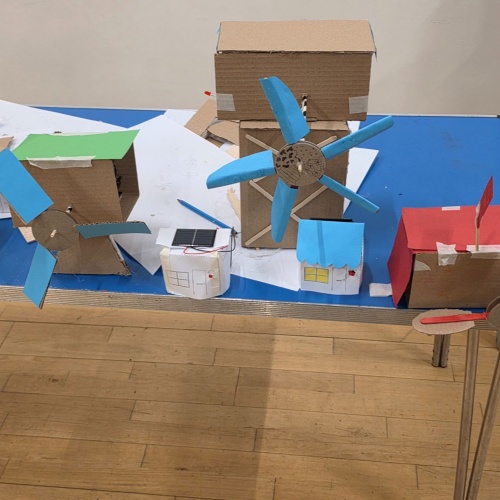
We were delighted to welcome The Smallpeice Trust, working in partnership with National Grid, to deliver an exciting STEM Day at school on Tuesday 10 March to Year 9 students.
During the day, students explored how domestic electrical energy is supplied, from generation through to delivery in the...
|
|
|
|
 |
16 Mar 2026
I continue to be extremely proud of the positive start Year 7 students have made this year and the way they are embracing the many opportunities available to them. Although this has been a relatively short half term, it has certainly been a busy and productive one.
Students would have recentl...
|
|
|
 |
16 Mar 2026
This year has been flying by and all of a sudden Year 8 have finished their fifth full term at North Leamington School. Year 8 should be very proud of all they have achieved, and it has been a pleasure to see them grow through the term, and indeed through the year.
|
|
|
 |
16 Mar 2026
It has been a very busy term for Year 9. Alongside their usual studies, students have been taking part in the options process, and considering the subjects they would like to study at Key Stage 4, as well as beginning their journey of preparation for the upcoming RE mock exam.
We continue to be i...
|
|
|
 |
16 Mar 2026
As we reach the end of the Spring Term, I want to take a moment to express how incredibly proud I am of Year 10. This half term has been eventful, demanding, and filled with successes. From mock exams to our crucial Parents' Evening, our students have continued to demonstrate our school's CO...
|
|
|
 |
16 Mar 2026
As we approach the end of another busy and productive term, it is an ideal time to recognise the hard work and commitment shown by our Year 11 students. They have approached this crucial stage of their education with focus and determination, preparing thoroughly for their final GCSE examinations...
|
|
|
 |
16 Mar 2026
I hope you are well and are looking forward to this Easter break and the promise of some Spring weather! This term was especially short but there has been much to celebrate none-the-less…
Tier 1-3– Year 12 Students
We were really proud of how students in Year 12 responded to the s...
|
|
|
|
Well done to Blackdown for achieving the highest number of Reward Points this half term.
A reminder reward points start afresh again after Easter so we look forward to seeing which College tops the board next half term.
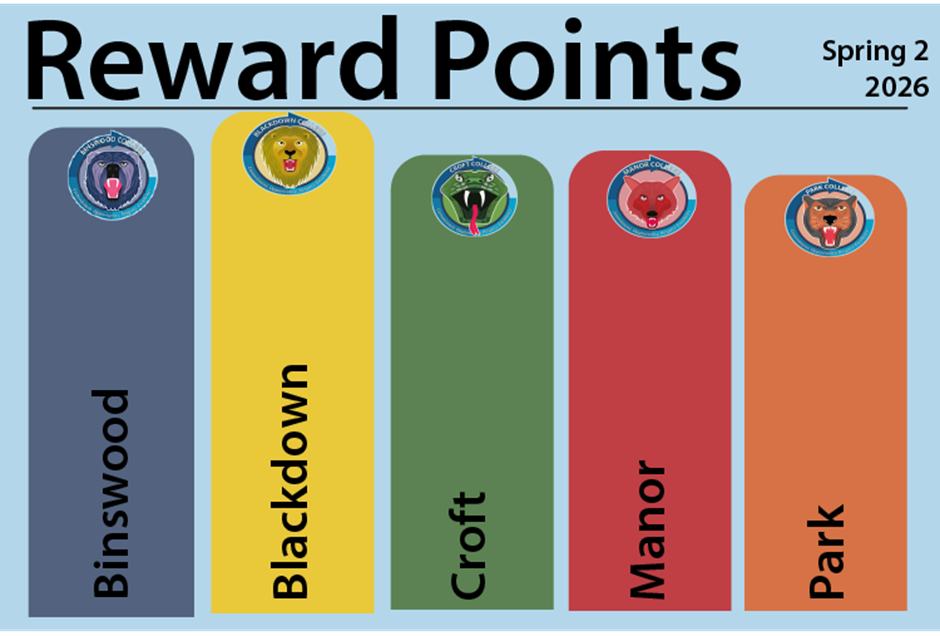
College assemblies took places at the start of term. It's always a lovely opportunity for students to meet in their Colleges across the year groups and we also launched the latest round of our Attendance Challenge.
|
|
|
|
Year 10 have enjoyed learning about Topic 2.2 Making Marketing Decisions on Business. Students have been learning about the importance of the marketing mix and how different businesses will adapt the design mix to suit their business situation. It is imperative that all students complete revision and practice questions from the workbook to check understanding. All students should have a copy of the Business Revision Guide and Workbook. All booklets and resources are on the Digital Learning Hub.
A reminder that Intervention support sessions are also offered to year 10 on a Thursday 3.15pm – 4pm.
Year 11 students have completed their last Topic, 2.4 Making Financial Decisions, this half term. Students have learnt some challenging concepts such as Gross Profit, Net Profit and Average Rate of Return. Interleaving and revision has been taking place to support students for their GCSE Paper 1 Exam. All students have been emailed a copy of a revision timetable, which they can edit to their chosen options. It is imperative that all students complete revision and practice questions from the workbook to check understanding. All students should have a copy of the Business Revision Guide and Workbook. All booklets and resources are on the Digital Learning Hub.
A reminder that Intervention support sessions are offered on Thursdays from 3.15pm – 4pm.
Year 12 have continued to work exceptionally well on Theme 1.4, showing real enthusiasm for exploring the recruitment process and the wider management of Human Resources.
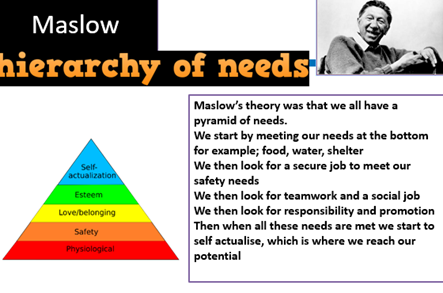 As part of the unit, they have also been studying key motivation theorists: Maslow, Taylor, Herzberg and Mayo and recently presented interactive revision games to their peers. As part of the unit, they have also been studying key motivation theorists: Maslow, Taylor, Herzberg and Mayo and recently presented interactive revision games to their peers.
These activities strengthened their understanding and sparked thoughtful discussions about the role of financial and non‑financial motivators in the modern workplace.
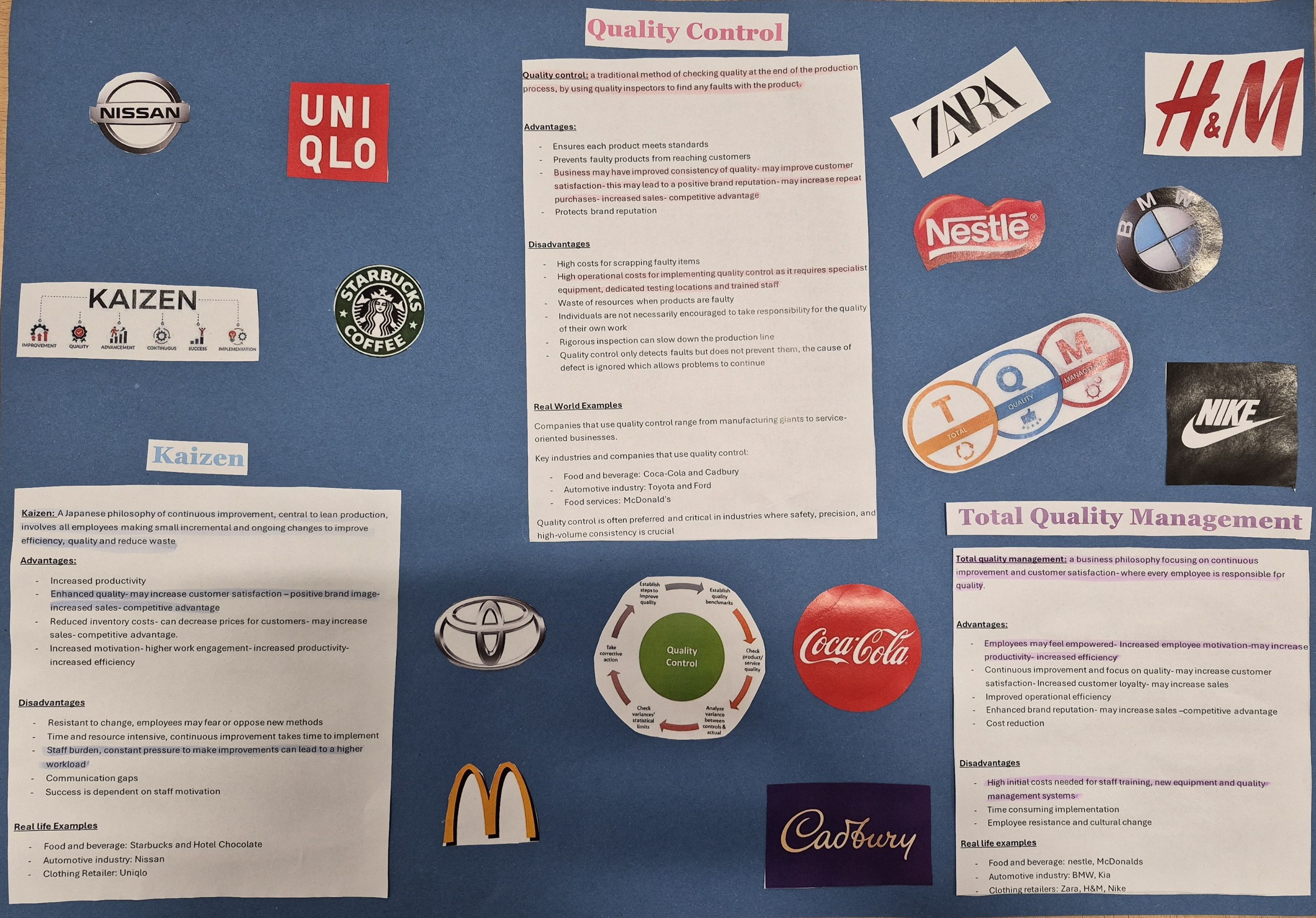
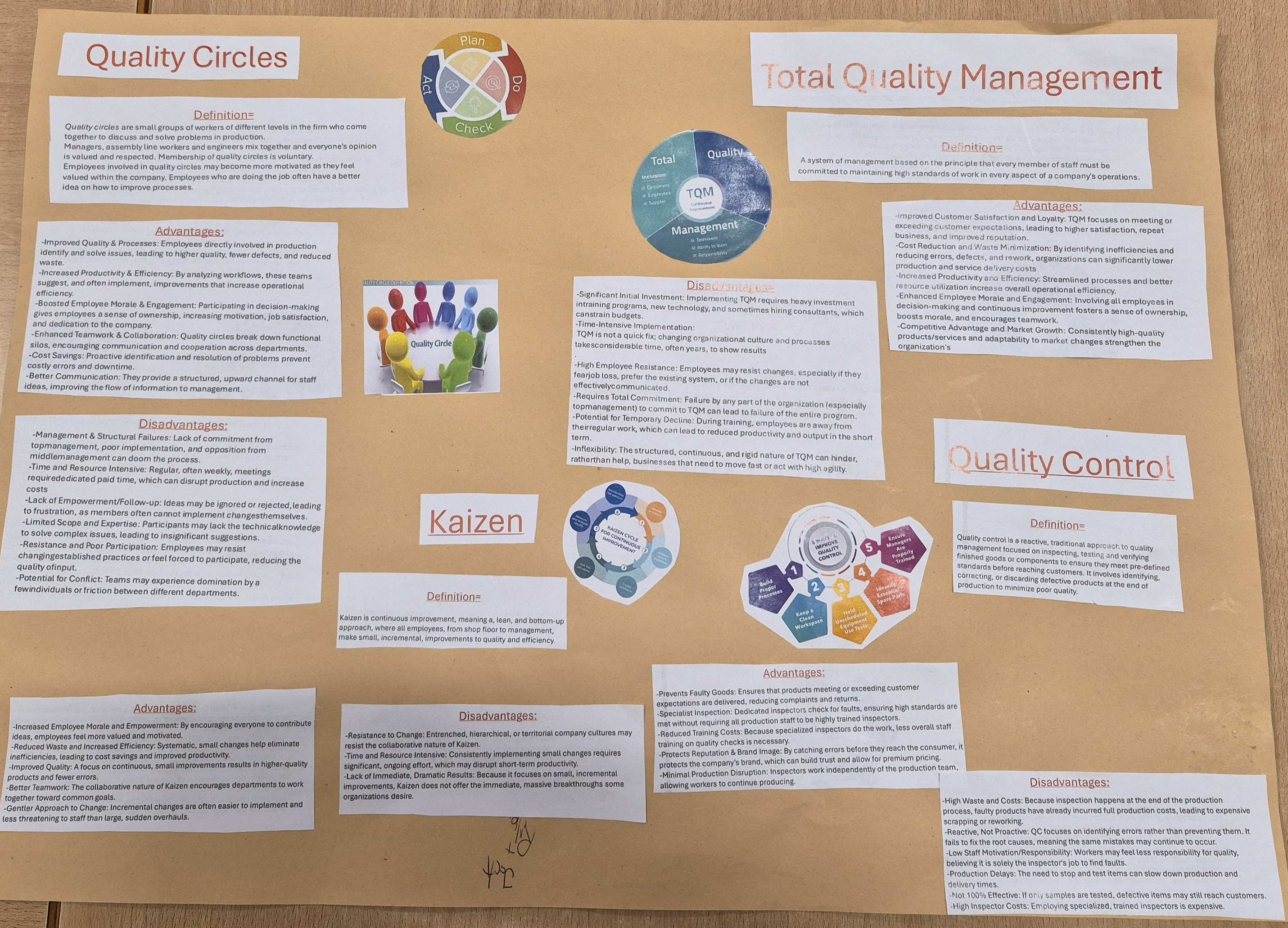
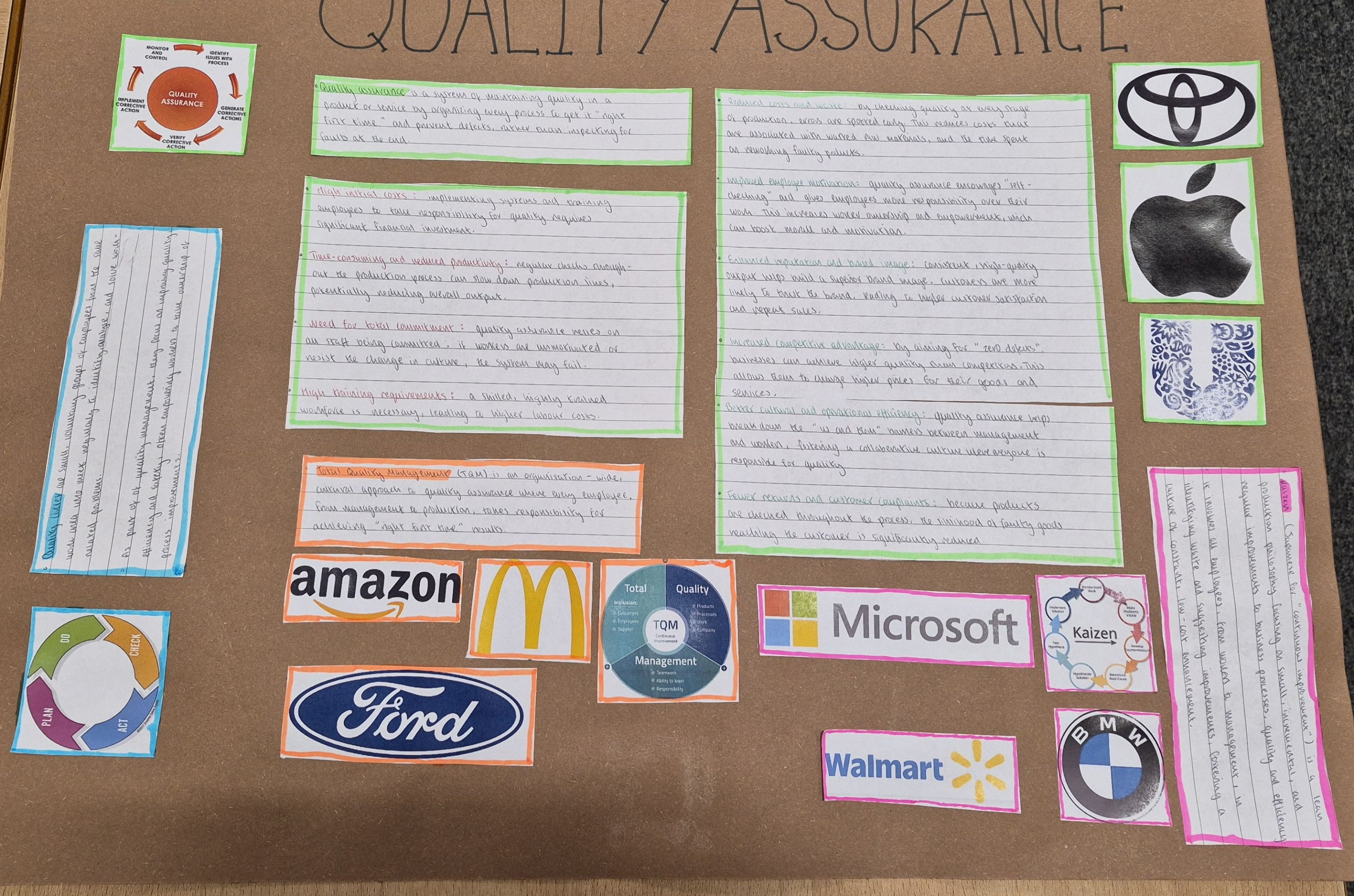
In Theme 2, students have studied Resource Management, where they developed an understanding of how businesses manage production processes, maintain quality, and optimise capacity utilisation. Through this topic, students learnt how firms make operational decisions to improve efficiency and competitiveness. They also built key analytical and evaluative skills, including interpreting operational data, assessing the impact of production methods on costs and quality, analysing capacity constraints, and making justified recommendations about how businesses can improve productivity and resource use. They really enjoyed exploring the different methods of quality management.
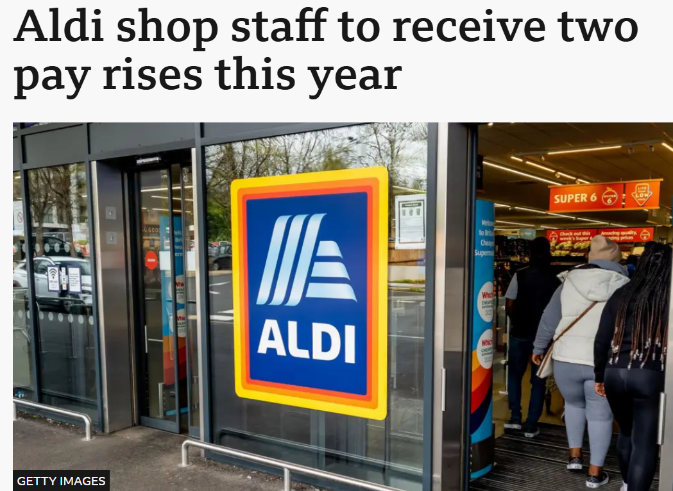
A reminder that all students are encouraged watch and listen to Business News and discuss the impact on Businesses and consumers.
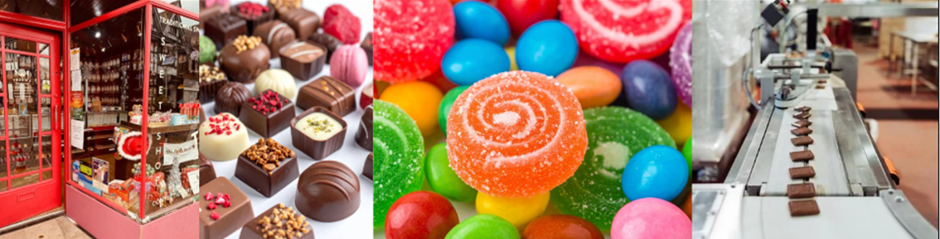
Year 13 students have now completed all content across the four themes and are turning their attention to the Paper 3 pre‑release topic, focusing on the confectionery industry. Their research for Paper 3 involves a detailed exploration of current market trends, resource management, the economic and competitive environment, and the influence of global markets. As part of this work, students have been investigating ethical manufacturers such as Tony’s Chocolonely and evaluating suitable marketing strategies within the sector.
Year 9 Taster Lesson to support Option Choices
We have really enjoyed the eight taster sessions we have run for Year 9 to support them in making their option choices. We have discussed the specification and topics that students will learn over the GCSE course.
Theme 1 concentrates on the key business concepts and skills involved in running a small business e.g. finance, liability, laws, tax, inflation, interest rates, exchange rates and government impact.
Theme 2 examines how a business develops beyond the start-up phase. e.g. Marketing, Procurement/Logistics, Finance for growth and Human resources. It also considers the impact of the wider world e.g. Globalisation, Ethical Issues and Global Economy.
We also looked at future opportunities for students after completing Business GCSE. Wherever possible, we use real-life local, national and global case studies to make it easier for students to relate to and develop their knowledge and application skills throughout the course.
Both exam papers contain case studies that need to be applied to all questions in sections B & C therefore, literacy skills and comprehension are key to enable students to analysis and interpret data given. During the lesson students completed application and financial based tasks to give them a true understanding of a typical Business lesson.
We hope the student found the taster lesson useful and enjoyable.
|
|
|
Key Stage 3 support
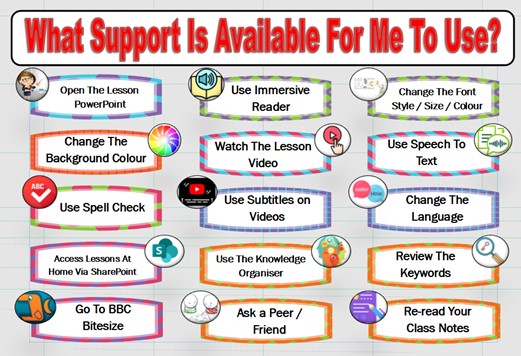
A wide range of support is available to help students with their Computer Science learning, and many of these resources can be accessed from home or on mobile devices. This means students are able to revisit lesson material, practise skills and receive additional support whenever they need it.
We have published a summary of these support options on the Digital Learning Hub, making it easier for students and parents to see what help is available and how to access it.
The support tools include a variety of resources designed to meet different learning needs. For example, students can access short instructional videos that explain key lesson content, allowing them to review topics at their own pace. There are also accessibility tools such as screen readers, which can read on-screen text aloud to support students who may find reading more challenging.
These tools are designed to help students build confidence and independence in their learning. In particular, they can support the development of literacy skills, as students are able to listen to explanations, revisit written material and engage with content in different ways.
By providing a range of flexible support options, we aim to ensure that all students have the opportunity to strengthen their understanding and make steady progress in Computer Science.
Year 7
Year 7 students have been learning about computer networks, focusing on how devices connect and communicate with each other. They have explored what is required to set up a Local Area Network (LAN)—the type of network commonly used within schools, homes and businesses. Students have learned about the key components involved, such as computers, switches, routers and network cables, and how these work together to allow devices to share information and resources.
They have also discussed the benefits of using a LAN, including the ability to share files, printers and internet connections, as well as how networks make communication and collaboration much easier. As part of this topic, students have also developed an understanding of how local networks connect to the wider internet, helping them see how the systems they use every day fit into the global network infrastructure.
Students have also been introduced to the iDEA Award programme. This is an online learning initiative designed to encourage self-guided learning and help students develop both computing knowledge and important workplace skills. Through a series of short interactive challenges, students can build skills in areas such as digital literacy, problem solving and online safety while earning digital badges and certificates.
Students can access the platform at iDEA.org.uk using their normal email address and password if they wish to continue developing their skills outside of lessons. This provides an opportunity for motivated learners to explore additional topics and gain recognition for their achievements.
Next half term, students will begin learning about the binary number system, which is fundamental to how computers work. They will explore how computers represent numbers, text and images using only the digits 0 and 1, and why this system is essential for digital technology.
Year 8
Year 8 students have been learning about cyber security, an increasingly important area in our modern digital world. As more aspects of daily life move online—from communication and banking to entertainment and education—the need to protect information and digital systems has never been greater. The UK faces a growing demand for skilled cyber security professionals who can help defend organisations, businesses and individuals from cyber threats.
As part of this topic, students have been using Cyber Explorers, a national initiative supported by the UK Government. This programme places learners in an engaging virtual world where they explore how digital, computing and cyber security skills are used to solve real-world problems. Through interactive challenges and missions, students begin to understand how cyber attacks can occur and how systems can be protected.
The programme is formally credit-rated by the Scottish Qualifications Authority, recognising the quality and educational value of the learning experience. Students who complete the programme have the opportunity to gain a formal qualification, providing an early introduction to a field that offers many exciting future career opportunities.
Beyond the qualification itself, the programme helps students build important digital skills such as logical thinking, problem-solving, and understanding how to stay safe online. It also provides a strong foundation for the topics students will explore in Year 9, where they will continue to develop their computing knowledge and skills.
For some students, this experience may spark a deeper interest in computing and cyber security, potentially leading them to choose GCSE Computer Science in Year 10, where they can explore these topics in much greater depth.

Year 9
Year 9 students have been studying algorithms, which are the step-by-step instructions used to solve a problem or complete a task. In computing, algorithms form the foundation of how software works, but the underlying thinking skills are valuable far beyond programming.
In recent lessons, students have explored algorithms for searching and sorting data. Searching algorithms allow computers to efficiently find specific information within large collections of data, while sorting algorithms organise data into a particular order (for example, alphabetical or numerical). Understanding how these algorithms work helps students appreciate how computers process information quickly and reliably.
This topic links closely with the Python programming students have been learning. By implementing and experimenting with algorithms in Python, students can see how abstract ideas are translated into working programs. This helps them develop both their programming skills and their understanding of how computers solve complex problems.
These algorithmic thinking skills are not only important in computing, but are also useful in subjects such as mathematics, science, and engineering, as well as in everyday decision-making and problem-solving. By practising this structured way of thinking, students build strong analytical and reasoning skills that will support them throughout their education and beyond.
Key Stage 4
All of our GCSE students have continued to develop their computational thinking, algorithms and programming skills.
Computer Science ‘Stars’
We have introduced a focus on students completing their ‘weekly goals’ in SmartRevise. Alongside this, we have introduced a weekly ‘Computer Science Star of the week’, whereby the student in the class who is top of the SmartRevise ‘mastery’ leaderboard and answered the most questions in SmartRevise is awarded Star of the Week.
Now that we have been completing weekly goals for number of weeks, we are able to introduce the ‘Computer Science Star of the Half Term’ award – this is awarded to students who have consistently achieve 100% completion in the weekly goals, for four or more weeks. Congratulations to this half terms winners:
- Y13 Dhruv M
- Y12 Khushpreet K and Chukwuemego N
- Y11 Sebastia P, Isabel H and Arun J
- Y10 Wilbur P
Please continue to encourage your child to complete their ‘weekly goals’ in the SmartRevise platform. This aids recall, develops their literacy of key terminology and builds confidence in exam question technique.
KS4 Additional Support
A reminder of the KS4 revision opportunities document, which can be found in the Digital Learning Hub. This gives an overview of all the opportunities available to support students with their revision, and it can be used to guide your child to so they can work more independently at home. I would highly recommend the Oak National Academy links which are created by teachers and are pretty much online tutors, there are lessons, videos and worksheets/activities to get engaged with plus website links for NGfL and Python Principles which are specifically designed to help with programming techniques and develop skills in an interactive way.
Year 10 – GCSE Computer Science
Alongside developing their programming skills, students have also been exploring Networks and Protocols. This has included topics such as LANs and WANs, client–server and peer-to-peer models, network hardware, network topologies, encryption, IP addressing, and MAC addressing, among others. Students will next move on to studying common network threats and the strategies used to mitigate them.
Year 11 – GCSE Computer Science
Students have now covered all the content required for terminal exams and are continuing to review and recap on all topics.
Year 11: Additional Support
The department is running an after-school revision session on Tuesdays where students can work on weaker areas and get additional support, we will provide resources for students to access to help close gaps in learning. This started in January following their mock exam and will continue until students finish for study leave. If a student hasn’t been specifically invited, they are welcome to ‘drop in’ to any support session.
Key Stage 5
Year 12 – A Level Computer Science
Students have been studying topics such as binary and hexadecimal number systems, ASCII and Unicode character encoding, floating-point arithmetic, and bitwise manipulation. Alongside this, they have been developing a programming solutions to problems using Object Oriented Programming, HTML and CSS. Students will next move on to Boolean algebra and data structures, where they will learn about logic gates, Karnaugh maps, simplifying Boolean expressions, stacks, queues, lists, trees, and hash tables and more.
Year 13 – A Level Computer Science
Students have finalised their programming projects and have received their marks for them. These marks contribute up to a maximum of 20% towards their overall grade. Alongside this, students have been developing their understanding of weaker areas of theory and getting ready for their mocks and final examinations.
iDEA Award
 We encourage all students to at least complete the Bronze award for iDEA. This is something students can access at home as well as in class. Students have their own individual logins for these. We encourage all students to at least complete the Bronze award for iDEA. This is something students can access at home as well as in class. Students have their own individual logins for these.
This half term we have seen Lola G, James T, Libby W, Billy G, Eva H, Alice KW, Marcus L, Samarth M, Molly P and Alexia R achieve their Bronze certificate … well done!
These certificates are an invaluable addition to CV’s, references, College, University applications plus apprenticeships and are nationally recognised as evidence of IT literacy competency in the workplace.
Supporting Students At All Levels
We continue to promote independence in computer science and have a variety of support mechanisms students can access during their lesson or at home through the Digital Learning Hub. Some of these strategies are outlined in the image below:
Computing Literacy
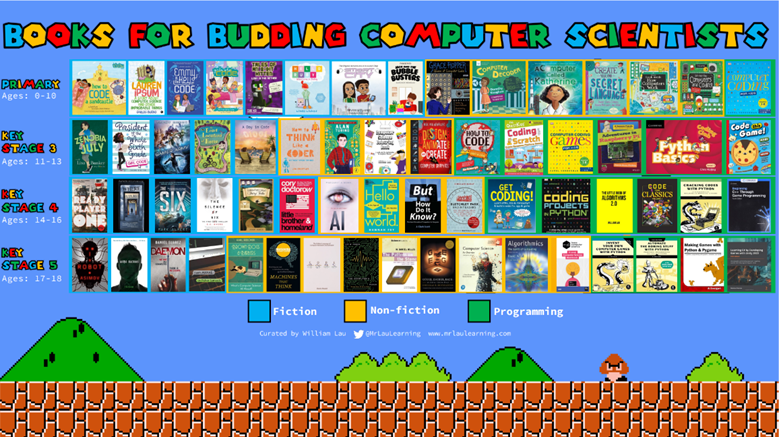
The computer science department has a selection of fiction, non-fiction and coding books plus a range of revision guides available to loan from the department. The school library has updated its collection of books and students can use these to supplement homework and NLS literacy focus as a whole.
|
|
|
Year 7
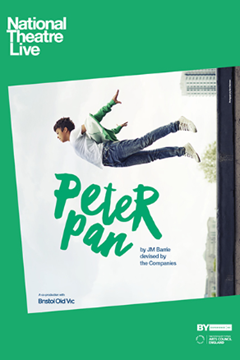 Year 7 students enjoyed the exciting opportunity to watch a live digital performance of Peter Pan by the National Theatre. Year 7 students enjoyed the exciting opportunity to watch a live digital performance of Peter Pan by the National Theatre.
This experience allowed them to engage with professional theatre and deepen their understanding of how productions are brought to life.
Students explored key production elements including costume, set, lighting, and sound design, developing their ability to analyse and discuss live theatre confidently.
Year 8
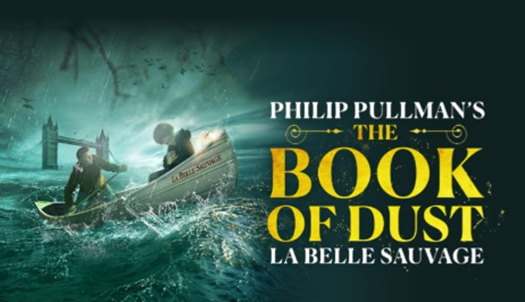 As part of their Live Theatre unit, Year 8 students watched a live performance of The Book of Dust. As part of their Live Theatre unit, Year 8 students watched a live performance of The Book of Dust.
They explored the story and its themes in depth and examined how production elements such as costume, set, lighting, and sound enhanced the performance.
Students demonstrated thoughtful responses and growing confidence in analysing theatre from a critical perspective.
Year 9
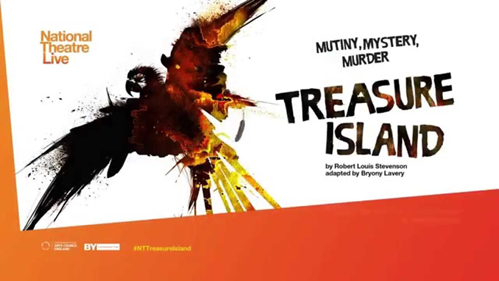 Year 9 students also focused on Live Theatre this half term and watched a performance of Treasure Island. They explored the narrative, characters, and themes before analysing how design and technical elements supported the storytelling. Year 9 students also focused on Live Theatre this half term and watched a performance of Treasure Island. They explored the narrative, characters, and themes before analysing how design and technical elements supported the storytelling.
Students showed increasing maturity in their written and practical responses to live performance.
Year 10 (GCSE Drama)
Component 3: Theatre Makers – Section B (Live Theatre Evaluation)
This half term, Year 10 students focused on developing their written exam skills in preparation for their Progress Exam.
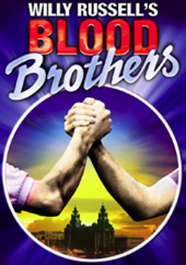 They created detailed live theatre notes based on Blood Brothers, strengthening their analytical skills and understanding of performance and design choices. They created detailed live theatre notes based on Blood Brothers, strengthening their analytical skills and understanding of performance and design choices.
Students also practised a range of exam-style questions, building confidence in structuring high-quality written responses. In addition, they began exploring An Inspector Calls by J.B. Priestley from both a performer’s and director’s perspective, developing thoughtful interpretations and creative ideas for staging.
Year 11 (GCSE Drama)
Year 11 students have worked extremely hard in preparation for their practical Component 2 Practical Exam which took place on Friday 6 March. They are now revising for their written examination on Friday 8 May.
Component 3: Theatre Makers
Section A: An Inspector Calls by J.B. Priestley
Students continued to strengthen their understanding of the play, revising plot, characters, themes, and historical context (1912 setting and 1945 first performance). They refined their knowledge of drama terminology and applied this confidently in exam-style questions from the perspective of performer, director, and designer.
Students made excellent use of structured revision checklists to identify areas for improvement and demonstrated resilience and maturity in their preparation.
Section B: Live Theatre Evaluation
Students created comprehensive live theatre notes on Romeo & Juliet and practised applying their observations to extended written responses. Their focus and determination in the lead-up to the exam were commendable.
Revision resources remained available on the Digital Learning Hub to further support independent study.
Enrichment in Drama
RSC Ambassadors Playmakers Festival – King Lear by William Shakespeare

Students involved in the RSC Ambassadors Playmakers Festival made fantastic progress in rehearsals for King Lear. They explored character relationships, key themes, and the world of the play through energetic and collaborative rehearsal sessions.
The group experimented with physical theatre, vocal expression, and creative staging techniques, showing impressive commitment and creativity. Excitement continued to build as they work towards performing at the Warwickshire Playmakers Festival in July 2026.
VIBE Drama Summer Production
VIBE Drama Club are excited to announce that our Summer Production will be an original play called The Girl Who Loved Books, inspired by the famous story Matilda by Roald Dahl.
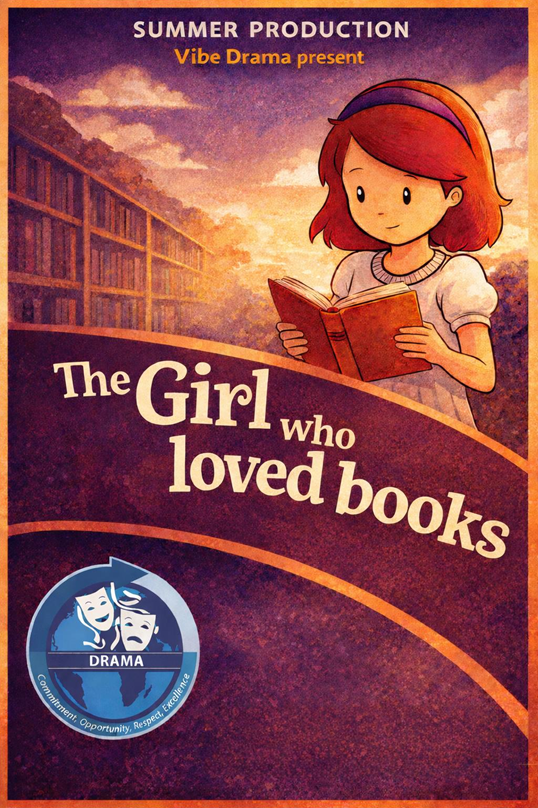
In a quiet town where grown-ups make the rules, one extraordinary girl discovers that stories can change everything. The Girl Who Loved Books follows a brilliant young reader who finds courage, friendship, and a touch of magic between the pages of her favourite novels.
As cruel adults try to keep her small, she learns that imagination is the greatest power of all. Heart-warming, mischievous, and full of wonder, this enchanting stage adventure proves that sometimes the smallest voice can tell the biggest story.
All Year 7–10 students are welcome to participate. Rehearsals will take place in C030 on Wednesdays, starting on Wednesday 15 April, from 3:15–4:15pm.
Students should see Mrs Clarke if they have any questions. The performance will take place on Wednesday 1 July, with more information to follow closer to the time.
|
|
|
Year 7:
Building on their imaginative and analytical work this term, Year 7 have been exploring A Monster Calls through a range of creative responses inspired by the novel’s most dramatic moments.
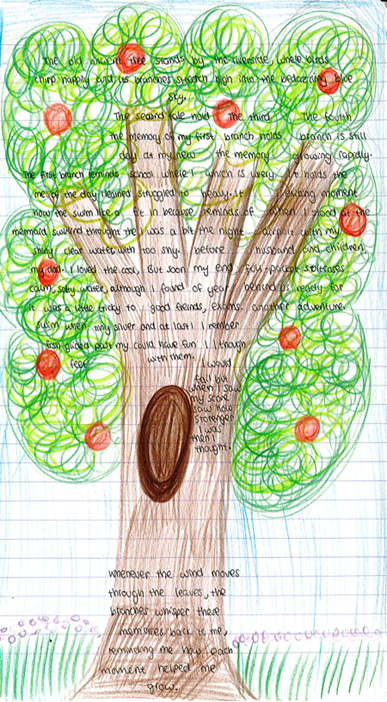
One particular focus has been writing in role as Grandma witnessing the destruction, which allowed students to step into her perspective and consider the event from a different emotional angle. This work has encouraged them not only to engage closely with character and viewpoint, but also to shape their ideas with increasing control and originality.
Alongside this, students have been developing their descriptive writing by experimenting with similes, metaphors, personification and onomatopoeia, using these techniques to bring scenes vividly to life. They have also practised “zooming in” on tiny details to reveal something much bigger beneath the surface, showing an increasing understanding of how careful language choices can create mood, tension and meaning.
As part of this unit, Year 7 attended a theatre screening of A Monster Calls. Seeing the emotional ending performed on screen helped to deepen their response to the story and brought its themes to life in a memorable way.
Next half term, Year 7 will move on to culture and identity poetry, where they will continue to strengthen their analytical skills by studying poems from writers such as John Agard and Sujata Bhatt. Through this, they will explore how poets express personal experience and reflect different lives, voices and perspectives from around the world.
Year 8:
Year 8 have been exploring dystopian writing, developing their understanding of the genre and the key conventions that make it so compelling. Through reading, discussion and their own writing, students have considered how dystopian fiction reflects fears about society, control and the future, while also experimenting with the kinds of ideas, settings and characters that define the genre. This has helped them move beyond straightforward description and towards more deliberate, crafted writing that mirrors the expectations of the AQA GCSE assessment objectives.
Building on the descriptive foundations laid in Year 7, students have been extending their writing repertoire through more sophisticated language and structural choices. They have experimented with techniques such as extended metaphors, varied sentence structures and cyclical structure, learning how these methods can shape meaning, create atmosphere and leave a lasting impression on the reader. It has been exciting to see students taking creative risks and beginning to write with greater control, ambition and awareness of effect.
Here is a lovely example of a dystopian description from Elspeth showcasing some of the skills we have worked on recently:
“Like a tsunami wanting to destroy anything and everything in its path, the intoxicated grey clouds polluted the bleak, oppressive factory. The little emerald grass bravely fought an impossible battle to overcome the all-consuming fumes created by the power-hungry monsters; mother nature had once been welcomed with open arms, but not now. “
Next half term, Year 8 will move on to an analytical study of Long Way Down by Jason Reynolds. Using the what/how/why approach they have already developed, students will explore a text rich in themes such as grief, violence, justice, family, revenge and peer pressure. This unit will give them the opportunity to apply their growing analytical confidence to a powerful and thought-provoking modern text.
Year 9:
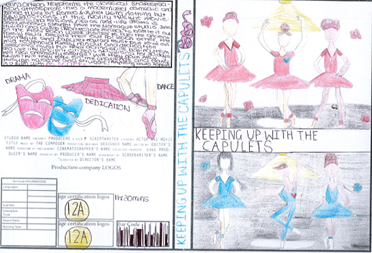
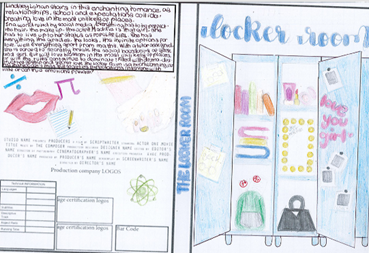
Students started the term with an introduction to media unit, where they explored media conventions, genre and the ways products are shaped to appeal to particular audiences. As part of this, they analysed DVD covers and applied their understanding in a creative mock-up of a GCSE-style coursework task, producing their own designs alongside a blurb, statement of aims and explanation of their creative choices. This gave students the opportunity to think both analytically and creatively, while developing their awareness of how meaning is constructed across different forms of text.
Year 9 have also been busy developing their narrative writing skills, building on the descriptive techniques they already know and combining them with the key conventions of effective storytelling. Students have explored how to craft engaging openings, shape tension and interest, and structure a piece with greater control through devices such as cliff-hangers and flashbacks. This has given them valuable practice in the style of writing required for the AQA GCSE English Language paper, while also helping them to think more deliberately about how stories are constructed for impact.
Alongside their narrative work, students have also focused closely on AO6, considering how ambitious punctuation, carefully selected vocabulary, and varied sentence and paragraph lengths can be used to create specific effects on the reader. They have been encouraged to move beyond simply telling a story and instead make thoughtful stylistic choices that add pace, atmosphere and sophistication to their writing. It has been excellent to see students drawing together their existing descriptive strengths with these more advanced narrative techniques, producing work that is increasingly crafted, purposeful and GCSE-focused.
Next half term, Year 9 will begin their first GCSE literature text, An Inspector Calls. Using the analytical skills they have developed so far, they will start to explore the play’s key characters and themes, laying strong foundations for the demands of the GCSE course ahead.
Year 10:
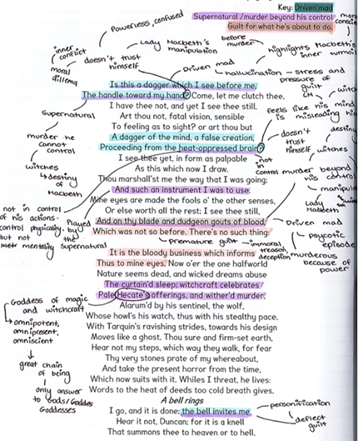 This half term, Year 10 have been exploring aspects of tragedy through Shakespeare’s Macbeth and Romeo and Juliet. Across both texts, students have been developing their understanding of the key characters, themes and contextual ideas that shape each play, using this knowledge to build stronger, more conceptual analytical essays. Lessons have focused on how Shakespeare presents tragic conflict, ambition, fate, violence and responsibility, helping students to strengthen their ability to track ideas across a text and respond in a more thoughtful, developed way. This half term, Year 10 have been exploring aspects of tragedy through Shakespeare’s Macbeth and Romeo and Juliet. Across both texts, students have been developing their understanding of the key characters, themes and contextual ideas that shape each play, using this knowledge to build stronger, more conceptual analytical essays. Lessons have focused on how Shakespeare presents tragic conflict, ambition, fate, violence and responsibility, helping students to strengthen their ability to track ideas across a text and respond in a more thoughtful, developed way.
Alongside deepening their knowledge of the plays, students have been practising the core skills needed for success in GCSE Literature: selecting apt quotations, analysing Shakespeare’s methods, and linking ideas to the wider concerns of tragedy as a genre. As they have moved through these units, students have been encouraged to write with increasing precision and confidence, shaping arguments that are clearly structured and rooted in the demands of the exam. It has been excellent to see them drawing on prior learning from Key Stage 3 while also rising to the greater challenge and sophistication of GCSE-level study.
Next half term, students will return to these texts to complete their study of Macbeth and Romeo and Juliet, while also beginning preparation and revision for GCSE Language Paper 1. This will include both the reading and writing elements of the paper, allowing students to revisit and strengthen the skills they developed earlier this academic year as they continue to build confidence across both English Language and Literature.
Year 11:
Year 11 teachers have been creating bespoke revision plans for their classes, carefully targeting the final areas of knowledge and skill development across both English Language and English Literature. Lessons have been shaped by the needs of each class, allowing students to revisit key texts, refine exam technique and focus on the specific areas that will have the greatest impact as they approach their final examinations. This tailored approach has helped students make the most of their remaining preparation time, while continuing to build confidence across both components of the course.
Mock examinations have been used as an important final opportunity for reflection, giving students the chance to identify strengths, address any remaining gaps and sharpen their responses ahead of the summer exam series. Alongside revisiting content, there has been a continued emphasis on the practical demands of the exams themselves: planning effectively, selecting precise evidence, structuring arguments clearly and writing with accuracy and control under timed conditions. It has been encouraging to see students engaging seriously with this process and responding maturely to feedback as they prepare for the next stage.
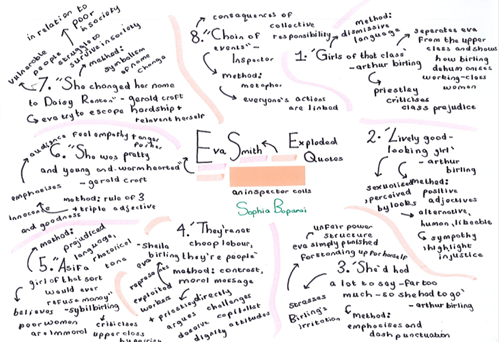 Revision sessions on Thursdays after school and remain a valuable source of extra support and focused exam practice. Please do continue to encourage students to attend these sessions, as they provide an excellent opportunity to consolidate learning and build confidence in the final run-up to exams. Revision sessions on Thursdays after school and remain a valuable source of extra support and focused exam practice. Please do continue to encourage students to attend these sessions, as they provide an excellent opportunity to consolidate learning and build confidence in the final run-up to exams.
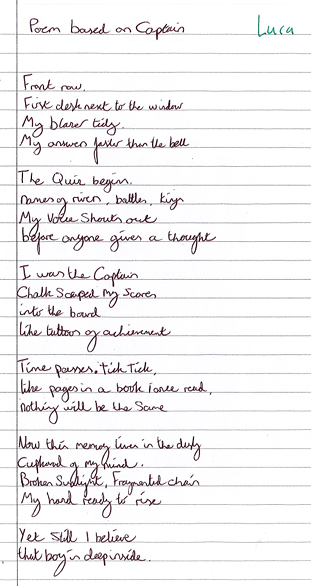 Year 12 Language/Literature: Year 12 Language/Literature:
Students have been producing personalised creative responses to poems by Carol Ann Duffy, experimenting with their own language and style before returning to analyse the techniques and choices within the original poems. This combination of creative practice and analytical reflection has helped students deepen their understanding of Duffy’s themes, language, and poetic craft.
Students are also continuing to broaden their study of Duffy’s poetry, exploring a wider range of her work to develop familiarity with recurring motifs, stylistic devices, and contextual influences. In parallel, they have begun studying The Handmaid’s Tale, examining key themes, characters, and societal commentary, while building the analytical skills necessary to engage critically with complex prose texts. This work is helping Year 12 consolidate their literary knowledge while continuing to develop the independent thinking and analytical precision that will support them throughout the course.
Year 12 English Literature:
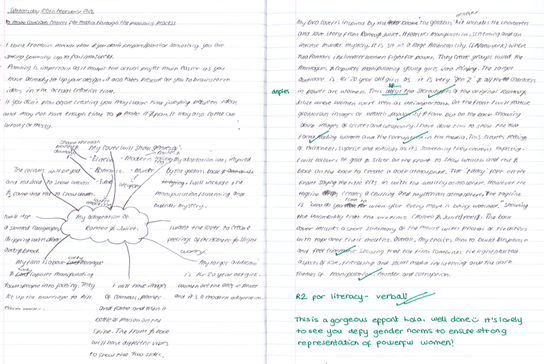
Year 12 English Literature students have continued their study of Skirrid Hill by Owen Sheers for their Modern Times paper, exploring how gender is presented across this 21st-century poetry collection. They have also progressed with The Great Gatsby by F. Scott Fitzgerald for the Love Through the Ages paper, analysing power dynamics within the relationships and debating whether the novel can truly be considered a love story. After completing their first mock examination before half term, students are now using this feedback and their developing knowledge to refine and strengthen their English Literature essay writing.
Year 13 English Language/Literature:
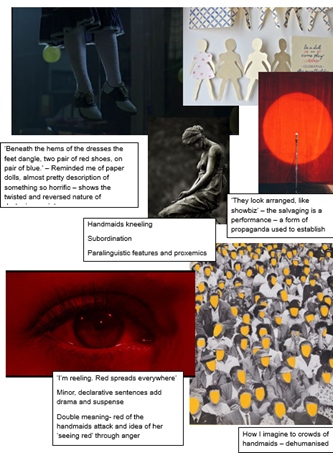 This half term, Year 13 have continued preparing for their upcoming examinations through a variety of engaging and creative revision activities. This half term, Year 13 have continued preparing for their upcoming examinations through a variety of engaging and creative revision activities.
Students have been exploring their set texts in imaginative ways—using images, music, and creative writing to deepen their understanding of key themes, characters, and historical or cultural contexts.
These approaches have encouraged them to think critically while making meaningful connections across texts.
In addition, students have been developing and delivering presentations, giving them the opportunity to practise articulating their interpretations and analyses with clarity and confidence. This work is helping to strengthen both their critical thinking and communication skills, while also supporting their readiness for the exam. It has been excellent to see Year 13 approach revision with such creativity and focus, combining innovative methods with rigorous analytical thinking to consolidate their learning.
Year 13 Literature:
Year 13 have been revising Paper 1: Love Through the Ages, with a particular focus on Othello. Lessons have encouraged students to make connections across key scenes, annotating extracts with detailed analysis and preparing structured arguments in response to exam-style questions. This work has helped them develop a more sophisticated understanding of character, theme and Shakespeare’s use of language, while practising the analytical skills required for the exam.
Students have also been exploring unseen poetry, learning how to use contextual knowledge to support more insightful comments on how love is presented in different periods and cultural settings. This has strengthened their ability to compare and contrast texts, and to apply critical perspectives with confidence.
Alongside this revision, students have been completing the final touches to their Non-Examined Assessment (NEA), ensuring that their submissions are polished and ready for the exam board. It has been encouraging to see Year 13 balance close textual analysis with exam preparation and independent project work, demonstrating focus and maturity as they approach the final stages of the course.
|
|
|
Year 10 Media:
Students have recently started their final NEAs, producing a DVD cover and poster for their own spy or romance film. This task has required them to consider how to design and create a visually engaging product and produce a Statement of Application (SOA) that explains the reasoning behind their creative choices and how these link to key media theorists. Through this process, students have been demonstrating their understanding of genre conventions, audience expectations, and the ways in which media language can be used to convey meaning and attract viewers.
Alongside their NEA work, students have completed detailed studies of music videos, including The Man by Taylor Swift, Intentions by Justin Bieber and Waterfalls by TLC. Within these case studies, they have applied media theory to explore issues of gender and racial representation, examined how media language is used to communicate with audiences, and considered the governance and regulation of relevant media industries. These tasks have allowed students to develop both their analytical and evaluative skills, linking theory to real-world media texts and strengthening their ability to respond to exam-style questions with insight and precision. Moving forward, students will study another music video, alongside the global gaming franchise, Fortnite.
Year 11 Media:
Year 11 have continued to use their December mock examinations as a valuable opportunity for reflection, carefully reviewing their performance and applying strategies to strengthen and develop their original responses. This process has encouraged students to think closely about how to improve the precision of their analysis, the structure of their answers and the overall effectiveness of their exam technique as they move towards the summer examinations.
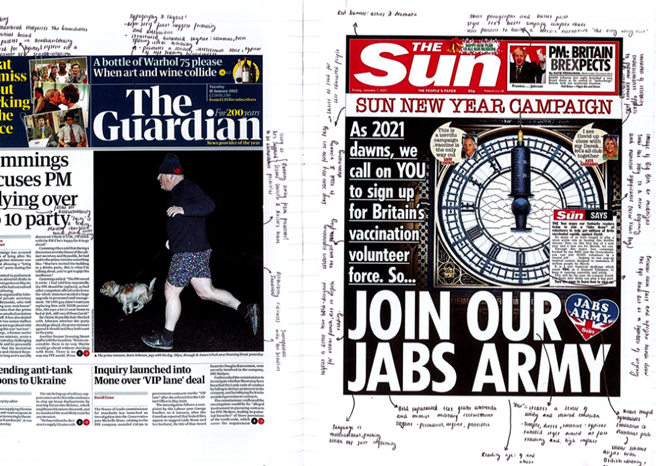
Alongside this reflective work, students have also been developing their media knowledge through case studies of the popular free-to-play game Fortnite, considering how media products are designed to engage audiences and achieve commercial success. They have also been applying semiotic analysis to newspaper front pages, exploring how images, layout, headlines and other visual choices create meaning and shape audience response. This has allowed students to strengthen both their analytical vocabulary and their understanding of how media texts communicate ideas in deliberate and often subtle ways.
After-school revision sessions are providing students with further support as they prepare for their summer examinations. These sessions offer a valuable opportunity to revisit key content, practise exam skills and build confidence, and we encourage students to make the most of the support available in the weeks ahead.
Year 13 Media:
Year 13 have been exploring the Newspaper industry in more depth with specific case studies (The Daily Mirror and The Times) with students producing insightful essays that demonstrate a growing confidence in applying media theory and engaging critically with concepts such as audience, representation and industry practices. This work has allowed students to consolidate their understanding of key theorists while developing the analytical skills needed for high-level media study.
Year 13 have been working on exam-based skills as we head closer to the final exams. Coursework has also entered its finishing stages with a range of exceptional, industry-standard pieces produced.
After-school revision sessions provide students with additional support and focused practice in the lead-up to the summer exams. These sessions help students refine their exam technique, revisit key concepts and build confidence in applying their knowledge under timed conditions, ensuring they are well-prepared for the summer examinations.
|
|
|
Year 7s have had a fantastic half term exploring coral reefs of the world and exploring polar environments and learning all about Captain Scott's adventures and how to survive in the Arctic.
Year 8s have developed their geographical thinking making links across topics exploring plate tectonics and tourism.
Year 9s have moved onto the final topic of the year exploring different urban environments of the world, with a big focus on the cities of Mumbai and, more locally, Birmingham.
At Key Stage 4, Year 10 are on their third topic of the year and have been exploring the beautiful coastal areas of the UK.
Year 11 have been looking at changing economies of the world and their last topic investigating urban areas of the world.
In Key Stage 5, Year 12 recently visited the city of Sheffield and carried out fieldwork in an area called Park Hill. This is a listed housing estate that has been regenerated by Urban Splash and our students had a guided tour around the site as well as going into one of the flats. It was great to see first hand the places learnt about in lessons.
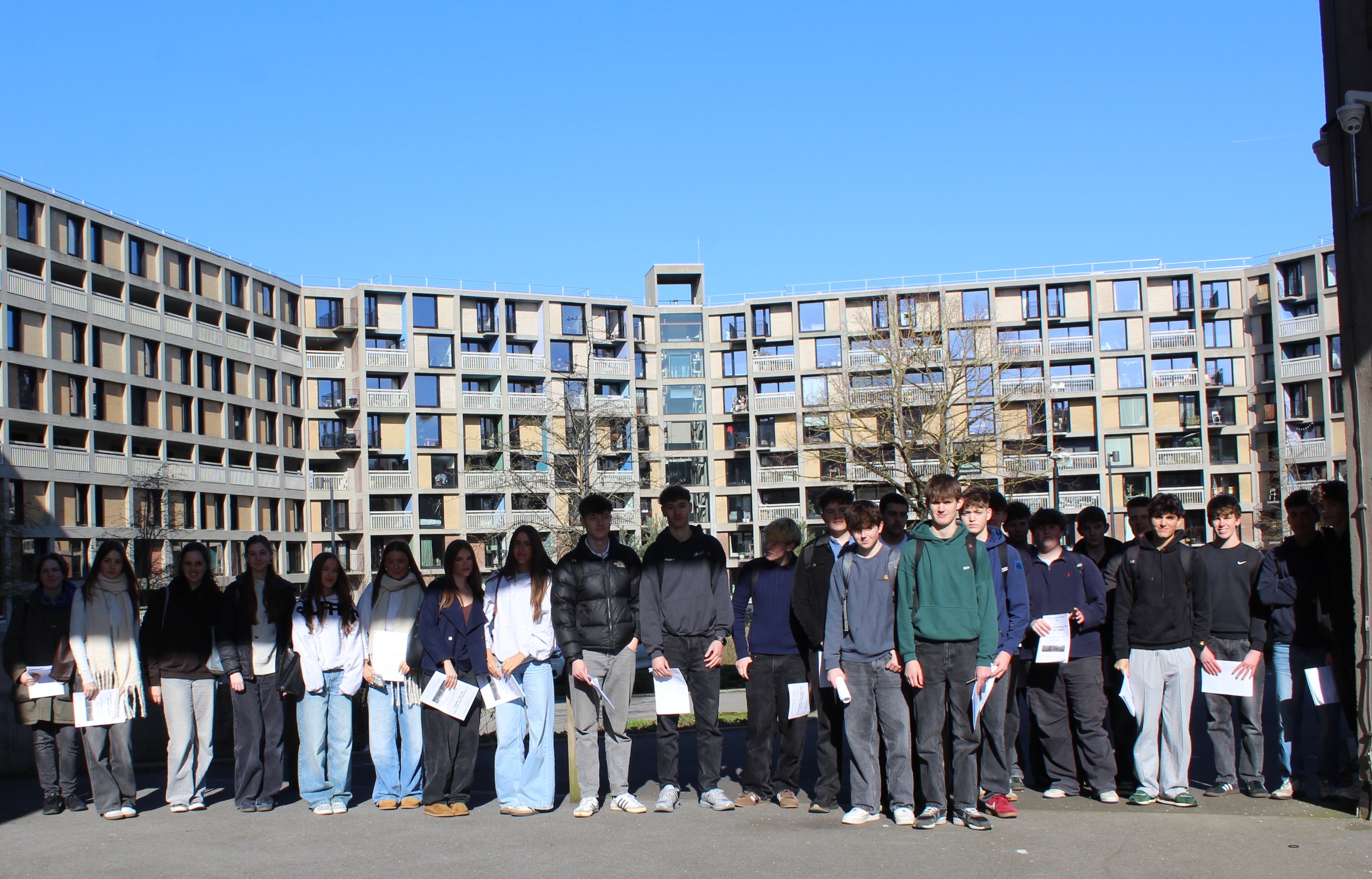
Students have also now started to plan their Non-Examined Assessment and are looking forward to our three-day residential fieldtrip to Southwold in June.
Year 13 have been busy completing the last two topics of A Level Geography which are hazards and disease dilemmas. They are preparing very well for the summer exams through the completion of weekly revision questions.
|
|
|
Year 11 Travel and Tourism students have completed all the internal assessments of their BTEC course (60% total grade) and have been studying their final component, Component 3: Influences on Global Tourism. These influences are diverse and range from natural factors such as earthquakes, to the spread of diseases, as well as economic factors such as a recession.
This learning includes sustainable tourism, impacts of tourism e.g. socio-cultural, economic etc and how this range of factors can be managed.
All learning aims (A, B and C) for this component will be assessed in one exam worth 40%, which will be a two-hour exam for 60 marks on 1 May. We wish them all the very best for this exam.
|
|
|
Year 9 Taster Lessons
We have been delighted to welcome Year 9 students to our Health & Social Care Taster lessons in support of them making their Option choices. We were able to give an overview of how the course relates to them, what Health & Social Care is all about, followed by some interactive tasks.
For the taster lesson we focused on one unit of the course – Human Lifespan Development - which looks at different life stages and what influences development at each stage, along with what Health Wellbeing is and the PIES tool used by practioners to help categorise and understand what development happens through the life stage.
The students enjoyed interactive sessions where they were tasked with:
- Identifying which life stages certain changes occur in and the type of change
- Identify which motor skills are being developed
- Justifying how the infant is using the identified motor skill- e.g. gripping the handle
We really enjoyed seeing Year 9s working together and hope they enjoyed the taster lesson.
Year 10
Year 10 have made a very good start with their first round of coursework that looked at how humans develop across the lifespan. This first component is worth 30% of their overall grade and encompasses four separate written tasks. We have been impressed with their work ethic and commitment during this period, in lessons, being proactive and organised and excellent participation in coursework catch-up/intervention to ensure the tasks are all completed. These sessions will be continuing after Easter until the end of the coursework window in April.
Once their coursework has finished in April, students will then begin learning about health and social care services and values in preparation for their second round of coursework (worth 30%) at the start of next year. Students will start to look at how specific services can support individuals' needs and the traits and qualities that make a good service provider in the health and social care sector.
If students are interested in exploring these in advance, additional links for further reading and watching are available on our website.
The award-winning and very popular series Ambulance is currently being broadcast and highlights many of the issues we have discussed over the course to date, including lifestyle factors, environmental factors and the services accessed by service users in health and social care.
Year 11
Students are in their final component of their Health and Social Care course. Students have been learning about the factors that impact their physical, intellectual, emotional and social development across the different life stages. They have been looking at health indicators such as BMI, pulse rate and blood pressure and the physical impact on these not being in the healthy guidelines. Finally, students have been working through how to set person-centred health improvement plans based on different case studies we have looked at in the lessons.
Students have completed 60% of the course through a series of written tasks and have received their results. We believe this will give them the confidence boost to ensure they push themselves for the final component in their exam. Students have been issued with revision booklets to support them with the knowledge and structuring of revision in a series of templates. These are also available on G4S as an electronic copy. The exam, worth 40% of the course will take place on Tuesday 6 May.
Year 12
Students studying the AAQ BTEC Level 3 Health and Social Care qualification have completed the core content for Unit 1 this half term. A key focus has been on multi-disciplinary working, where students have explored how different health and social care professionals work together to support individuals. As part of this, students took part in a role-play Multi-Disciplinary Team (MDT) meeting based on the case of 'Charlotte,' a woman in her 60s recovering from a broken hip. Students took on a range of professional roles and worked collaboratively to develop a care plan. They demonstrated a strong understanding of how to meet an individual’s physical, emotional and social needs, while also respecting personal preferences and family circumstances.
Next term, Unit 1 students will begin focused revision and complete practice exam papers in preparation for the Unit 1 exam in May.
In Unit 2: Human Biology, students have been learning about the nervous, renal and endocrine systems, with a particular focus on how these systems work together to maintain the body’s internal balance (homeostasis). In the summer term, they will continue their studies by exploring the musculoskeletal, immune and reproductive systems, ahead of their final exam in May.
Year 13
Year 13 Health and Social Care students have completed the teaching of all new content for their examined component and have been focusing on consolidation and revision in lessons. Students have been working extremely effectively as a team, demonstrating strong collaboration skills as they recall key knowledge and apply their understanding to a wide range of examination-style practice questions.
Students have been revisiting key concepts such as promoting equality and diversity, understanding the impact of discrimination, upholding individual rights, and the responsibilities of health and social care providers. They have also been reinforcing their understanding of legislation, policies, and procedures that underpin safe practice, including risk assessment, safeguarding, and infection control.
Alongside exam preparation, students have completed their Unit 5: Meeting Individual Needs coursework. This final piece of assessed work has allowed students to demonstrate their ability to apply theoretical knowledge to real-life health and social care contexts, further strengthening their readiness for both assessment and progression beyond sixth form.
The commitment and maturity shown by students throughout the course has been excellent, and their focused approach to revision and coursework completion has been a positive reflection of their dedication to achieving strong outcomes.
|
|
|
Year 7 have been working through the problems faced by medieval Kings, including King John and Magna Carta, the Black Death, and the Peasants Revolt. We have also looked at Henry III and the Provisions of Oxford which created the first English parliament.
Year 8 have been looking at the Restoration period that began with the return of Charles II in 1660. We have focused on the power of subsequent monarchs, the witch craze of the 16th and 17th centuries with an assessment on the position of women in this period. We have also looked at the scientific revolution which began the period of industrialisation in the 18th and 19th centuries.
Year 9 have been looking at key events from World War II, which began with an assessment on its causes. We have also looked at the retreat from Dunkirk, the impact of evacuation and the arguments for and against the use of the atomic bomb to force a Japanese surrender.
Year 10 have continued to work through Paper 2 of their GCSE this term. We have been working on Early Elizabethan England, 1558-88 with a focus on Elizabethan society, challenges to her reign from Spain and other Catholic plots, including the Babington Plot of 1586, which led to the execution of Mary Queen of Scots in 1587. We have also looked at how the relationship with Spain in the Netherlands and the New World led to the Spanish Armada of 1588. Please be aware of the revision schedule students should be following to prepare themselves for their progression exam at the end of the year. This will be a full Paper 1 on the History of Medicine.
Year 11 have been working through Paper 3 on Weimar and Nazi Germany. This includes life in Nazi Germany, with a focus on the economy, living standards, the experience of young people and the persecution of minorities. Please be aware of the revision schedule students should be following to prepare themselves for their final exams.
Year 12 historians are working through Paper 1 and 2 – Britain, 1918-97 and the USA, 1955-92 – which is their focus for the year.
Year 13 historians have been working through Paper 3 on the British Experience of Warfare from Napoleon through to World War I. They have also completed and submitted their coursework.
If students need any support during this period for revision their teachers will be available either in their classrooms or via email.
|
|
|
Year 12 Politics students have been working through Paper 1 and Paper 2 – British Politics and British Government – which is their focus for the year.
Year 13 have been working through Paper 3 which looks at Global Politics.
It is important that students keep abreast of contemporary political events by reading broadsheet newspapers, following politics programmes on TV and radio, and listening to the podcasts signposted to them in class.
Mr Bowker emails essential reading on a weekly basis. This is important for Year 13 to enable them to comment on contemporary events in their June exams, even if the information they read is published on the same day as the exam. If students need any support during this period, their teachers will be available either in their classrooms or via email.
|
|
|
Year 7
Year 7 have continued to make excellent progress in their maths lessons. There is a real sense of enthusiasm in the classroom, and it is great to see students enjoying their learning in Maths. Recently, students have been learning how to use a scientific calculator correctly and exploring some of its many useful functions. Having a scientific calculator is an important part of their school equipment, so please ensure it is brought to school each day.
With the end of year assessments approaching, now is a good time for students to begin their revision. Looking back over previous assessments, exercise books and any resources provided by teachers will help reinforce what they have learned throughout the year.
If students would like extra support with homework or revision, our Homework Space runs every Tuesday after school until 4pm in S206 and is open to all year groups. We are consistently impressed by the effort, dedication and positive attitude shown by Year 7, and we encourage them to keep up the fantastic work.
Year 8
Year 8 students have continued to work hard and show great commitment in their maths lessons. Since the start of this term, they have been learning how to use scientific calculators correctly and exploring the many helpful features that support their calculations. It is important that all students have a scientific calculator as part of their school equipment and bring it to school every day.
Students have also been studying equations in more detail, developing their skills in solving for the unknown and working out that mysterious “x”. We have been very pleased with their positive attitude and the effort they are putting into their learning.
With end of year exams approaching, now is a good time for students to begin revising and practising the topics and skills they have learnt throughout the year. If students would like extra help with revision or homework, our Homework Space runs every Tuesday after school until 4pm in S206 and is open to all year groups.
Keep up the great work, Year 8!
Year 9
Year 9 students continue to make strong progress in their Maths lessons and have now successfully completed five GCSE modules: Number, Geometry, Fractions, Decimals & Percentages, Algebra, and Probability. Through these topics, students have developed a broad range of mathematical knowledge and problem-solving skills. Their engagement in lessons and willingness to challenge themselves reflects the school values of Commitment and Excellence, while the curriculum provides valuable opportunities to deepen their understanding. Students should continue completing weekly homework and revising using their personalised learning checklists to address any gaps in knowledge.
Year 10
Year 10 students have continued to work hard this term and are making positive progress in their Maths lessons. They have now completed several modules including Mensuration and Calculations, Inequalities and Equations, Measures and Accuracy, Ratio and Proportion, and Statistics and Geometry, developing a wide range of mathematical knowledge and problem-solving skills across these topics. Their engagement and effort reflect the school values of Commitment and Excellence, while the curriculum provides valuable opportunities to deepen their understanding.
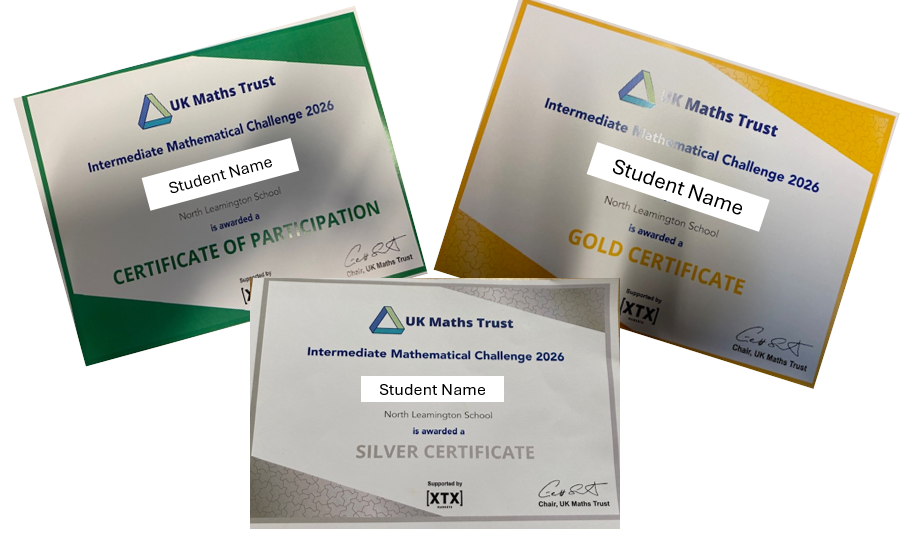
Some students also took part in the Intermediate Maths Challenge, achieving an excellent range of results across the cohort, including Bronze, Silver and Gold awards. This is a fantastic achievement and demonstrates the strong mathematical thinking and perseverance shown by many of our students.
At home, please encourage students to complete their weekly homework and spend time revising areas for improvement identified in their personalised learning checklists, which can be found on the front page of their assessments. Regular revision, little and often, will help students continue to build confidence and strive for Excellence in their Maths learning. Useful revision resources include Maths Genie, Corbett Maths, and the school’s Digital Learning Hub, which provide additional support and practice across a wide range of topics.
A reminder that at the Parent/Carer Revision Evening on April 15 we will be sharing information and guidance on how you can best support your child at home with Maths. We look forward to welcoming you all at this event.
Year 11
Year 11 students have now completed their final set of mock examinations and are entering the last stretch before their GCSE exams. We are very pleased with the progress many students have made so far, but there is still time for further improvement before the summer exams.
Students should aim to complete at least two hours of additional maths revision each week (in addition to their normal classwork and homework). We also strongly encourage them to attend the after-school revision sessions on Tuesdays, which are designed to consolidate key topics and give students further practice with exam-style questions.
The following websites are excellent resources for revision and past papers:
• 1st Class Maths
• Maths Genie
• Corbett Maths
With continued effort and regular practice using past exam papers, we are confident that our Year 11 students will be well-prepared for their final exams.
The Easter break will also be an important opportunity for revision, and we encourage students to use this time productively so they can approach their exams feeling confident and prepared.
We wish all of our Year 11 students the very best of luck in the months ahead.
Year 12
Year 12 have completed their first set of mock exams and are almost at a stage where all AS content has been covered. The majority of students have shown good progress and managed the transition from GCSE to AS level well. They are working independently to revise areas they have found more challenging as identified from their mock feedback.
Going forward, we will start to cover year 13 content and include this in the end of year paper in order to better bridge the gap from AS level to full A level. We will also look to set up small group intervention for any year 12 who needs the additional support.
Year 13
Following their spring mocks last term, many have made some really encouraging progress, reflecting their hard work in focused revision based on their performance in the November exams. All content from the course has now been delivered and the priority is on refining exam technique in order to be best prepared for the exam, working through practice papers and shadow papers.
We wish all of Year 13 the very best of luck with the exams in the months ahead.
|
|
|
 French French
Year 7 French students have worked incredibly hard this half term studying the topic of sport and free time. They have learnt a lot of new vocabulary and are able to describe which sports they ‘play’ and ‘do’ and give detailed opinions. Students have also become confident using present tense verbs in different forms, including he/she and we. Students completed their first Spelling Bee competition which will continue after the Easter break. Students had to translate the words from English and spell them in the target language. Well done to all taking part and to the winners of this competition.
Year 8 students have really worked well this half term to increase their range of language. Students studied the near future tense in their previous module, and more recently have learnt the perfect tense of regular –er verbs in its different forms. With this under their belt, students are now able to produce language in three different time frames – a key skill moving forwards to year 9 and GCSE French. At the end of term, students looked at Easter celebrations in the Francophone world and the key differences with the UK.
Year 9 have been rapidly improving their language skills during the term and started the final Key Stage 3 module – Le Monde est Petit. So far, they have learnt how to use modal verbs to describe their region in detail and discuss what chores they have to do around the house. In the final weeks of this term. We were really pleased to see so much interest in the French GCSE and look forward to seeing some familiar faces next year in Year 10.
Year 10 continue to work hard and have made great headway through content this term, completing Module 3 (school and future plans) and beginning Module 4 (staying healthy physically and mentally). In Module 3, students have recapped the perfect tense of regular verbs and were introduced to irregular verbs in order to describe their progress at school. Module 3 also saw the introduction of the imperfect tense, which students applied to discuss what they used to be like when they were younger. During Module 4, students have been reintroduced to reflexive verbs to describe how they are feeling, and have used the imperative form to give advice.
Year 11 are nearing the end of their GCSE French journey and have been working tirelessly in the lead up to their final exams. In the last few weeks of term, students did their final GCSE speaking exams, completing 25% of the course. The dedication, time and effort that students put into these exams has been truly astounding and I have no doubt that we will see some fantastic results in the summer. Having completed the last module of the GCSE course, lessons have focussed on revision as we head towards the Reading, Listening and Writing exams in May and June. Well done Year 11, just one last little push!
 German German
Year 7 German students have worked well this half term and have studied the topic of free time. They have become very confident in forming present tense verbs in different verb forms. They have formed opinions about sports and hobbies and developed their answers by providing reasons. We have researched Easter in Germany and are looking forward to the Easter bunny arriving this year.
Well done, Year 8 – another very successful half term. We have studied the imperfect past tense and the perfect in German. Students have really got to grips with the word order of the perfect tense and have been able to form this tense using a variety of different verb forms. On a lighter note, we have also looked at Easter in Germany and understood their traditions at this time of the year.
Year 9 German students have worked exceptionally well this half term and have made fantastic progress in all their assessments. We were so pleased with the results and the progress made since September – well done! We have focused on many grammatical rules and topics, which appear at GCSE level and students have handled these complex structures extremely well. We hope that many will opt for GCSE German. We have also looked at how German is used in the working world and the benefits of learning a language.
Year 10 German students have made amazing progress this half term and we are so pleased with their dedication and progress. We have looked at many examples for the GCSE speaking examination and successfully completed role-plays, read aloud and picture tasks. Well done! Students have really focused on what is required and applied a variety of tenses, opinions and reasons, as well as target grade grammatical structures to their work. We have also looked at Easter in Germany as a big reward for all their hard work. Ein Osterei – das liegt im Nest. Wir wünschen Euch ein frohes Fest!
Year 11 German students have worked diligently this half term. They have really focused well on the feedback from a mock speaking examination and will complete their actual GCSE speaking unit after the Easter break. We have also focused on revision of Year 10 and 11 topics and looked at exam techniques for listening, reading and writing. Well done! Keep going, you can do this!
Frohe Ostern! Osterglocken klingen, die Osterhasen springen!
|
|
|
Year 7: Keyboard Skills and Rhythm in Music
Keyboard Skills
This unit of work has focused on performing written music. Students have developed their practical music-making and keyboard skills alongside their understanding of notated parts. Notated music challenges students to consider note placement, duration and pitch to reproduce famous musical melodies, whilst developing their keyboard and collaborative skills. Students have been encouraged to perform to the class for assessments and build confidence through shared music-making experiences. Resources are provided to offer students of all musical ability the opportunity to access the curriculum and develop musical understanding.
Rhythm in Music
This unit of work focused on performing percussive Samba-style rhythms using a variety of percussion instruments. Students have developed knowledge about Samba Batucada alongside their practical music-making, collaborative and listening skills. They have performed ‘class samba’ compositions and creating their own rhythmic pieces in small groups. Students are encouraged to perform to the class for assessments and build confidence through shared music-making experiences. Resources are provided to offer students of all musical ability the opportunity to access the curriculum and develop musical understanding.
Year 8: Keyboard Duets
This unit of work focused on performing written music. Students have developed their collaborative music-making skills and keyboard skills. Notated music in two parts challenges students to consider the importance of listening, timing and note placement to reproduce famous musical melodies and harmonies with their partner. Students are encouraged to perform to the class for assessments and build confidence through shared music-making experiences. Resources are provided to offer students of all musical ability the opportunity to access the curriculum and develop musical understanding.
Year 8: Sound and Animation
This unit of work focused on composing, sequencing and editing sound for a short, animated film clip. Students have been exploring the use of musical devices to create expressive musical motifs and effects to enhance the emotion and action happening in different scenes of the film. There has been an emphasis on attention to detail and timing alongside developing editing and sequencing skills to produce an effective and appropriate soundtrack for the scenes throughout the film. As preparation, students have watched and analysed cartoons and animated film clips from different eras to develop their appreciation of music and sound in film.
Year 9: Musical Styles - Performing/Composing/Sequencing
Composing & Sequencing
This unit of work focused on students collaborating in pairs or small groups to compose and produce three musical examples that demonstrate an understanding of the key features associated with Rock’n’roll, Reggae and Latin music. Students have been using their knowledge of sequencing software to compose and record examples of these musical styles. To broaden their understanding of the instrumentation, composition techniques, structure and features associated with different types of music, students have been encouraged to analyse a range of pieces through listening tasks, identifying the key terms and musical devices used to create music in a certain style.
Performing
This unit of work focused on students collaborating in pairs or small groups to perform examples and elements of Rock’n’roll, Reggae and Latin music. Students have been encouraged to develop their practical, technical and collaborative performance skills, practising and performing challenging notated music. They have also been encouraged to consider the three genres and apply genre-specific stylistic or musical features to their performance. Students have demonstrated a disciplined approach, reviewed their work, monitored progress and identified areas for development.
Year 10: BTEC Music Level 2: Component 1
Students have been working towards the completion of Component 1 of their course. During these components, students have been learning about a range of musical styles and will be tasked with performing, reproducing and composing pieces to demonstrate their practical/instrumental/music-making skills. Alongside their practical work, students have produced written analysis and reviews to demonstrate their historical, contextual and theoretical knowledge.
Year 11: BTEC Music Level 2: Component 3
Students have been working towards their PSA for Component 3. This unit is focused on students developing and demonstrating their music composing skills using a combination of music software tools, live techniques and instrumental skills to explore, compose and realise their creative ideas. They are tasked with planning, preparing and recreating a popular piece of music in a contrasting style, providing written analysis/reviews to record their progress and demonstrate their knowledge.
Year 12: BTEC Music Level 3: Unit 1
Students in Year 12 have been developing their knowledge of music theory by completing performing and composing tasks. They continue to build on their current understanding of western musical traditions and notation with a view to consolidating their knowledge in the form of a presentation and musical examples for assessment. Students have also started to explore job roles, careers and business plans for their Unit 2 examination in the Summer term.
Year 13: BTEC Music Level 3: Unit 3
Year 13 have completed their Unit 6 solo recitals and Unit 3 ensemble performances. They have planned a short set of musical cover versions and adapted the style to fit with their ensemble instruments, skills and strengths. They have documented rehearsals and reflected on the rehearsal process to ensure they are contributing and developing throughout the unit of work.
Extra-Curricular
- Orchestra: Tuesdays 3:30pm – 4:30pm
- Music Club: Wednesdays 3:20pm – 4:20pm
- Steel Band: Wednesdays 3:30pm – 4:30pm
- Pop Choir: Thursdays 3:30pm – 4:30pm
Orchestra Performance
The NLS Orchestra have been preparing to perform for a ‘Showtime’ concert of music from Stage and Screen at Leamington Baptist Church tomorrow, 28 March 2026. The orchestra will perform alongside the ‘Village Voices’ to provide an evening of musical entertainment inspired by sounds created for theatre and film. We would once again like to express our thanks to Mr Howe for his commitment to providing our students with valuable opportunities to perform musical repertoire to audiences at events like this.
|
|
|
The start of Spring 2 term have brought a change in activities in PE lessons, with boys in Key Stage 3 doing Hockey, Handball, Gymnastics, Netball, and Table Tennis. While the Girls in Key Stage 3 doing Basketball, Badminton, Rugby and Health Related Fitness. Key Stage 4 boys moved onto Netball, Badminton and Fitness, with the Girls doing Basketball, Football and Health Related Fitness.
Spring 2 term sees a busy time for the examination courses. Year 13 A-level students completed their Evaluation and Analysis of performance element of their course, worth 10% of their final grade. Students watched a 10-minute video of a performer in their chosen sport and then talked about the performer for 30 minutes, identifying their strengths and weaknesses in terms of skills, tactics and physical performance and plan a training programme to help the performer improve on their weaknesses.
Practical performance grades are also submitted for A-level and GCSE PE candidates, making up 20% and 30% respectively of their final grades. While Year 10 GCSE PE students have been completing mock exams this term, and Year 11 GCSE PE students getting lots of revision and exam question practice as they prepare for their summer exam.
BTEC level 2 Sports students in Year 10 have been completing coursework assessment of their component 2, including delivering practical sessions to younger students. While the Year 11 BTEC Sport students have been preparing for their final exam at the start of next term.
In extracurricular, the season continued with Football, Netball, Basketball, Squash and the start of Athletics.
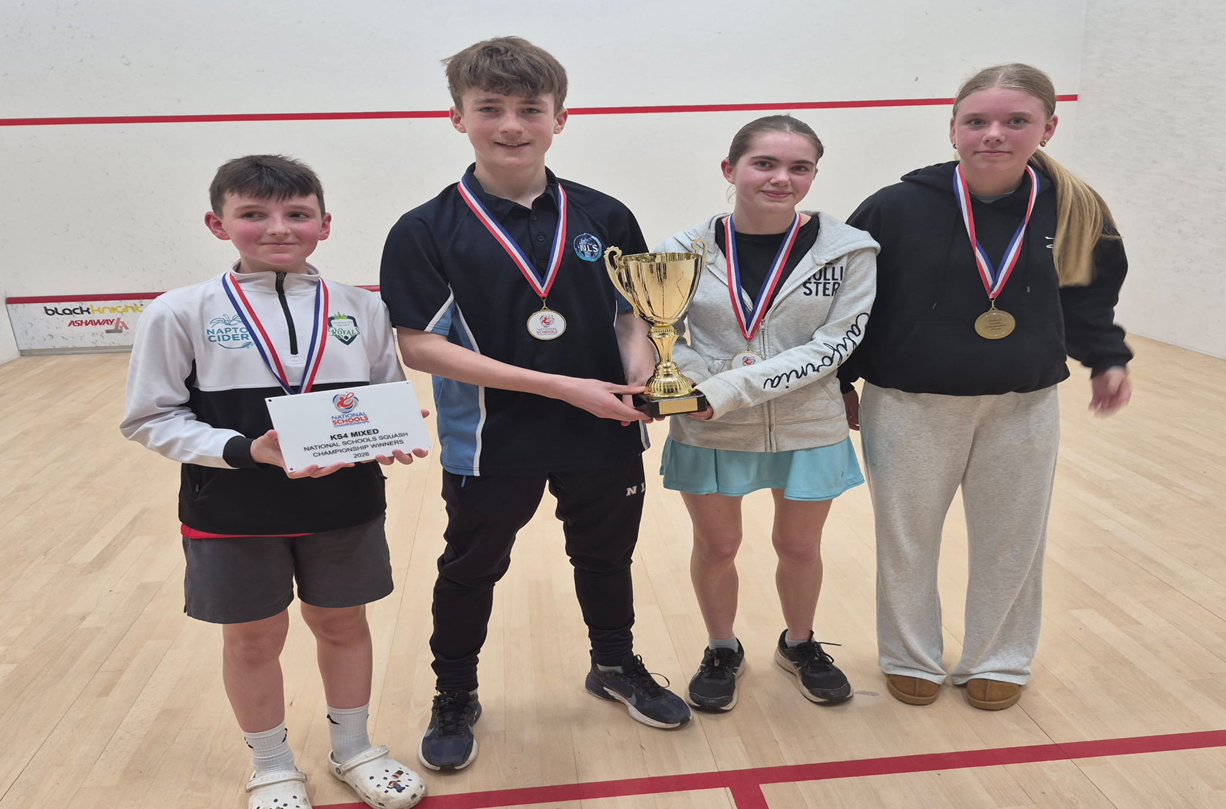
National school Key Stage 4 Mixed Squash Finals Finals - National Champions
Four students competed in the National Schools Key Stage 4 mixed squash finals in Birmingham on March 4th. Our team Hannah D (yr 11), Heidi C (yr 10), Ethan C (yr 10) and Joe G (yr 8) faced the best squash teams from around the country.
They got off to a fantastic start, winning against Felsted School 4-0 before following up with 3 -1 victory against Bennett Memorial and then a 4-0 win against Blackrod School to finish top of their group and progress to the semi-finals.
Another fantastic 3-1 victory over Rainford School, took them through to the final…
There they faced last year’s champions South Hunsley School. In a nail-biting close game, which came down to the last match and the last game, the youngest member of the team, Joe, came through to win and the NLS team were crowned National Champions.
Huge congratulations to Hannah, Heidi, Ethan and Joe on an amazing achievement.
Year 7 Basketball
NLS travelled to Southam to take part in the final central venue District basketball league meeting. NLS, were in joint second in the league format over the season, and played extremely well, recording convincing wins over Southam and Oakley.
It came down to the game against the other joint second placed school, Myton, and a place in the final. Sadly, they just fell short and finished third in the league, missing out on the final. The only team to beat them, went on to win the final, while NLS finished on a high with another convincing win vs Southam in the third/ fourth place play-off game.
Well done to all the boys that have represented the team this season.
Year 8 Basketball District Champions
The Year 8 Basketball team looked to retain their District Champions title as they also finished off their season with a third central venue competition. Each event featured teams from Myton, Southam, Campion, Oakley and North Leamington.
Teams played a round-robin format, playing each team and the results being added up to a final league total and the title. NLS finished with an impressive 11 wins and only 1 defeat in all fixtures to top the overall standings and retain the title of District Champions!
Their season will continue though as they compete in the National Jr NBA competition and are hoping to follow in the footsteps of the last NLS team to take part who made it all the way to the East Midlands Finals. Good luck to the boys – we wish you well!
Year 9 Basketball
The Year 9 team continued their season with a fixture against Oakley, with NLS looking to get a repeat of their victory from last year. The first half was neck and neck, with the lead changing numerous times. Halfway through the third quarter, Oakley had a narrow two-point lead, before NLS took control, pulled level and then pulled away. Behind a well-balanced team performance, led by top scorer Joe F, the boys secured a comfortable 46-36 victory. We look forward to the season continuing next term with fixtures against Southam and Aylesford.
Year 7 Football
The Year 7 Football team’s season resumed with a friendly against Finham Park School, where they played out an entertaining 3–3 draw in front of a strong and vocal home crowd.
With the scores level at 3–3 at full time, after some superb play, some excellent chances created and the atmosphere lifted by the excellent support from the NLS crowd, the match was decided by a penalty shootout. Despite a great effort and strong performance from NLS, Finham Park edged ahead 3–2 to take the win. Their season will continue with fixtures against Southam, Kingsley and a semi final against Stratford.
Year 8 Football
After a long winter break, Year 8s also welcomed Finham Park over for a friendly match to help prepare for their upcoming league and cup fixtures. NLS dominated from the start, and in the second half they took the lead early through Dan B before two more goals were added by Rajan J and debutant Noah EG, to give NLS a score line which was more reflective or their excellent performance.
They renew their league campaign next term with league matches against Kenilworth and Aylesford and a Cup semi-final against the team they defeated in last year's final, Stratford.
Yr 9 Football
Year 9 District Cup semi-final match v Startfrord was a tense game of possession football. With only a minute on the clock Stratford hit what looked like an unstoppable shot into the top corner however, Nathaniel leapt to tip it past the post with the Stratford coach saying, 'the best save I have ever seen’. The match was decide on penalties - well done to Milo, Fin, Hugh O’N and Hugh S who all converted with ease, Nathaniel directed the next Stratford penalty onto the bar and Tom then scoring for NLS - a 5-4 win for NLS to take us to the final next month.
A great show of team spirit which epitomised the whole performance.
Year 10 Football
Year 10 travelled to Stratford for their District Cup semi-final and a rematch of last year’s District Final.
NLS had their work cut out as they fielded a team missing players through injuries including the two goalkeepers. Ed CW, who usually starts centre back, bravely filled in, in goal and was outstanding, making numerous fantastic saves throughout the match. In the end it wasn’t quite enough as NLS suffered a narrow, 1 nil loss. The year 10s will continue their league campaign with fixtures against Kineton, Kenilworth and Stratford.
Indoor Athletics
The Year 7 and 8 boys and girls Indoor Athletics teams travelled to Myton to take part in the District Indoor Athletics competition last week, competing against, Campion, Kenilworth, King’s High, Kingsley, Myton and Southam,
In a highly competitive competition, the Year 8 boys, girls and Year 7 girls all finished third with the Year 7 boys winning their competition and will now represent the District at the upcoming county event in Solihull.
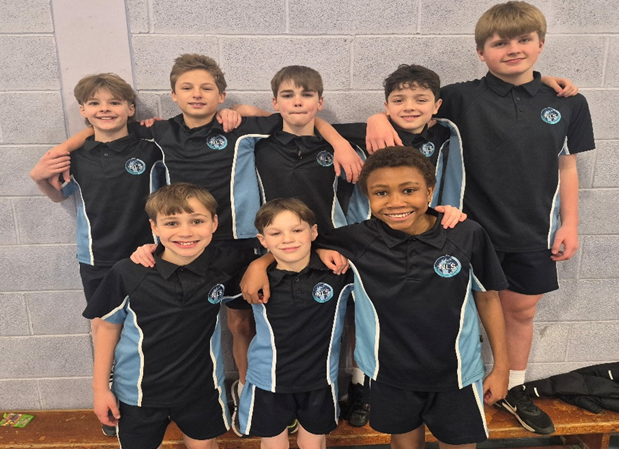
Cross Country
Seven NLS students travelled to Liverpool to represent Warwickshire in the ESAA National Cross-Country Championship at Sefton Park on Saturday 14 March.
Teams from 46 counties in various age groups took part.
- Archie Lane, (32nd out of 329 runners)
- Jacob Smith (34th out of 334 runners)
- Dylan Kerr (115th out of 334 runners)
- Lola Golding (203rd out of 349 runners)
- Daisy Golding (207th out of 304 runners)
- Esther Vaughn (264th out of 304 runners)
- Amelia Farrington (97th out of 140 runners)
Gwil Price, team manager for the Warwickshire team stated, "all seven of our runners were excellent ambassadors for NLS and WSAA and always a pleasure to meet and manage!"
Well done to all our students on getting to the Nationals.
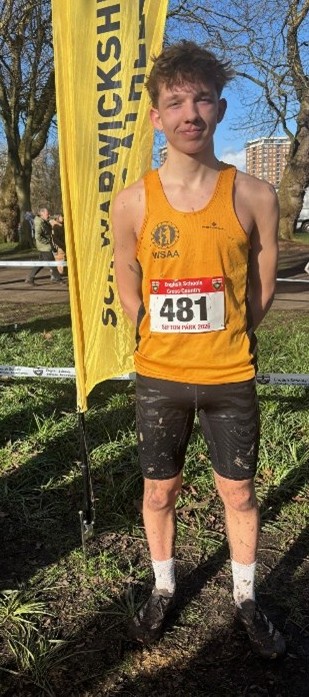 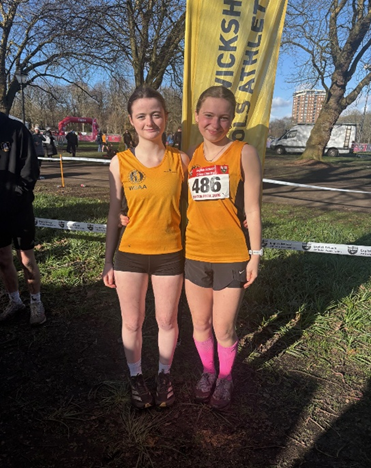
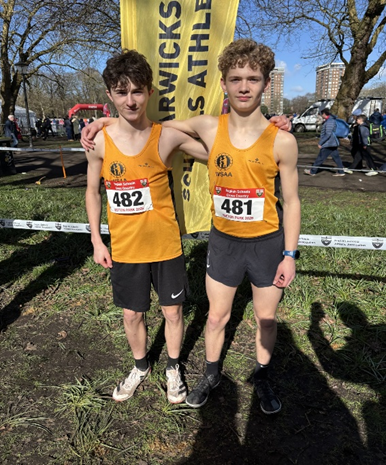 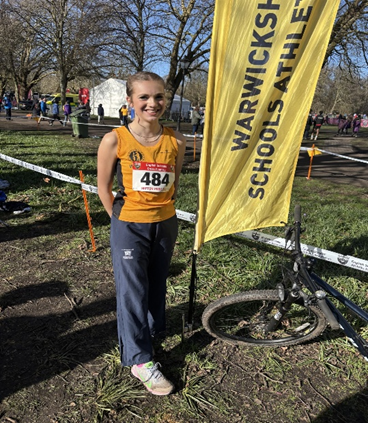
Years 7,8 & 9 League Cup Netball Finals
On Tuesday 17 March, our Year 7, Year 8 and Year 9 netball teams all competed in their respective League Cup Finals. It was fantastic to have NLS represented in all three year groups.
To reach the final each team have played a series of matches in the Warwickshire league, with group rounds and then a semi final to win their place in the final.
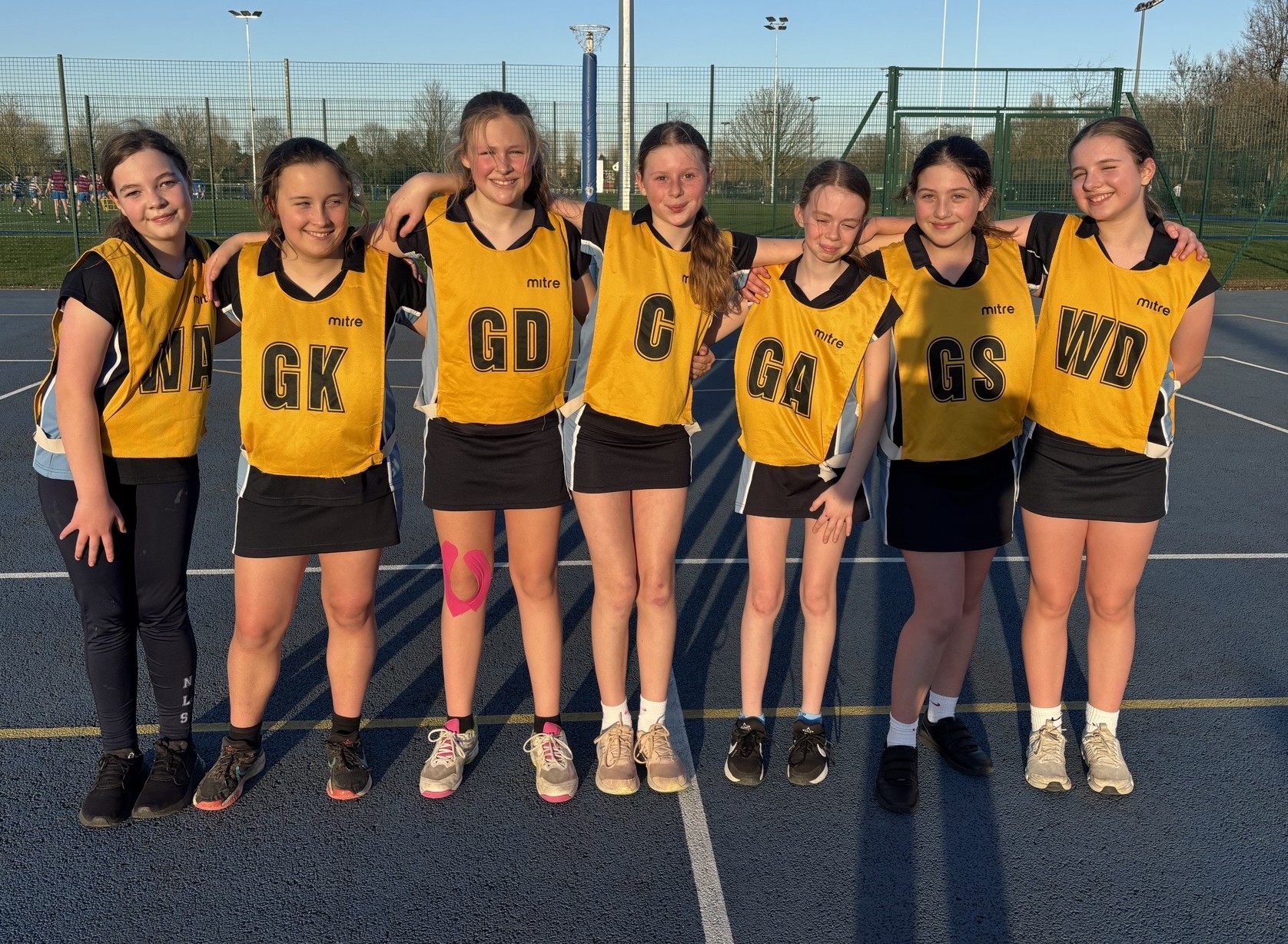 Our Year 7 team showed great determination and teamwork throughout their final and despite their very best efforts it wasn’t a win for them against Myton . However, they should be really proud to have reached the final and be runners up; a fantastic achievement in their first season as a team, and they should be extremely proud. Our Year 7 team showed great determination and teamwork throughout their final and despite their very best efforts it wasn’t a win for them against Myton . However, they should be really proud to have reached the final and be runners up; a fantastic achievement in their first season as a team, and they should be extremely proud.
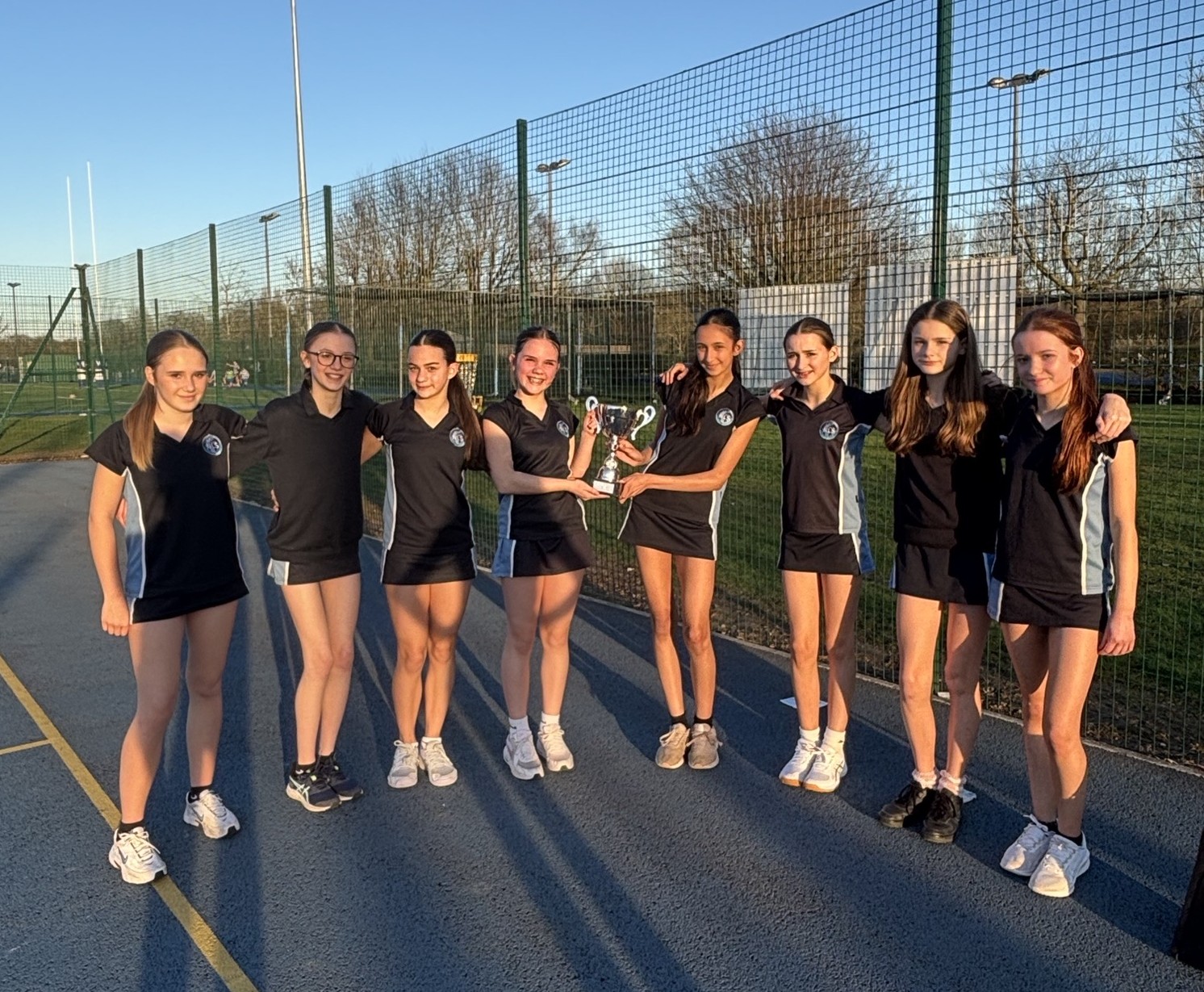 Year 8 played Kenilworth in their final. Year 8 played Kenilworth in their final.
Playing with confidence, energy, and excellent teamwork, they dominated the game to secure a convincing 33–9 victory.
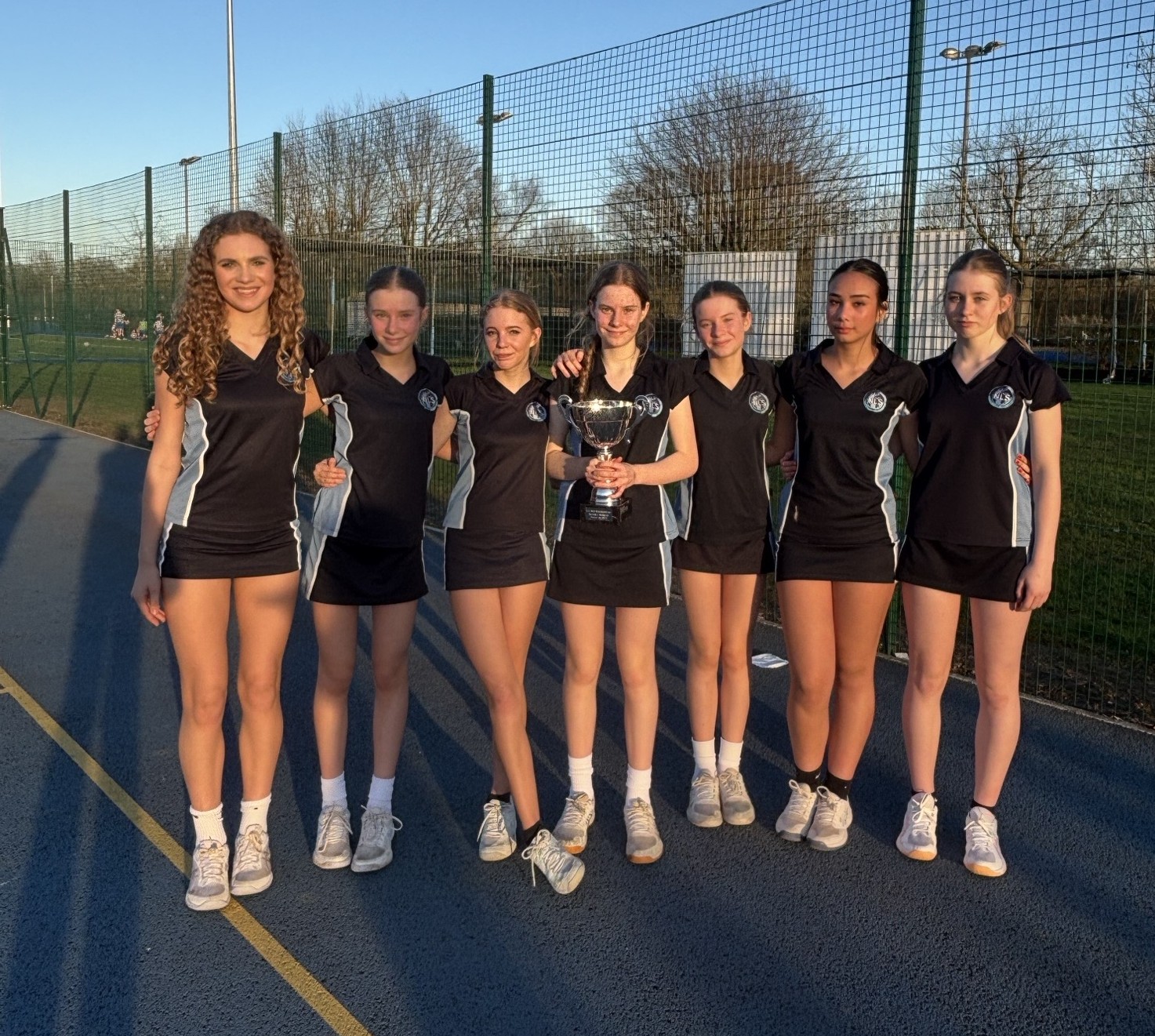 Year 9, who have been unbeaten in the league season, also faced Kenilworth in their final. Year 9, who have been unbeaten in the league season, also faced Kenilworth in their final.
NLS showed great resilience after being three goals behind in the first quarter and with excellent teamwork pulled ahead and secured a well a well-deserved 28–22 victory.
Well done to all students involved in what has been a brilliant netball season. We are extremely proud of your effort, commitment, and passion towards netball this year.
Dance Recital
On Wednesday 18 March, 65 students showcased their wonderful talent and passion for dance at the annual Dance Recital.
An audience of over 200 were treated to a range of styles by students across Years 7 to 13 who are members of our Dance Club, Dance Leaders and those who study Dance.
There were a range of styles performed including Contemporary, Commercial, Jazz, Tap and Ballet from BTEC assessment work to extracurricular clubs and students’ own choreographed pieces and their dedication and passion were evident in every routine.
All the dancers involved, along with our student photographer in Year 10 and student backstage crew, were so professional and enthusiastic during the show.
It was fantastic to see all their hard work and creativity come to light in the performance. You can see more photos from the event in the latest news earlier in this Bulletin.
Warwickshire Dance Competition
On Friday 20 March, a group of Year 8, 9 and 10 students represented NLS at the Warwickshire Dance Competition held at King’s High School.
The competition featured a strong field of schools, including Myton, Aylesford, King’s High and Trinity. Our dancers performed with confidence, energy, and excellent teamwork, showcasing the hard work they have put into rehearsals.
We are especially proud to celebrate and share their fantastic achievements.
- 1st place in the KS3 Contemporary Group category, with Nancy, Isla B and Esther delivering an outstanding trio performance.
- Myah achieved an excellent 2nd place in the KS3 Contemporary Solo category.
- Penny achieved 2nd place in the KS4 Contemporary Solo category
- Alexia, Freya W and Emilia secured 2nd place in the KS4 Group Choreography Street category.
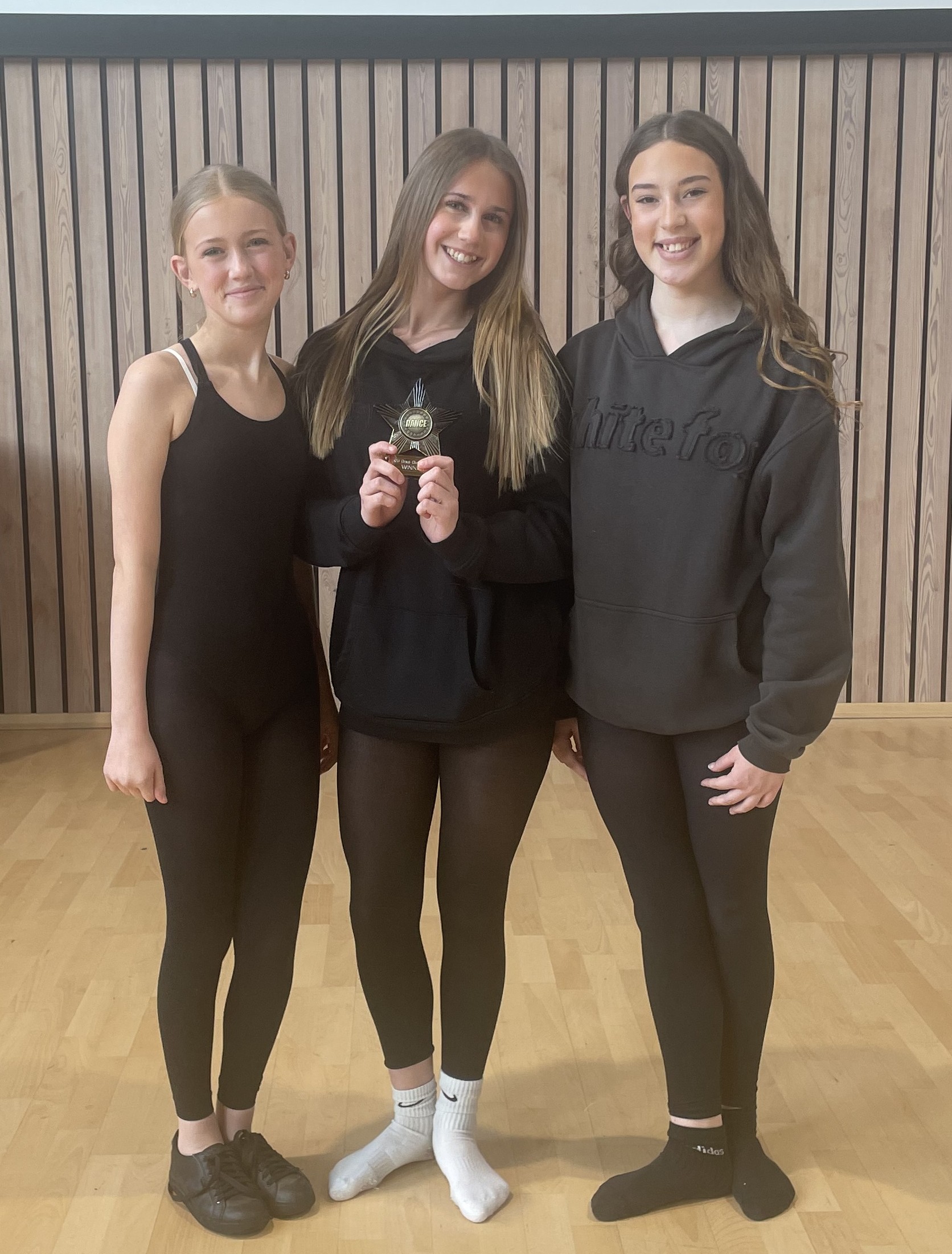
All students represented the school brilliantly throughout the event, demonstrating strong support for each other.
Their performances were very well received, and we are incredibly proud of their achievements.
Well done to everyone involved!
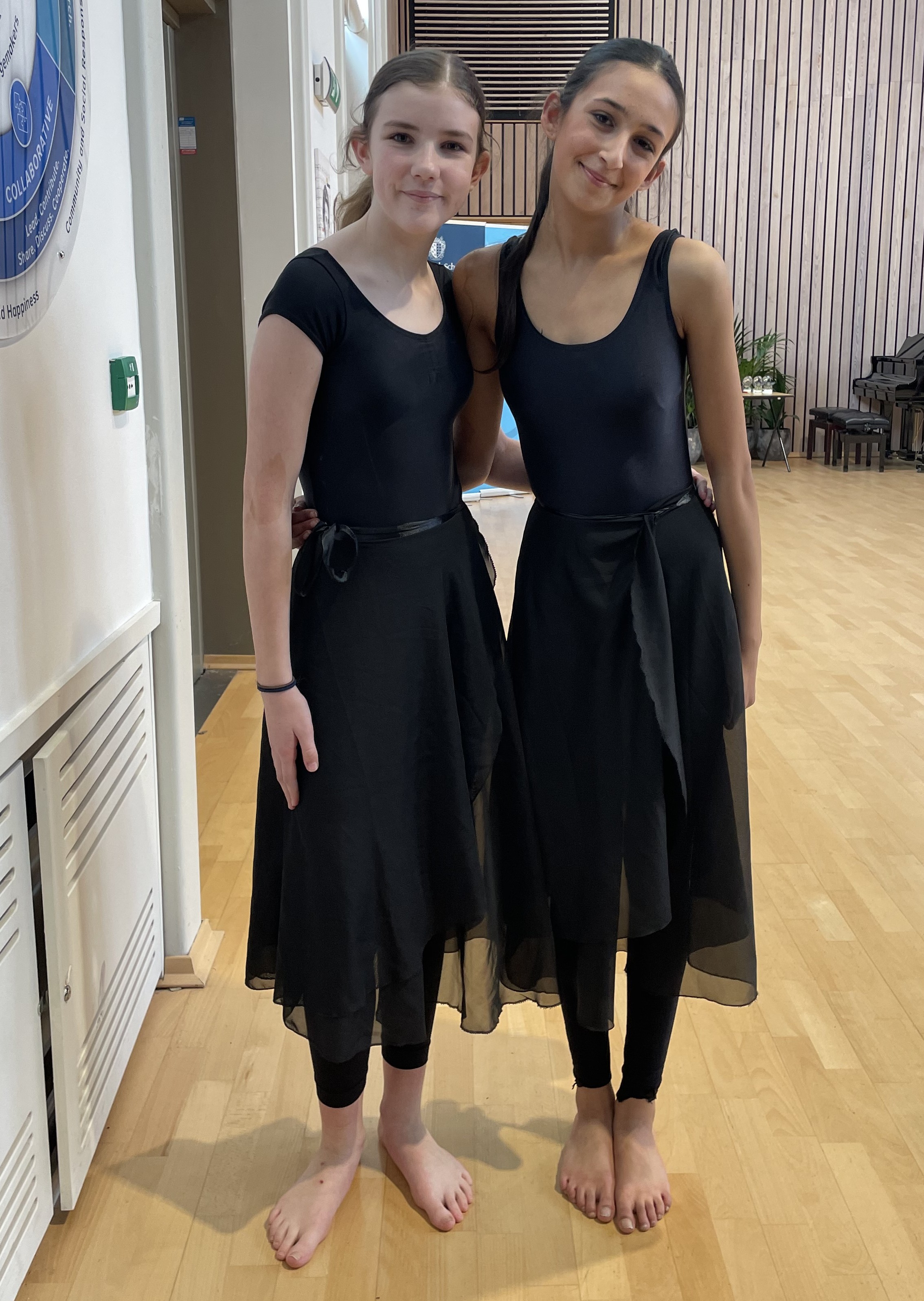 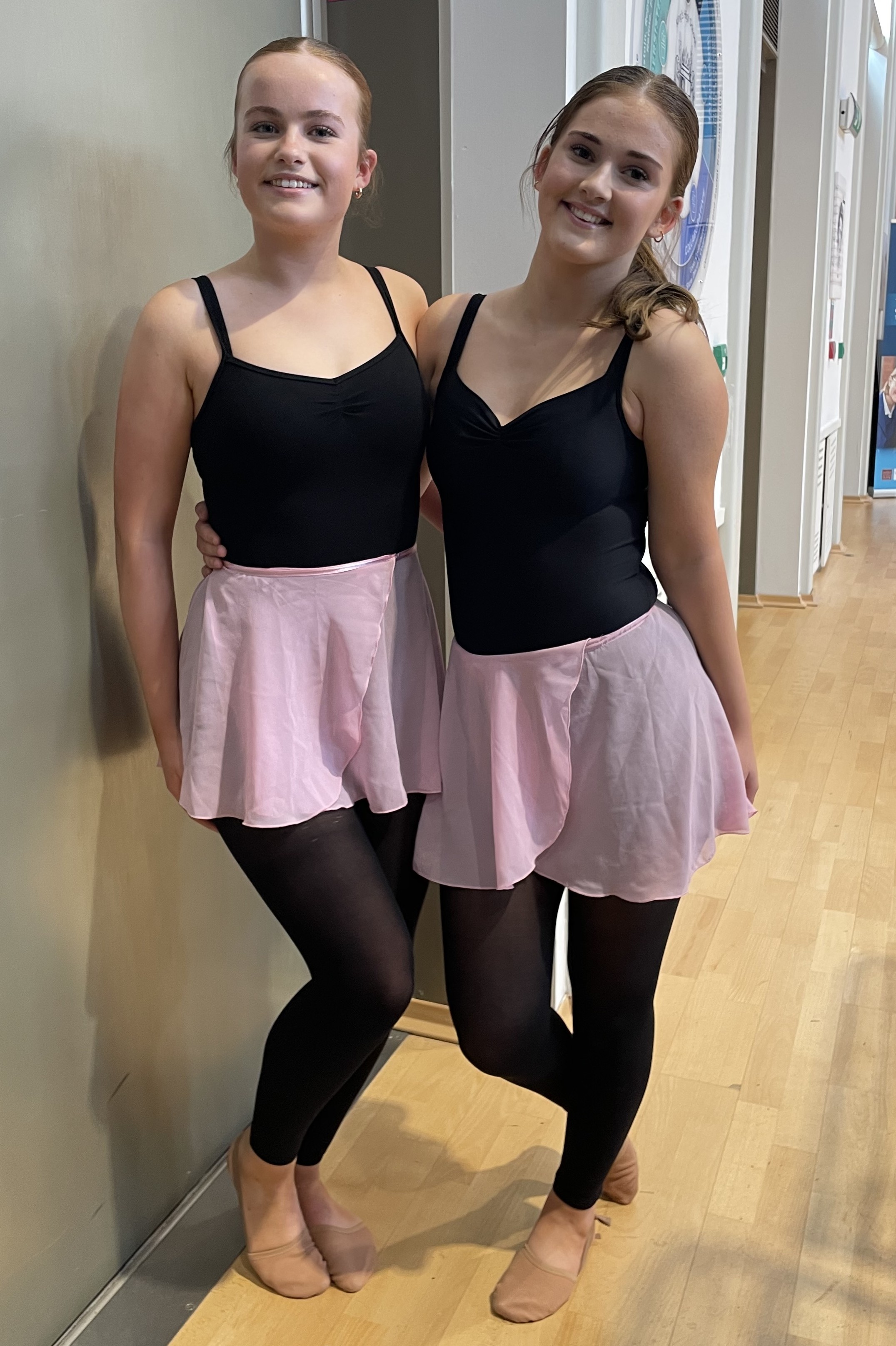
|
|
|
Year 7
As part of the healthy lifestyles unit Year 7 have examined the importance of making healthy choices including prioritising sleep and avoiding energy drinks. Students have also looked at some of the physical and emotional changes that happen during puberty and the importance of good personal hygiene as we get older.
Year 8
Year 8 have been exploring factors that can impact on mental health such as body image and bereavement. These topics can be very challenging for students and we have been so impressed by the way they have contributed to discussions and the empathy they have shown to their peers.
Year 9
Year 9 have been looking at signs and symptoms of stress and anxiety. They have been working together to come with strategies to support young people who might be affected by this. Students have responded to sensitive issues raised here with a great deal of maturity.
Year 10
Students have been examining substance misuse and addiction and the short and long term impact this can have on all area of a person’s life.
Year 11
Students have been looking at how to keep themselves, and others, safe in new and potentially risky situations. It has been lovely to see them working collaboratively when examining case studies and offering sensible advice and strategies for staying safe.
Year 12
As part of the relationships unit, students have been examining the importance of looking after their sexual health. We have also looked at the potential risks associated with body alterations. Students have been extremely engaged and have made some insightful contributions to class discussions.
Year 13 have been looking at the signs of coercive and abusive relationships and have been discussing strategies for exiting relationships respectfully and safely. Students have shown a great deal of maturity and empathy throughout.
|
|
|
This term, Year 13 students have been studying one of the more ‘classic’ aspects of psychological study, Cognition and Development which attempts to tackle and study how children develop over time.
Students have studied some famous names in psychology including Piaget and Vygotsky. Their work included when children are able to understand object permanence, when children learn the ability to put themselves in other people's shoes and how children learn through the support of other people.
Year 12 concluded their studies of ‘Attachment’ and ‘Approaches’ and begun the next stage of the numeracy aspects of Research Methods, and Clinical Psychology.
Below is our recommended reading, watching and listening list for the next term:
Reading list:
- The Happiness Hypothesis by Jonathan Haidt
- Reaching Down the Rabbit Hole by Dr Allan Ropper
- The Man Who Mistook His Wife for a Hat by Oliver Sacks
- The Happiness Hypothesis by Jonathan Haidt
- The Psychopath Test by John Ronson
Podcasts:
- The Happiness Lab (Lecturer from Yale University discussing how to be happy based on research!) (Spotify/Apple music)
Documentaries/films: 
- A Beautiful Mind
- Shutter Island
- Black Swan The Psychopath Test: A Journey Through
Recommended revision guide/textbooks for all topics in year 12 and 13:
- AQA Psychology for A Level Year 2 & A2: 2nd Edition by Cara Flannigan (TEXTBOOK)
- AQA Psychology for A Level Year 2 & A2 Revision Guide: 2nd Edition by Cara Flannigan (Revision Guide)
We also recommend www.physicsandmathstutor.com as they have detailed notes on every topic, every past paper, and past paper questions organised by topic. This is completely free and has the updated Year 12 specification.
|
|
|
Year 13:
We have now finished the course content with Year 13 RE and will be focusing on revision after Easter. Please remind students that once exam leave starts, we will be available to support them during their timetabled lessons right up until the final Ethics paper. We will also continue to offer after school sessions for students every Tuesday in H118 from 2.20-4.30. Please encourage your children to make contact with us if they need anything while revising at home.
Year 12:
Students are now almost halfway through the course content in Philosophy, Ethics and Christianity. It is really important that students are reviewing their notes outside of the lesson and are creating revision resources for each topic as this is the best way to secure knowledge and prepare for assessments and their progression exams in the summer term.
Year 10:
Year 10 have been working very hard this half-term revising key topics for their final RE exams. Please remind your child to check Go4Schools regularly as exam questions are set weekly to encourage students to revise and apply their knowledge. Students have been given a Christianity past paper and a Themes to complete over the Easter break. If they need any support with this, please let the RE team know. After-school revision sessions will continue every week until the final exam. It would be great to see as many students attending as possible.
Year 9:
Year 9 students have been working on Paper 3 (Islam). They have been focusing on key beliefs and teachings and how they impact the lives of religious believers. We have been very impressed by the thoughtful discussions students have engaged in on the afterlife, freewill and predestination. As discussed at parents evening, Year 9 will be completing their first RE mock exam on Wednesday 6 May in the morning. All revision resources are on Go4schools and students have paper copies. Please encourage your child to start revision early and do let the RE team know if we can support in any way. I will be holding a Teams meeting for parents on Tuesday 14 April at 6pm to discuss how you can support your children with their revision at home.
Year 8:
Year 8 students have been studying Judaism this half-term. They have particularly enjoyed recreating the Passover meal in lessons through tasting the different elements and discussing the meaning behind this.
Year 7:
Year 7 students have been exploring the foundations of Christianity. We have had some very interesting discussions on miracles and it has been lovely hearing the students talk about their personal experiences of ‘miracles.’ As we begin to look at the impact of parables, we are looking forward to seeing our classes write and perform a modern day parable.
|
|
|
Year 7
This term, Year 7 students learnt how to use the light microscope and spent time developing their skills in focusing the lenses, adjusting magnification, and handling scientific equipment safely and responsibly. As their confidence grew, they had the opportunity to explore a wide range of ready‑made slides, including samples of hair, blood and locust tissue. They were amazed by the tiny structures they could suddenly see so clearly, and many were excited to share their discoveries with one another, especially the hairy locust legs. The students thoroughly enjoyed these practical sessions which sparked plenty of curiosity and thoughtful questions about the microscopic world. It was a wonderful opportunity for them to build both their scientific understanding and their enthusiasm for learning.
  
Year 7s have been exploring acids and alkalis and have really enjoyed testing different substances with universal indicator to determine whether they are acidic or alkaline. They found the colour changes fascinating and were especially engaged in the challenge of creating a perfectly neutral green solution by carefully mixing an acid and an alkali. As part of their investigations, they have also been learning how salts are formed in neutralisation reactions. They developed key practical skills such as filtration and crystallisation while making copper sulphate crystals.
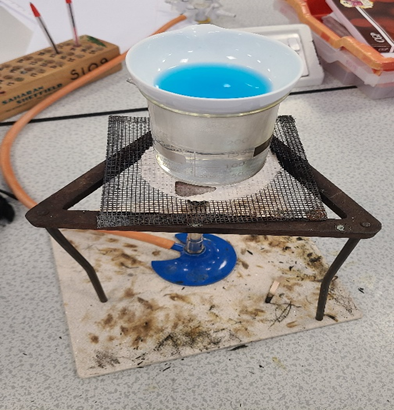 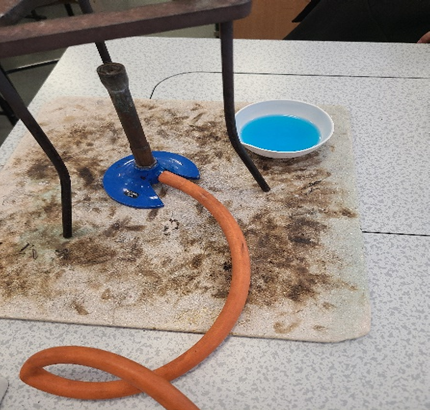
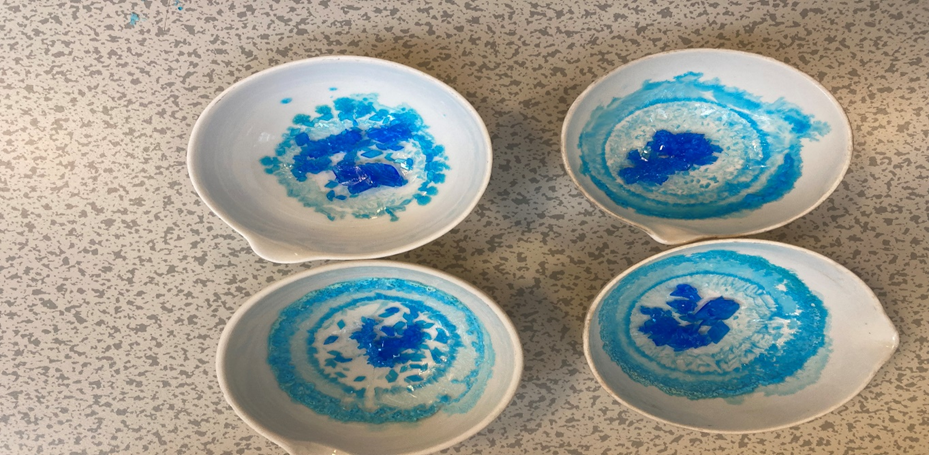
Science Club - Year 7 students have enjoyed exploring the topic of electricity in Science Club.
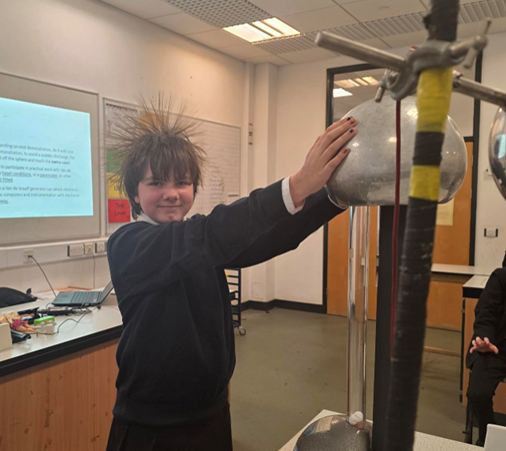 They have built both series and parallel circuits, learning how different circuit arrangements affect the flow of electricity. They have built both series and parallel circuits, learning how different circuit arrangements affect the flow of electricity.
Students then investigated static electricity using the Van de Graaff generator, observing how electric charge can build up and cause hair to stand on end! It was a fun and engaging session that helped bring key physics concepts to life.
Year 9 have begun a Unit on electricity, exploring how electrical circuits work and why electricity is such an essential part of everyday life. They have investigated the differences between series and parallel circuits, identifying components such as switches, resistors and bulbs, and learning how to represent these using standard circuit symbols. Through practicals, students have developed confidence in safely building and testing circuits, while also applying key scientific ideas such as current, potential difference, and resistance.
Students will use their understanding to explain real‑world electrical systems and to solve practical problems and explore how electricity is generated and learn about the national grid.
Year 9 - Investigating the pH of Acids & Alkalis
Year 9 have also been learning about acids and alkalis and their properties through practical work. They have revisited, and built on, what they learnt about acids and alkalis in year 7 – for example, discussing where acids and alkalis are found in everyday life has put a context and relevance to the topic.
Practical work has included using a pH scale & digital pH probe to measure how acidic or alkaline a substance is, safely handling common laboratory chemicals, conducting neutralisation reactions, using indicators such as litmus paper and universal indicator to identify substances. Key quantitative and qualitative observations made by students during such reactions include the appearance of colour changes, recording numerical data and identifying unknown samples and salts produced in neutralisation reactions.
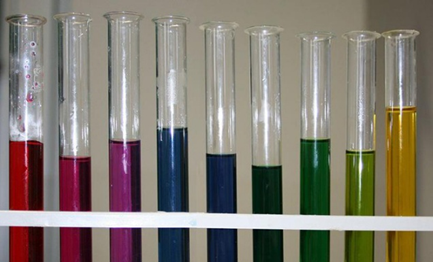
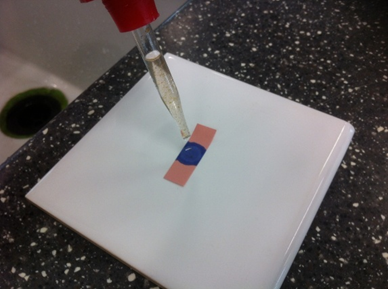
Students have started to understand & appreciate the wider economical, medical & industrial importance of acids and alkalis such as in relieving indigestion, production of cleaning products & the role of pH in soil and agriculture. Additionally, key skills have been further developed, such as making observations during a chemical change, applying knowledge to make predictions and then analysing findings to make a conclusion.
Year 9 Stem Day – Renewable Energy Sources
We were delighted to welcome The Smallpeice Trust, working in partnership with National Grid, to deliver an exciting STEM Day at school on Tuesday 10 March. During the day, students explored how domestic electrical energy is supplied, from generation through to delivery in the home.
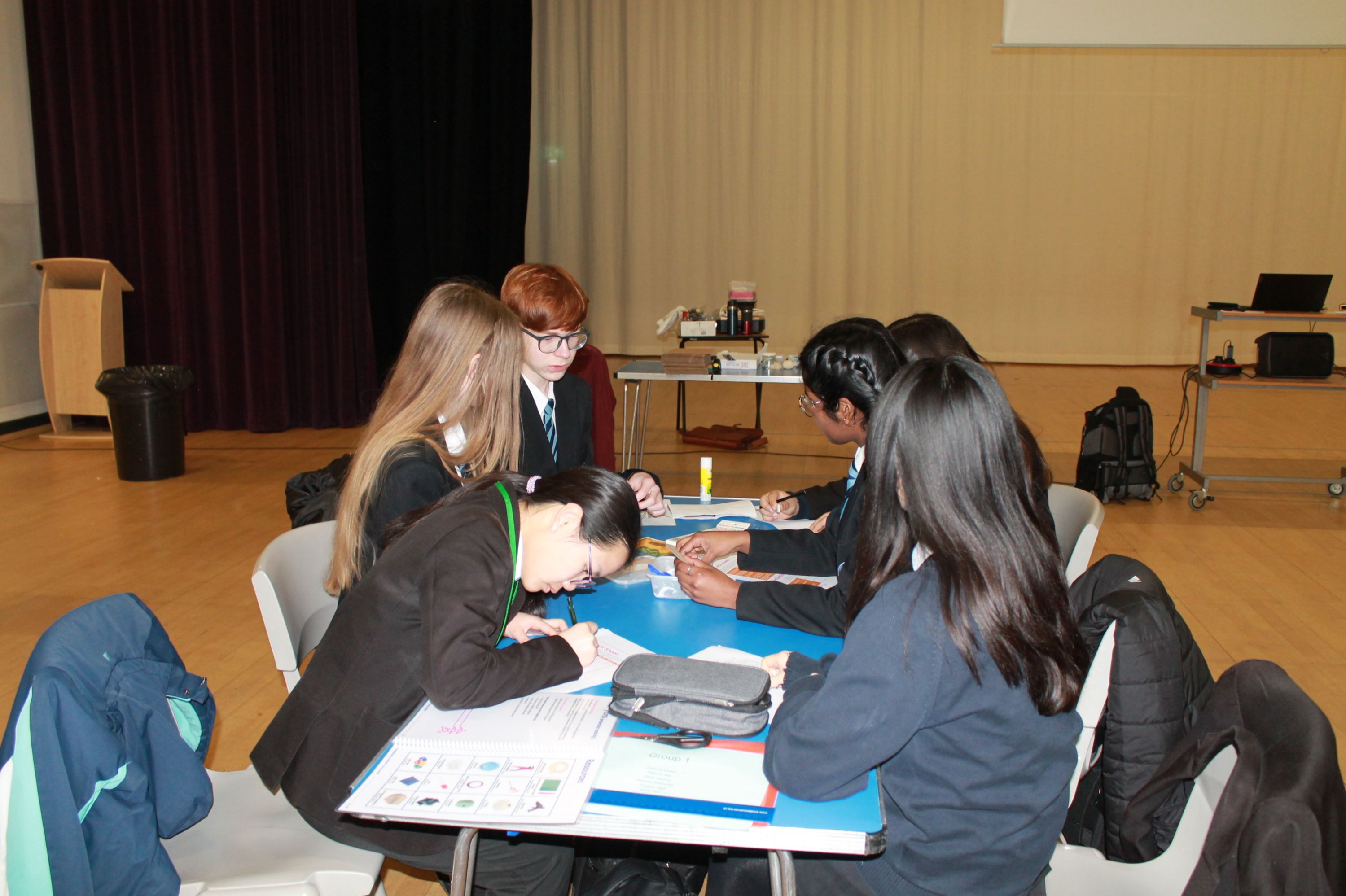 Working in teams, and taking on roles that reflect real careers in industry, students were challenged to design an energy solution for a small village. Working in teams, and taking on roles that reflect real careers in industry, students were challenged to design an energy solution for a small village.
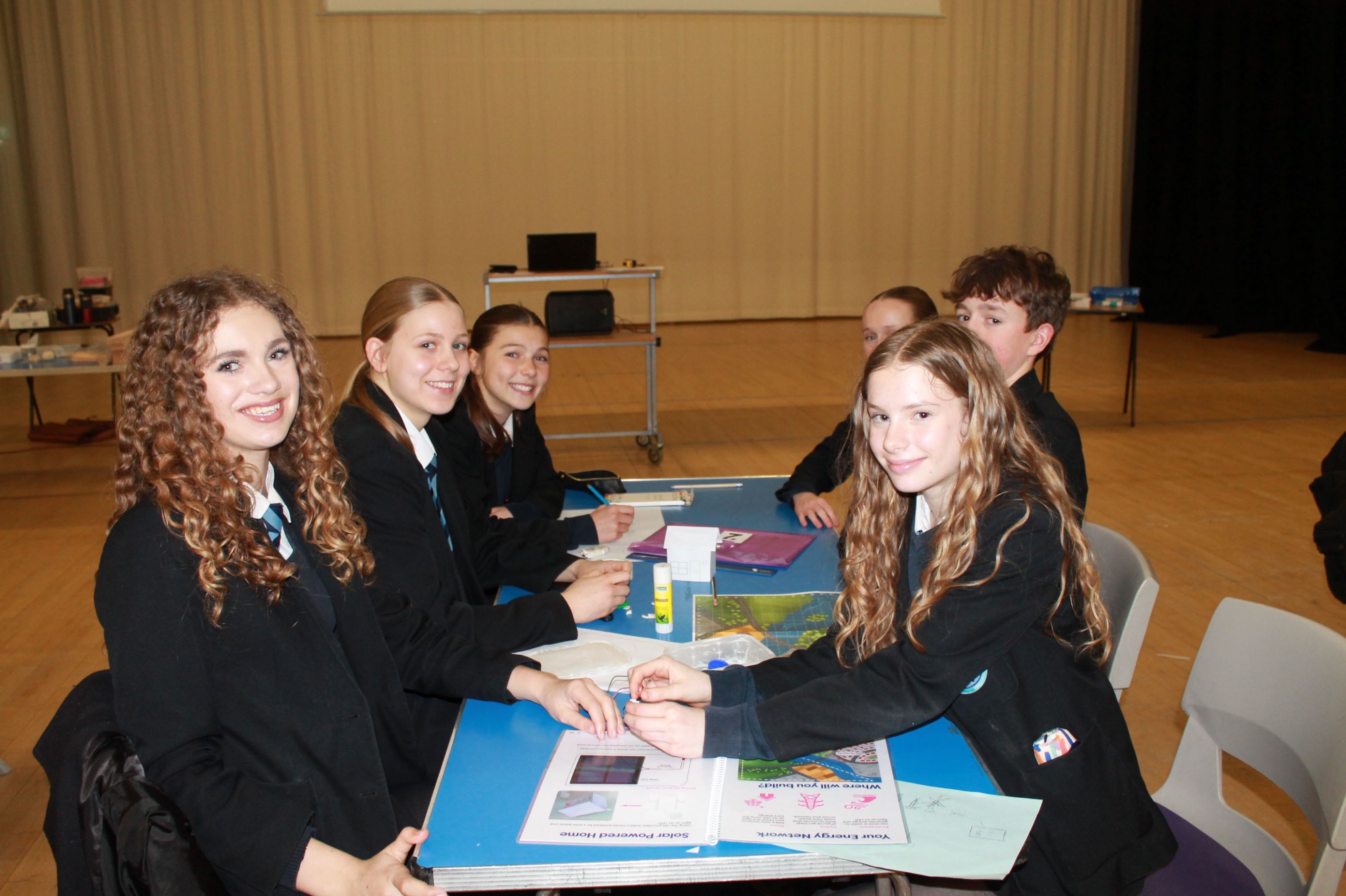 
Acting as engineers, they created prototypes of renewable technologies such as wind turbines, water turbines, or solar panels, and planned how electricity would be transmitted from the source to homes.
Teams also considered the costs of their designs and presented their solutions to others.
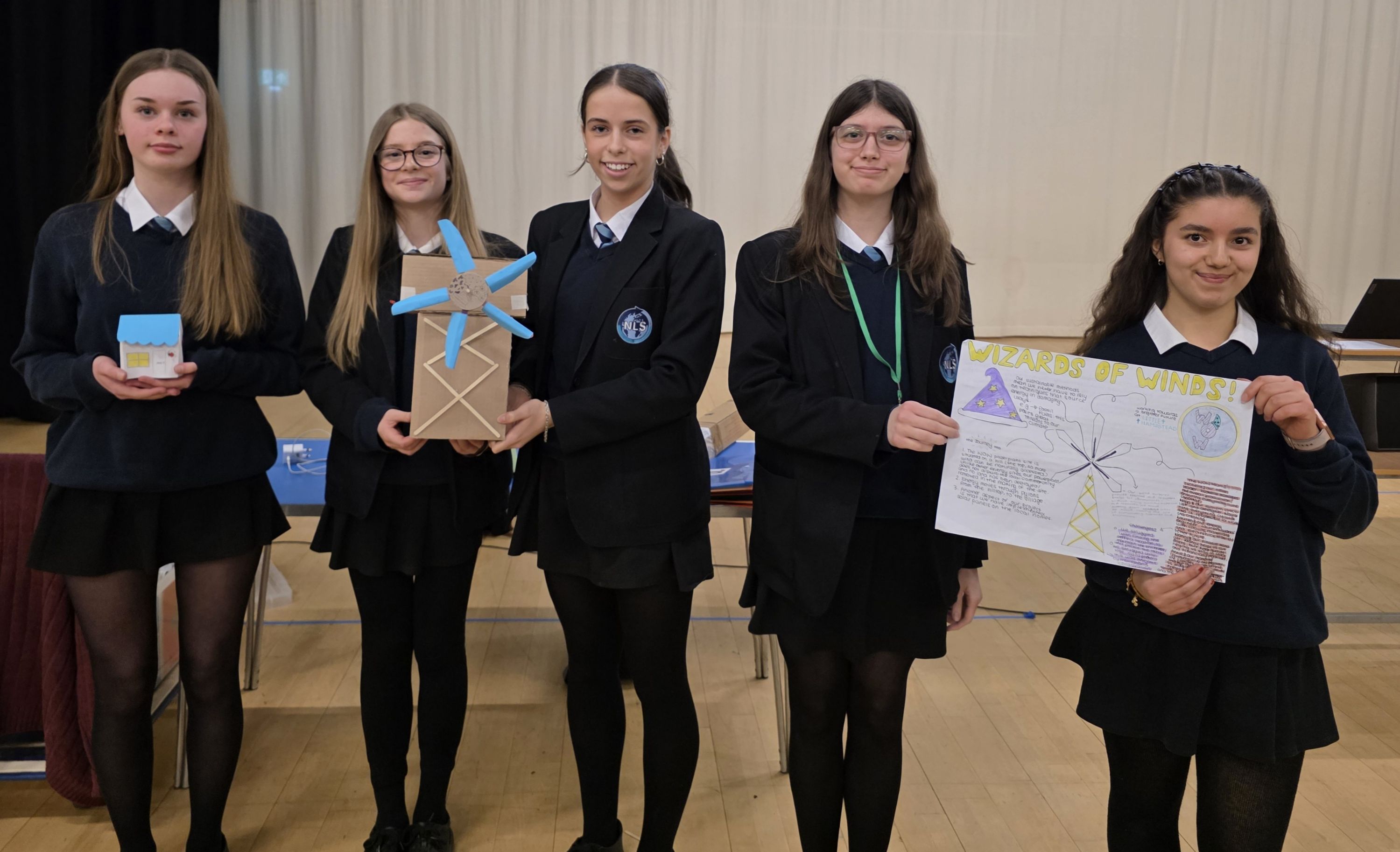 All students demonstrated fantastic engagement, teamwork, and creativity throughout the event, making it a truly valuable and inspiring experience. All students demonstrated fantastic engagement, teamwork, and creativity throughout the event, making it a truly valuable and inspiring experience.
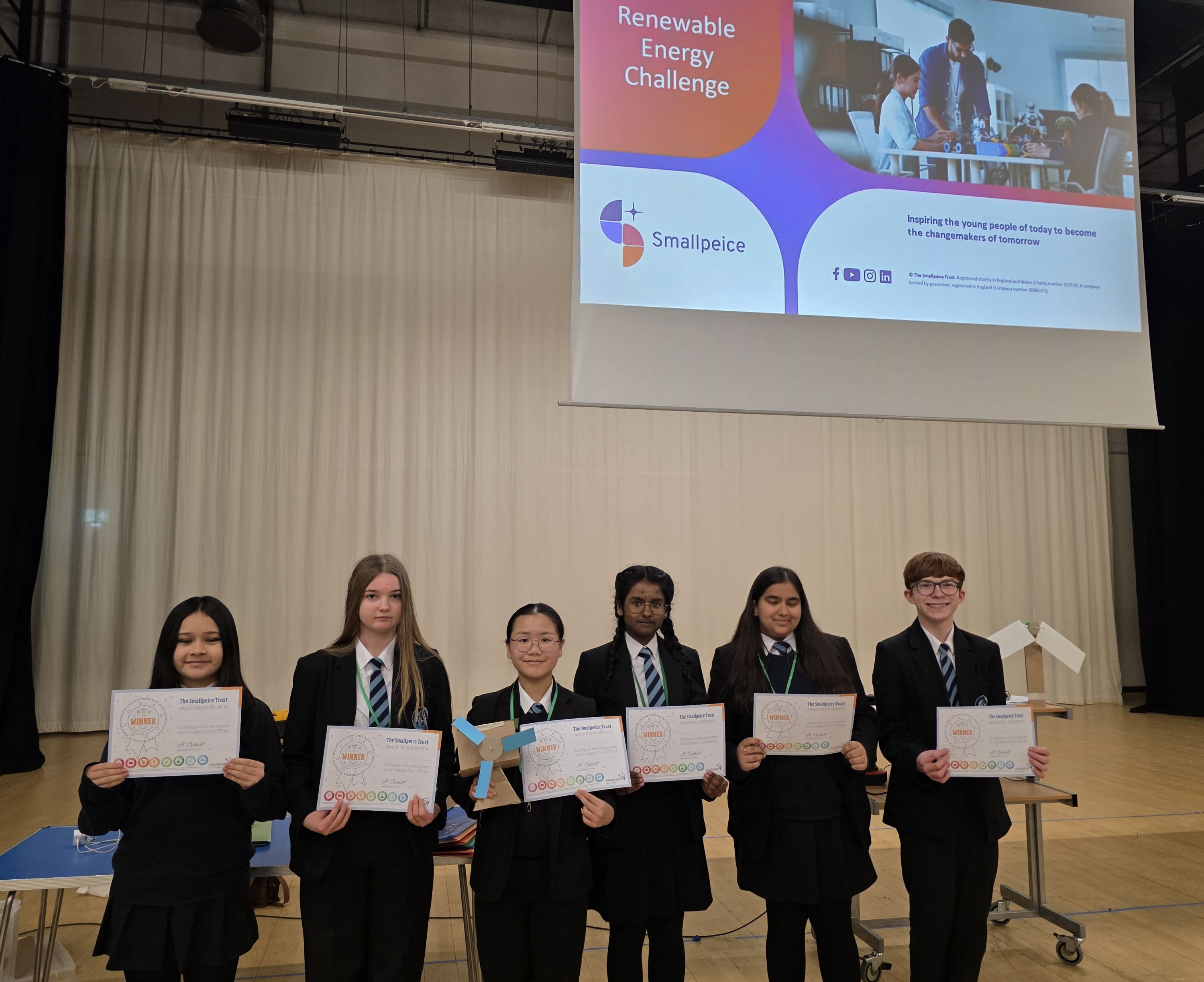
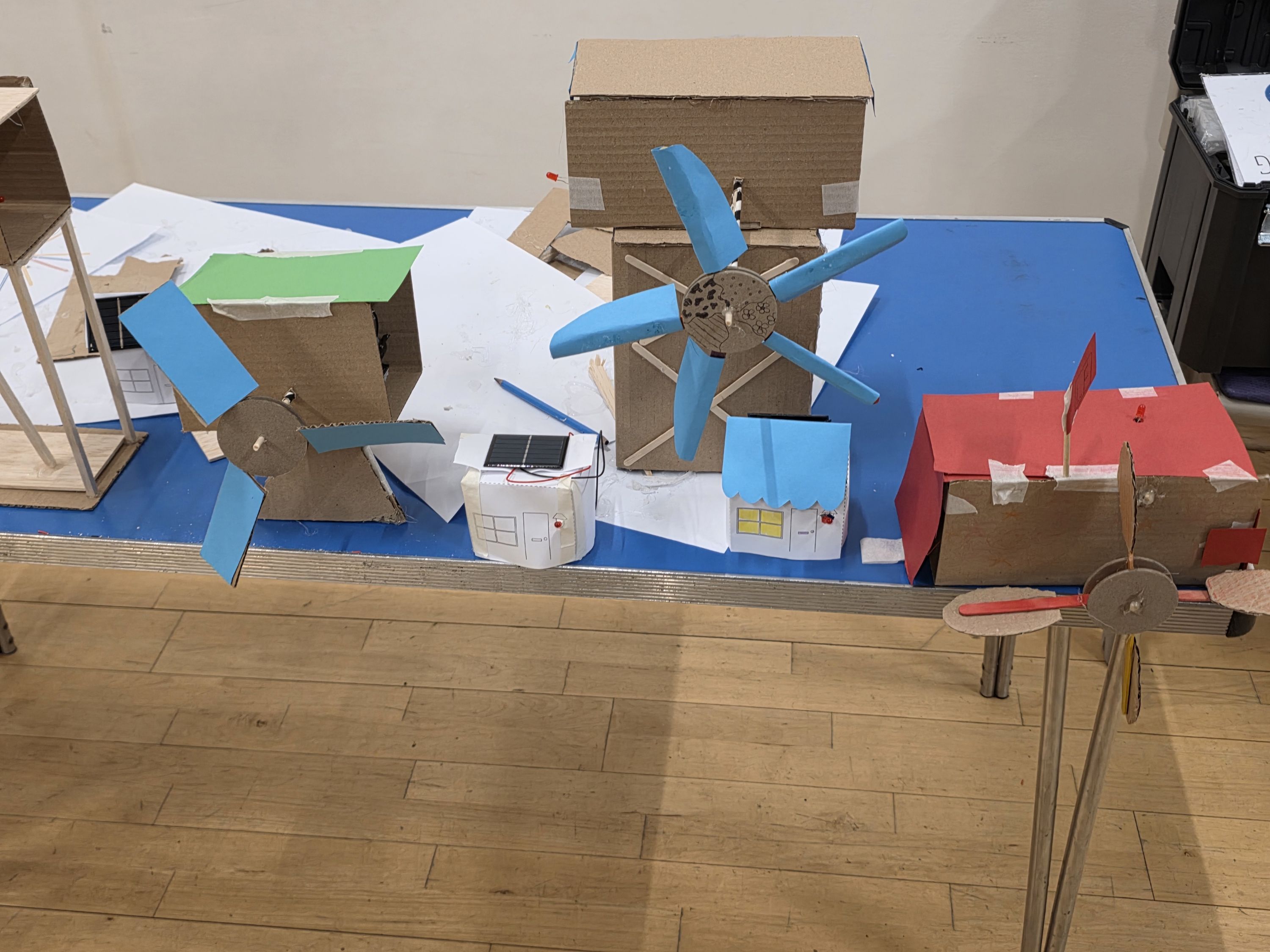
Year 10
This half-term, year 10 students have been investigating how to measure the rate of a reaction. They have had the opportunity to use exciting new equipment like the gas syringe that can be used to collect the hydrogen gas produced from a metal and acid reaction or the carbon dioxide produced as a result of mixing a carbonate with an acid. They have also completed several practicals seeking to determine the factors that can affect the rate of reaction. Students have learnt about collision theory and are now able to use this to explain their findings on how temperature, concentration, surface area and catalysts effect the rate of reaction.
Year 11 have been revising content in preparation for the upcoming summer examinations working on revision resources and practical work
They have been working extremely hard to create their revision resources, supporting the memorisation of key content and the application of their knowledge through targeted exam question practice and through practical work.
Revision has been completed on key topics including photosynthesis, aerobic and anaerobic respiration, fermentation, DNA, and enzymes to ensure a secure understanding of core biological concepts. Students have also engaged in practical experiments for example, looking at enzyme rate of reaction and explored how factors like temperature and pH affect enzyme activity.
We will continue revision with further components after Easter with a focus on developing confidence in tackling the mathematical skills required across the sciences.
Year 12 A Level Chemistry
Students have been studying energetics this half term. They have looked at a range of reactions, how they can be carried out and how they can use Hess’s Law to calculate the enthalpy change for a reaction.
As part of this unit student carried out a required practical investigating the conversion of anhydrous copper(II) sulfate into hydrated copper(II) sulfate. They carried out two reactions, recording the temperature changes over the time of each reaction and recorded this data in appropriate tables. They then processed this data, producing a graph of the temperature changes for each reaction, and used the information from their graphs in mathematical expressions to determine the enthalpy changes.
Precision in Practice: Year 13 Master pH Measurements
This term, Year 13 Chemistry students have completed their AQA Chemistry Required Practical 9, investigating how the pH changes as a strong base is gradually added to a weak acid. This practical helped students deepen their understanding of acid–base chemistry while developing the careful experimental techniques required at A-level.
Students began by calibrating a pH meter using buffer solutions to ensure their measurements were as accurate as possible. They carried out a titration-style investigation, carefully adding measured volumes of a strong base to the weak acid and recording the pH after each addition. This allowed them to observe how the pH changed throughout the reaction.
To improve the reliability of their results, students used a calibration curve to convert their raw pH readings into more accurate pH values before plotting their pH curves. They analysed the shape of the curve to identify key features of the reaction.
During the investigation, some groups found that the solutions neutralised earlier than they had initially anticipated. Students responded by confidently adjusting their methods, taking smaller volume measurements around the neutralisation point so they could collect more detailed data. This demonstrated excellent attention to detail, strong problem-solving and data-handling skills, and the ability to adapt their experimental approach when necessary; all qualities that will serve them well in their future endeavours.
Sixth Form Biology Club runs every Thursday after school and brings together Year 12 and Year 13 students in a supportive learning environment. Supervised by the Biology department, the club allows Year 13 students to mentor Year 12s through their A Level Biology journey. Students work through challenging topics, practise exam questions and share effective revision strategies. The sessions also provide an opportunity to ask questions and build confidence with difficult concepts. Year 13 mentors develop leadership and communication skills while reinforcing their own knowledge. The club has quickly become a positive, collaborative space that supports academic progress and encourages a shared enthusiasm for Biology.
A Level Physics Club
Our A Level Physics club has run successfully with Year 13 students running weekly sessions. The aim is to stretch highly-engaged Year 12 students (and Year 13 peers) beyond the A Level specifications. Topics have included extensions to familiar topics such as circuits, forces, and momentum, and some brand-new concepts such as Archimedes' principle. With final exams approaching for Year 13 two Year 12 students have stepped up to the plate and offered to run the club for its fifth year for 2026-2027. A huge congratulations to all students involved for building such a collaborative, inspiring collective.
|
|
|
Year 12 have completed the Families and Households topics and the second topic of the Research Methods element of the course. We have explored the practical and ethical strengths of a range of research methods that Sociologists use in their research, to uncover the patterns and trends in society, quantitative methods such as experiments and questionnaires.
Following their mock examination results and DIRT to determine specific actions to take regarding skills to practise and knowledge or understanding gaps. Students in the tier system have been completing past paper questions weekly to further embed these skills. This will provide some good practise ahead of an interleaving paper after the Easter holidays and progression exams in June. The interleaving assessment will include one 10 mark question and one 30 mark question and will cover the education topics we have completed. Focusing on this will enable the students to review their learning and make vital adjustments in this final term if needed. Past papers and revision questions and materials are available on the Digital Learning Hub but students are reminded to also use their own revision materials that we have checked throughout the term.
This is also a good point to remind students to look at the recommended ‘reading and watching’ to enhance their learning and understanding of key topics. Recommendations are outlined on the curriculum overview section of the NLS website. Appropriate reading for our current topics may be ‘Gang Leader for a Day,’ a book which outlines Sudhir Venkatesh’s ethnographic study of the Black Kings Gang in Chicago, USA or watching The Met: Policing London, a fly-on-the-wall documentary about the Metropolitan Police which shows policing, crime, and observational research in action.
Undercover in the Police in the Panorama series reveals evidence of racism, misogyny and officers revelling in the use of force at one of London’s busiest police stations, Charing Cross.
Year 13 have been completing the final sections of the AQA A-Level specification in preparation for their summer examinations.
Students have finished studying Paper 2: Beliefs in Society, where they explored the role of religion and belief systems in modern society, including topics such as secularisation, religion and social change, and the relationship between belief, identity and globalisation.
Students also completed Paper 3: Crime and Deviance, examining key sociological explanations for criminal behaviour and deviance. This unit has included discussions about patterns of crime, the role of social control and punishment, and contemporary issues such as media influence and global crime.
It has been fantastic to see students applying sociological theories and research to real-world issues as they prepare for their final examinations. After Easter, lessons will focus on consolidation, revision, and developing exam technique to help students feel confident and well-prepared.
On Tuesday 14 April, Year 13 Sociology students will take part in an online seminar with Keith Trobe, who has been a senior examiner for the exam board for the past 35 years and has served as a Principal Examiner for many of those. Keith is also a contributing author to the A Level Sociology textbook used by students.
During the session, Keith will share valuable guidance on how to approach examination questions effectively. This will include practical advice on exam technique, insights into the types of questions that have historically received the lowest marks, and strategies students can use to access the higher mark bands. Much of this advice reinforces the approaches students have already been practising in lessons, and the seminar offers a valuable opportunity to gain additional “insider” insight from an experienced examiner. We look forward to welcoming Keith again this year and are confident that this session will support students in the final stages of their exam preparation.
Revision Sessions for Year 13 Sociology will take place every Tuesday with Ms Holland and Miss Howard. A “sprint finish” revision schedule has been shared with students. These sessions provide an excellent opportunity to revisit the knowledge and skills required across all three examination papers in a focused setting. Content is reviewed in the context of potential exam questions, and students explore key topics alongside possible areas of focus for the 2026 examinations.
Students are strongly encouraged to attend these sessions, as they provide valuable consolidation of knowledge and exam skills in the lead-up to the summer examinations.
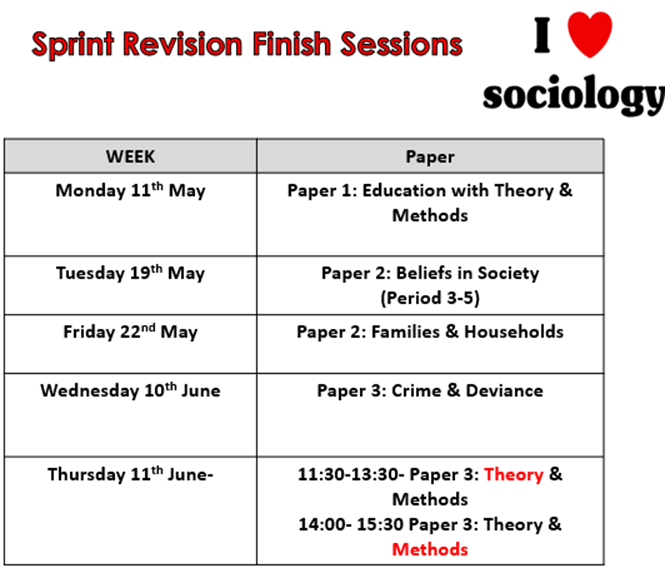
|
|
|
|
 Year 7 have been looking at character art. Year 7 have been looking at character art.
Studying the Mr Doodle colouring-in books they have been inspired to create their own murals demonstrating their knowledge of illustration techniques and character art.
 Here are a few pieces that show how students have utilised their learning to create interesting murals for others to colour in. Here are a few pieces that show how students have utilised their learning to create interesting murals for others to colour in.
Sketchbooks have been used to document their ideas and create their own doodle characters.
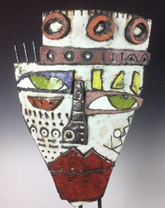 Year 8 have been busy learning about African Masks and the Ceramic Artist Kimmy Cantrel, creating designs for both in clay and card. Year 8 have been busy learning about African Masks and the Ceramic Artist Kimmy Cantrel, creating designs for both in clay and card.
They have enjoyed creating their masks and have learnt to layer clay and indent patterns with simple tools to create patterns.
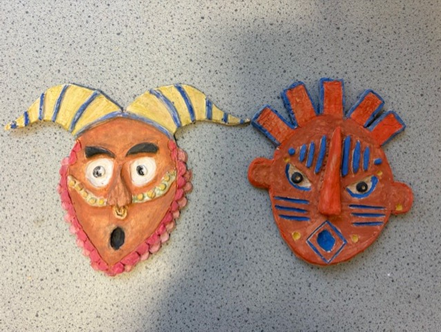 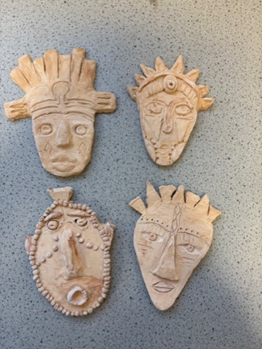
Year 9 have been learning about the style and techniques of Loui Jover.
 They have focused on the key features of the Artist and created a checklist which they have used to create their own artwork. This is good preparation for any student wishing to take GCSE Fine Art, Textiles or Photography. They have focused on the key features of the Artist and created a checklist which they have used to create their own artwork. This is good preparation for any student wishing to take GCSE Fine Art, Textiles or Photography.
Here are some of the fantastic responses year 9 students have created. The focus has been on using celebrity icons and the use of geometric shape, line and colour. Analytical skills have been developed further with students describing the original artwork by Loui Jover in detail, which has helped them understand how to effectively compose interesting and balanced artwork.
 
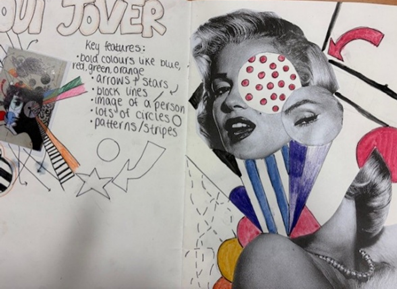
Year 10 students have been researching a variety of artists and creating three responses using the key features of their chosen artist.
Below are some of the lovely research pages students have created to do this as part of their NEA Component 1.
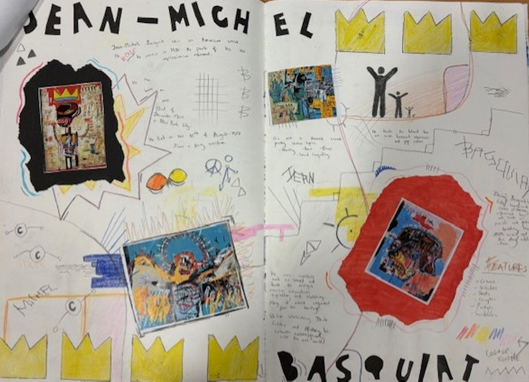
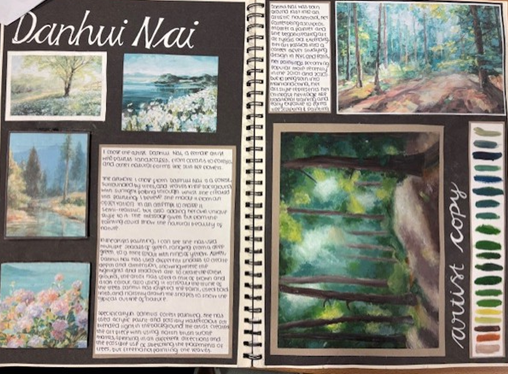
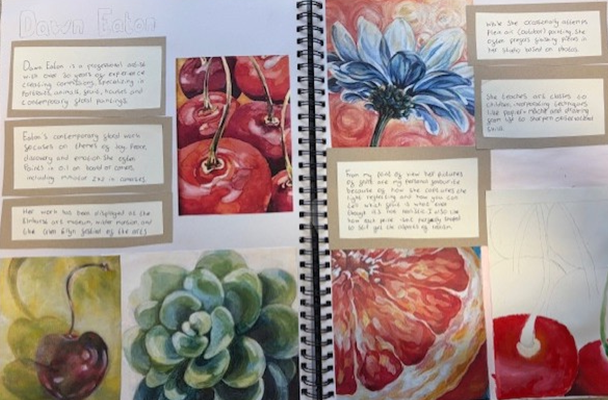
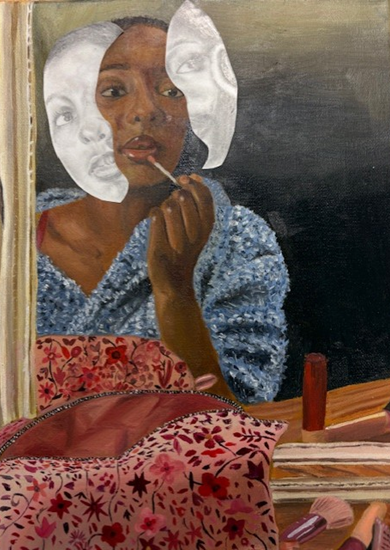
Our creative Year 12 students have started their independent A level projects, each using research and their own photo shoots to generate responses.
At this level, students are expected to describe artists' work in depth and make effective use of materials, tools and techniques.
Here are four examples of pieces that capture the maturity and sophistication required to generate research, drawings and responses in their sketchbooks.
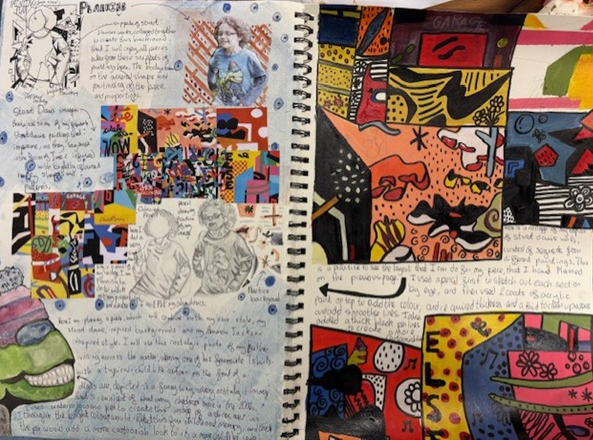
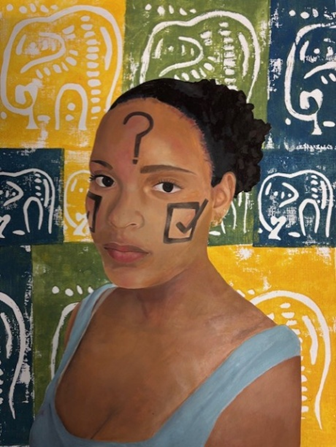 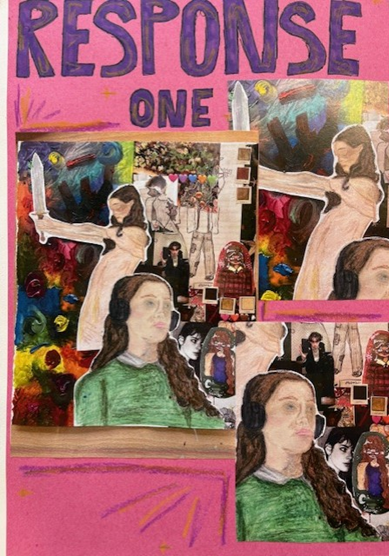
Year 11 and 13 have been working on their exam preparation for the forthcoming exams; we wish them all the best for the exam days in April and May and the creation of a refined outcome.
|
|
|
This term has been an exciting and productive time in the Photography Department. With exam season approaching, our students across the key stages have been developing their skills, refining their ideas, and producing some truly impressive work. We are incredibly proud of their effort, creativity, and dedication.
Year 11 & Year 13
Our exam groups are now in the final stages of preparing for their terminal assessments. Both Y11 and Y13 students have spent this half term experimenting, refining concepts, and testing a range of ideas for their final outcomes. Their 10‑hour practical exams will take place shortly after the Easter break, and we wish them all the very best as they move into this final phase.
The ambition and maturity shown in their preparatory work has been fantastic to see, and we look forward to the exciting pieces that will emerge during their controlled assessments.
Year 9
This term, Y9 have continued their exploration into colour theory and light. Building on their previous learning, students have been working with colour filters—creating their own using cellophane and experimenting with how colour can transform mood, contrast, and atmosphere in their photographs.
They have produced a range of imaginative images both in lessons and through practical homework challenges.
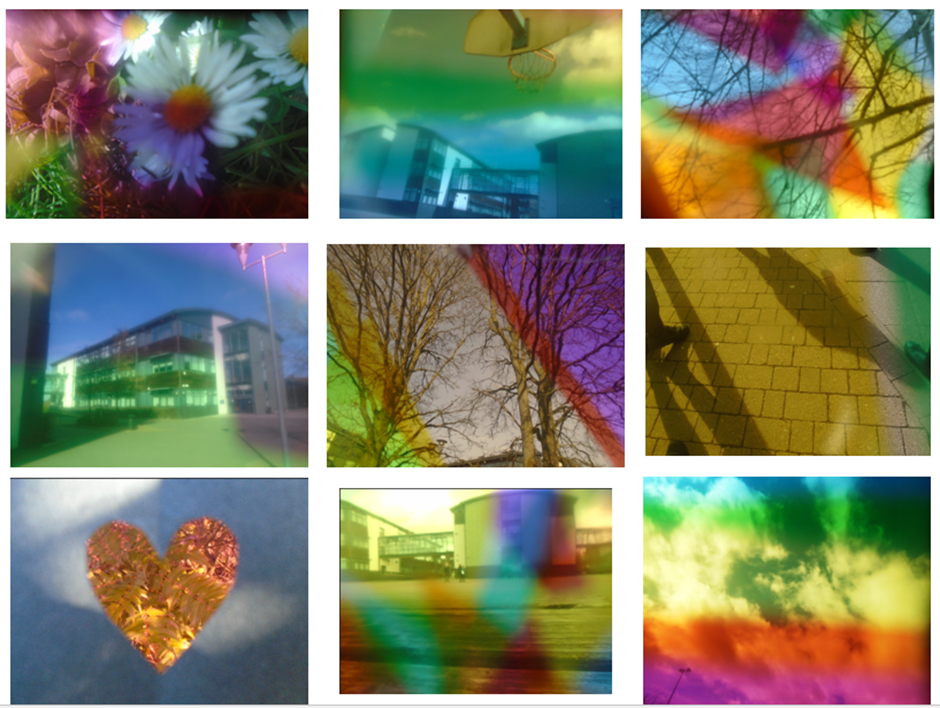
Next term Y9 will extend their study of light by investigating shadows, silhouettes, and how photographers use these elements to create drama, mystery, and strong visual impact.
Year 10
Year10 are well immersed in their Component 1 coursework project. This term they have been developing their developing camera skills and refining their use of photoshop to manipulate photographs. This has resulted in some highly creative and personal outcomes that demonstrate strong technical progression.
Moving forward students will begin developing ideas for their major project outcomes, moving from experimentation into more focused concept development.
Year 12
Our Year 12 students have now launched fully into Component 1. They have been completing their extended written research projects, each based around a theme of personal interest. Their chosen topics are diverse and thought‑provoking considering factors such as documentary-style image making, investigating the changing role of the family and looking at the ‘behind the scenes’ in the theatre.
These research projects provide a strong foundation for their practical coursework, and we are excited to see how their ideas translate into imagery over the coming months.
Earlier in the year, students completed a short introductory project—some of those outcomes are showcased below.
|
|
|
Year 7 have been exploring their Pop art theme looking at Roy Lichtenstein and Andy Warhol. They have also been working on developing their basic hand stitch skills.
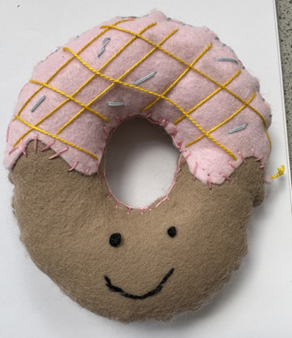 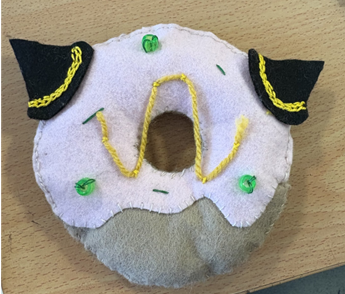
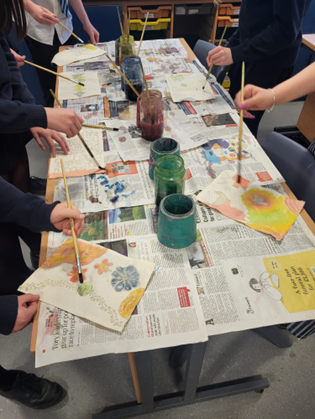
Year 8 have been working on a cultural patterns project.
They added dye to the background of their hemmed fabric, before adding print and aboriginal dots.
Year 9 have been busy creating their final pieces based on designs inspired by Jean-Michel Basquiat, Keith Haring and incorporating the theme of New York City. They have used a range of techniques from stencil printing to fabric marker pens.
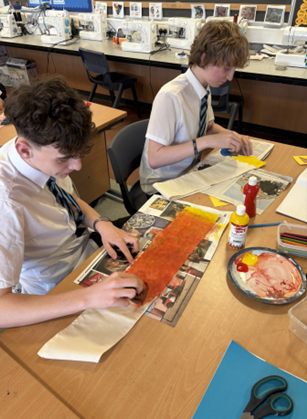
Year 10 have been working on artist-1-inspired samples for their coursework projects, using a range of techniques.
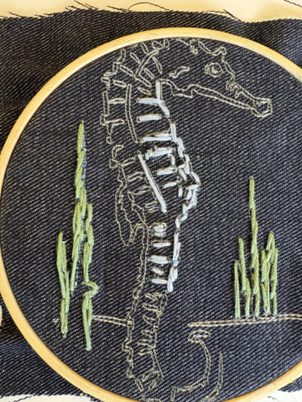 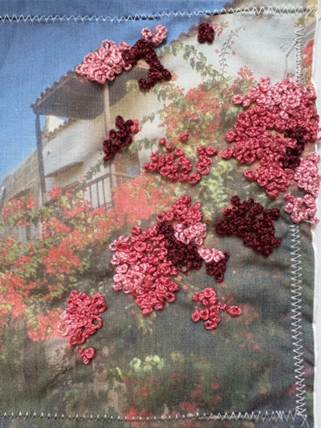
Year 11 students are currently working hard on their exam preparation projects and will be bringing this to a conclusion on a two-practical exam after the Easter break. Students have had the opportunity to get more work completed during intervention sessions.
Year 12 have been busy working on ideas for their personal investigations, using a range of techniques from fabric manipulation to embroidery using a very mixed media approach.
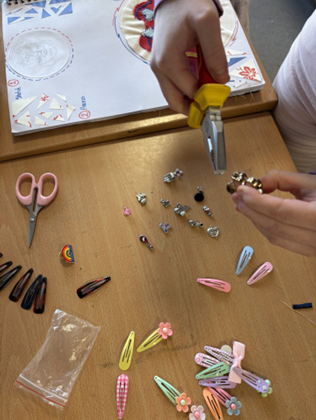 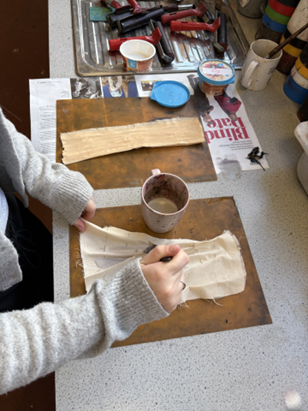
Year 13 students have also been working on exam preparation work. They have chosen different starting points from the exam board and have been creating exciting work to help them prepare ideas for a final outcome. This will take place after Easter during a three-day practical exam.
Wishing both year groups lots of luck at this busy time.
|
|
|
Year 11 Food Preparation and Nutrition Practical Assessment
Wow what a cook! The year 11s were truly amazing in the final cook of their NEA and I was so proud of them showing such skill and commitment. The NEA saw a large number of practical items being made to fulfil the tasks of ‘preparing a range of buffet-style food for a celebration' and ‘prepare a range of dishes for an active person or incorporating more fruit and veg for a teenager.' It is worth 35% of the students GCSE.
Now that the NEA 2 is complete, students should be turning their attention to revising for their upcoming written examination. Students revision should focus around –
- Food Science
- Nutrition
- Food Provenance
- Food Safety and Hygiene
Here are some of the products made from the most recent assessment.
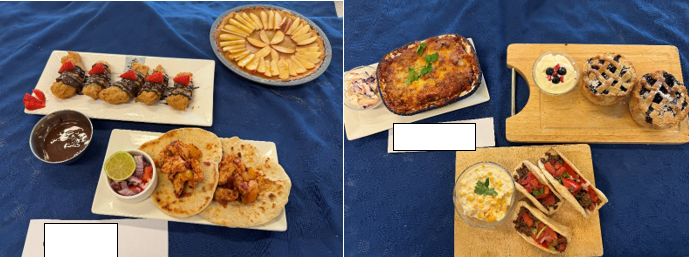
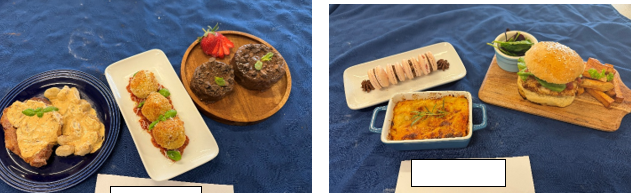
Year 10 Food
Students have completed some new complex dishes this term. Some of these have been themed towards the season. Cooks that have occurred throughout the past few weeks included fishcakes, Battenberg, homemade pasta, giving students a little more freedom with themed cooks.
Students have made puff pastry and created vanilla slices learning about how we laminate the pastry. We look forward to Sacher Torte and tortilla wraps coming up next term.
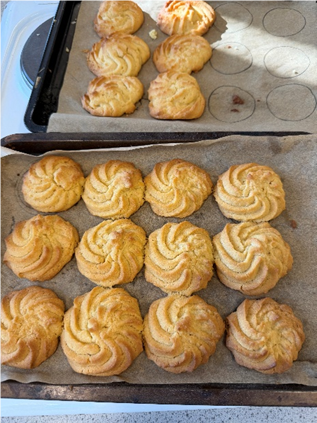 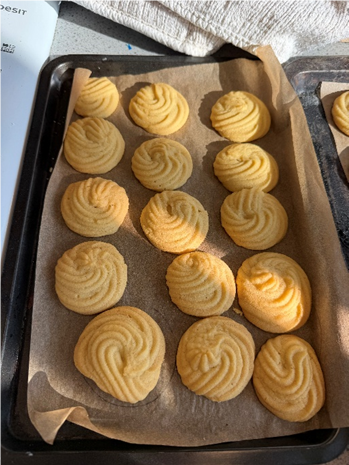
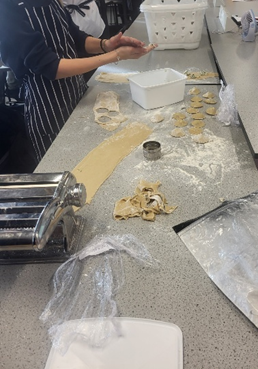 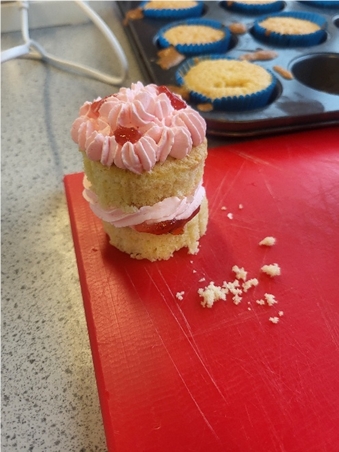
Year 7, 8 and 9
Classes have been working on a rotational system with Art Textiles, Food Preparation and Product Design with the final of these rotations after Easter. Students will hopefully show you some of the lovely items they have made in the workshop or in the food room. Thank you again to parents for supporting us by providing ingredients for the food lessons.
Students in year 7 have been making marble cakes, spring rolls and Jambalya. They have focused on understanding some of the technical language that is used in our course such as dextrinisation and coagulation and this has been very much part of their learning through the practical tasks.
Some of the fabulous products KS3 have been making are shown below.
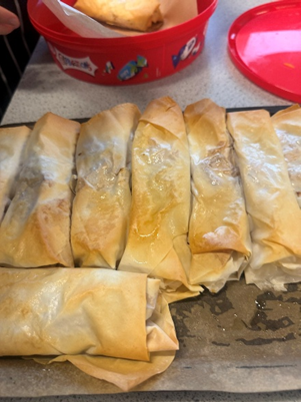 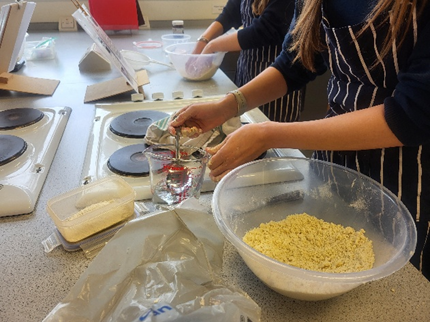
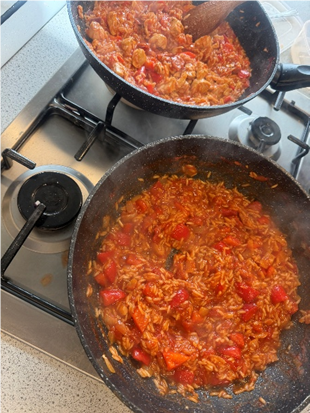 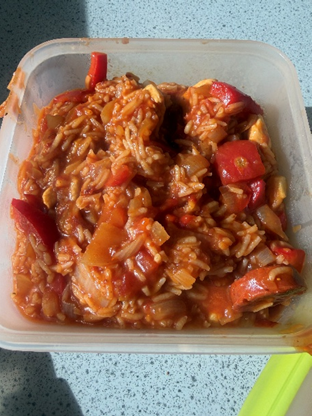
Year 7 - Design Technology
Year 7 students have been full of enthusiasm and creativity as they took on the exciting challenge of designing and making their own personalised luggage tags for their school bags. This gave them the chance to grow in confidence while learning how to safely use a range of tools to carefully shape and refine their designs.
Alongside these practical skills, students were also introduced to modern design technology, using CAD/CAM software to personalise their tags with striking images and meaningful text. It’s been wonderful to see their ideas come to life, combining creativity with real-world skills in such an engaging way.
Year 8 - Design Technology
Year 8 students have been busy channelling their creativity into an exciting project—designing and making their very own wooden pencil boxes. Combining modern technology with practical workshop skills, they began by using computers to personalise their designs with names, images, and bold patterns, making each piece truly unique.
In the workshop, students developed their confidence as they worked with a range of tools and techniques, carefully measuring, cutting, and assembling their boxes with increasing precision. One of the standout achievements of the project was learning how to create a lap joint, a key woodworking skill that allowed them to join the sides of their boxes securely while demonstrating real craftsmanship. It’s been fantastic to see their ideas take shape and their skills grow throughout the process.
Year 9 - Design Technology
This term, Year 9 students have been taking their creativity and practical skills further, producing an impressive range of projects including electric toothbrush holders, mobile phone stands, and, as a final challenge, a sweet dispenser.
Building on the joining techniques they developed in Year 8, students have created products that are sturdy and functional but also thoughtfully designed and visually appealing. It’s been wonderful to see their confidence and precision grow as they tackle more complex tasks and refine
It’s particularly encouraging to see so many students showing a real interest in continuing with Design & Technology at GCSE. We’re excited to see the innovative ideas and high-quality work they’ll bring to their future projects.
Year 10 - Design Technology
It’s been a busy and inspiring term in Design & Technology, with students across Key Stage 4 embracing creativity, developing practical skills, and growing in confidence. From designing personalised products to working with a range of tools and modern technologies, students have shown great enthusiasm and pride in their work. It has been particularly rewarding to see their ideas develop from initial concepts into finished pieces, combining both creativity and craftsmanship. We are incredibly proud of their efforts and look forward to seeing their skills continue to flourish in the months ahead.
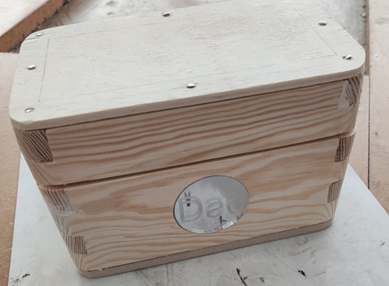 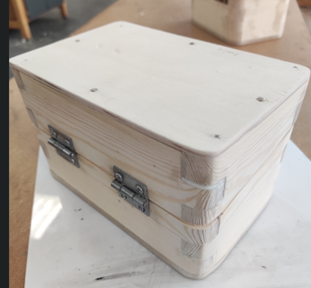
Year 11 – Design Technology
Students are now entering the final stages of their NEA projects, where their ideas are really starting to take shape as finished products. Working more independently, they are refining their designs, exploring different materials, and drawing on all the skills they have developed throughout the course.
It’s been fantastic to see the variety and creativity in their work, with projects ranging from bathroom organisers to DIY tool storage systems. Each design reflects thoughtful consideration of real-life needs, and students should be proud of the high-quality outcomes they are producing as they bring their projects to completion.
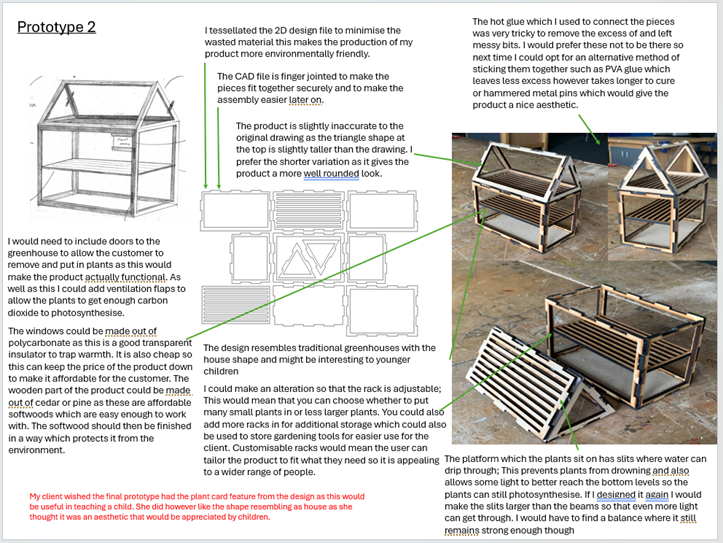
Year 12 - Product Design
Year 12 students have been busy in the workshop turning their design drawings into tangible models. Using a variety of modelling techniques, they are bringing their ideas to life, developing both their practical skills and their understanding of how designs translate from concept to reality. It has been exciting to see their creativity and precision in action as they carefully craft each piece, laying the groundwork for more complex projects ahead.
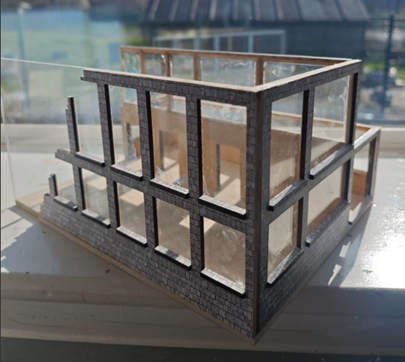
Year 13 – Product Design
Year 13 students have now completed their NEA projects and are fully focused on revising for their upcoming exams.
Their hard work and dedication throughout the year have resulted in some truly impressive design work, showcasing creativity, skill, and attention to detail.
We are incredibly proud of all they have achieved and look forward to celebrating their exam results and following their exciting next steps as they prepare for university
|
|
|
Following our celebration of Safer Internet Day before half term, the winning posters from our competition were shared during Tutor Time Digital Literacy sessions across all year groups at the start of this term. The theme, “Smart tech, safe choices – exploring the safe and responsible use of AI,” provided a valuable opportunity for students to engage in discussion.
All year groups further explored Artificial Intelligence, considering key issues, sharing their opinions, and understanding who they can speak to if they have concerns.
Years 7, 8 & 9 focused on discussing the following;
- Understand the risks AI can pose online.
- Identify ways to stay safe when using AI-powered tools.
- Know who to talk to if you have concerns.
Years 10, 12 & 13 explored the ethical implications of AI, increasing their awareness of key issues surrounding its use.
These sessions have been highly beneficial in developing students’ understanding of AI, allowing them to learn new information while reflecting on both the benefits and challenges of this technology.
Further Digital Literacy sessions focused on using Office 365, basic applications, and working effectively at home:
- Year 7: Using Word
- Year 8: Using PowerPoint
- Year 9: Using Forms
- Year 10: Using search engines
- Years 12 & 13: Referencing and citation
Students also considered effective home working, including the benefits of a suitable study space, how it can be improved, and strategies for setting limits on screen time. Each student took away a practical tip to support their learning.
|
|
|
Throughout our outdoor learning sessions this term we have worked on developing student social skills, communication, team building and resilience. We have been bird watching on the school grounds and worked on their identity project where they can share their hobbies and interests with one another to build relationships.
Students have completed projects on the seasons and animals where they have developed research skills and used their creativity to complete seasonal art. They have worked on building their confidence by talking about what makes them happy and ways to deal with challenges they might face. Many of them have also found strategies to reduce their anxieties and worries.
Autism Awareness Event
As World Autism Awareness Day falls in the Easter holidays, we celebrated the event with activities from 16 to 27 March here at NLS.
During tutor time information was shared regarding Autism Awareness day.
On Tuesday 24 March, the SEND team held an Autism Awareness Event for parents and carers and were delighted a number of providers could join us. Following a short presentation from the NLS SEND team, attendees had the opportunity to speak to various providers who joined the event including:
- SEND Supported
- Independent Travel Training
- Childrens Disability Team
The NLS team were also able to give signposting support and for anxiety. The event was really well received and feedback really positive in helpful the event was.
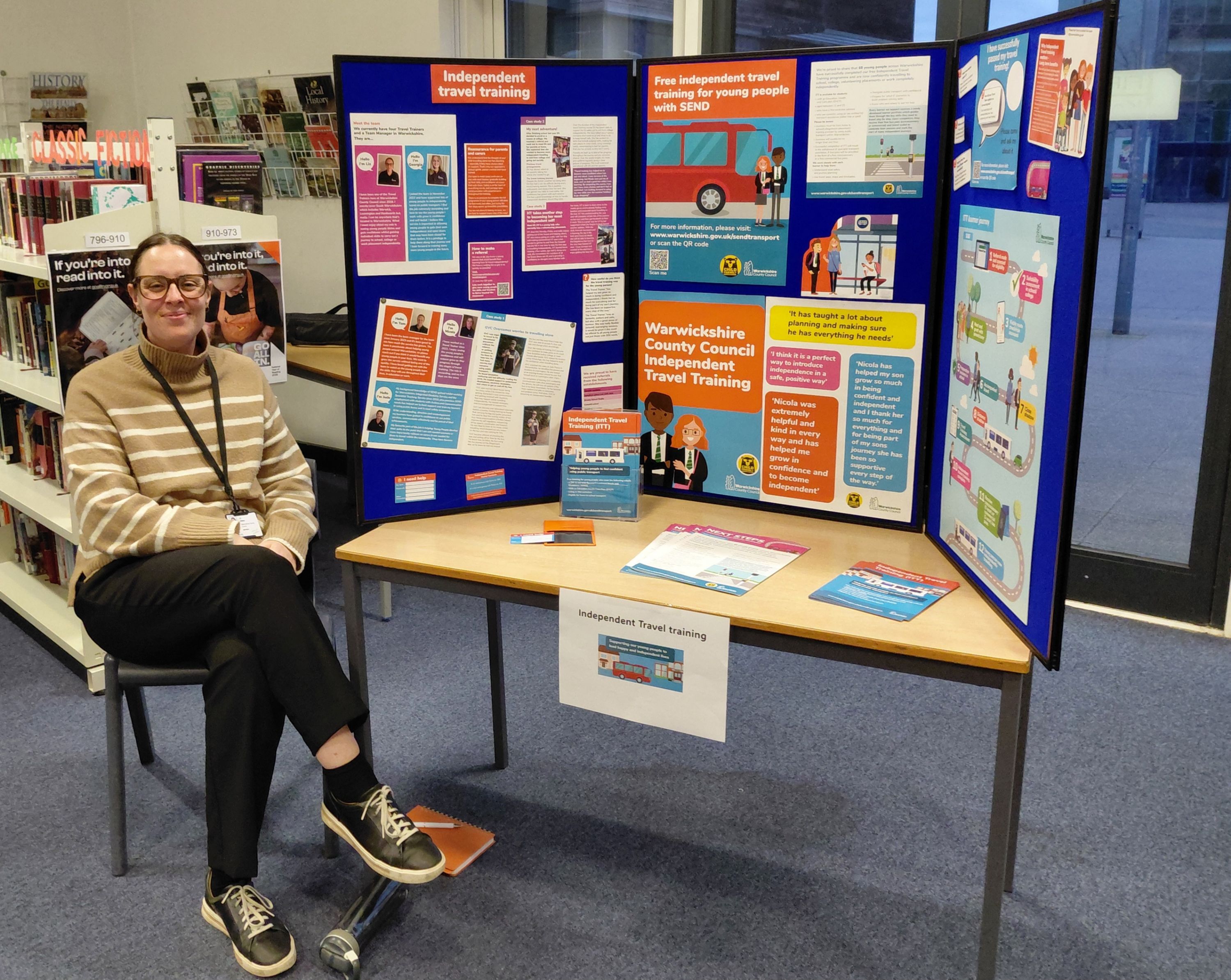 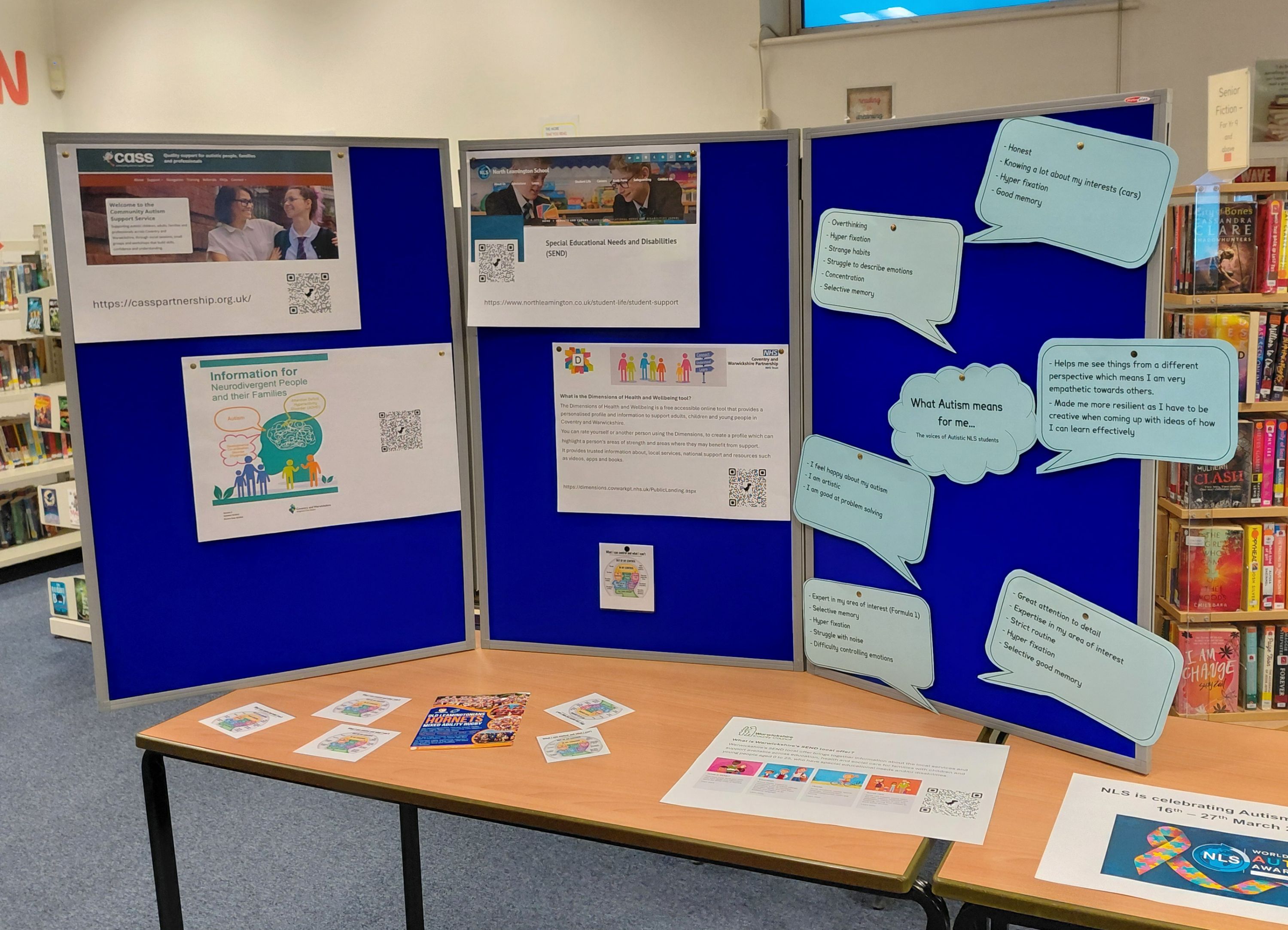
Our Mental Health Team at NLS endeavour to do everything possible to support the mental health and wellbeing of our young people.
We work closely with SEND Team, Family Support Team, Safeguarding Team and Personalised Provision Team to help meet the individual needs of students. We aim to build positive supportive relationships with students. All staff know the students well and notice early signs of emerging difficulties with their wellbeing and mental health.
Early intervention is key. Our team provide targeted support on a regular basis and if needed referrals are made for appropriate individualised intervention.
We can refer students to the Mental Health in Schools Team (NHS mental health services) for both 1-2-1 and group interventions. We have an exceptional mutually supportive relationship with this team who are indispensable, providing help and guidance for young people, their parents and for staff.
In addition, we access specialist therapy and counselling services for those whose wellbeing is more severely compromised.
If you would like to find out more, please do look at our school website for more information, signposting and advice.
NLS Website Mental Health Support Information
|
|
|
International Schools
This term our Year 8 International Leaders took part in a live video call with students from our partner school, Anjuman i’Islam Girls High School, in Mumbai, via North Leamington School’s long-standing International Schools partnership. They discussed life in both the UK and India, asking well-prepared questions and acting as superb ambassadors for our school.
Our Eco and Fair Trade leaders have been busy planning new projects around school and different ways to raise awareness of different global issues. I am always so impressed by their commitment and creativity in coming up with new ideas.
Alongside the leadership opportunities, international activities run in all our departments over the school year. The range of these projects is fantastic. Some of these include Year 7s writing spy fiction with our partner school – swapping characters and stories and collaborating in the most creative ways. Year 8s exchanging essays about development in India in Geography and reflecting in History on ‘How we should remember the British Empire?’. Students were able to read our partner school's thoughts on the same issues. There are lots of other department projects running throughout the year, all of which enhance and widen our curriculum and expose our students’ to different world views.
|
|
|
At NLS, we utilise the schemes of learning and opportunities that the King's Trust (KT) offers to enable some of our most vulnerable students to achieve. Students in Year 10 have completed modules on Managing Money, Teamwork and another on Sustainability so far. Next term, Year 10 students will be planting trees in the school grounds.
Our Year 11 students have been working on their units for two years now (with many completing six units) and many have been entered already for their Level 1 Certificate and the remaining students being entered at the end of their Year 11.
If any students have any outstanding work that has not been entered into their folder, please ask them to submit it, either to me at the address below or to their teacher for KT.
If you wish to have any more information about The King’s Trust, please contact jbarrett@northleamington.co.uk
|
|
|
We have a range of Extra-Curricular clubs available and details can be found on the website - extra-curricular-activities. Details are also on the digital screens around school.
|
|
|
Students in Year 9 who are undertaking the Bronze Award have been completing their Skills, Volunteering and Physical sections since the start of the academic year and many are coming to the end of at least one of these.
For Bronze students, their commitment to the award looks like this:
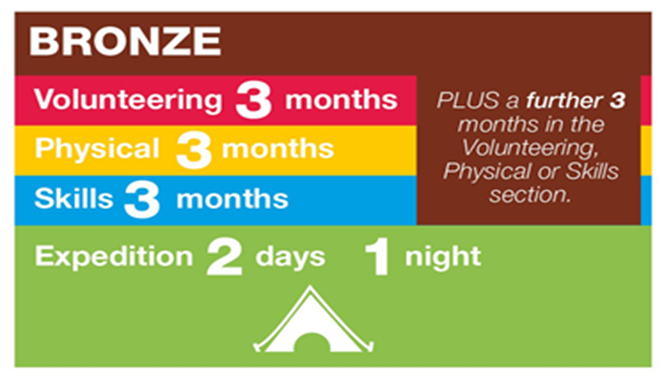
Training for the Bronze Award will take place on the weekend of 15 and 16 May 2026, with students camping over; putting their newly found map skills into practise as they undertake a walk as well as completing all of the training elements that are needed for their Bronze Award
Students in Year 10 who are undertaking the Silver Award have also been completing their Skills, Volunteering and Physical sections since the start of the academic year. For Silver the demand is a little more and students’ commitment to the Silver award looks like this:
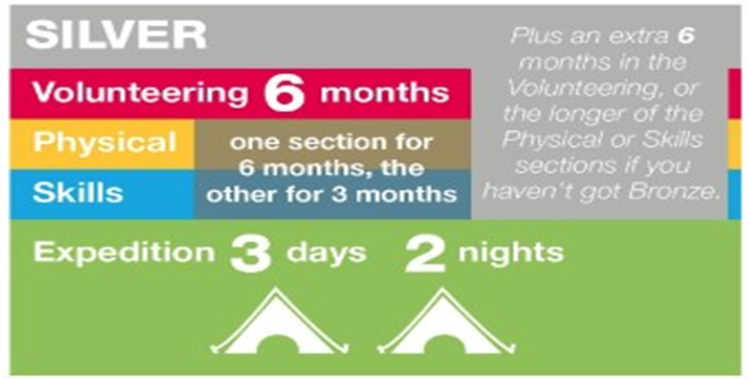
Training for the Silver Award took place in last weekend and students learned all the vital skills they need for when they undertake their practice and qualifying expeditions from tent set-up and campcraft to basic first aid; how to cook, what food to bring, the importance of hydration, choosing the right clothing and obeying the countryside code were all included in their training. They also planned, drew out their routes and completed route cards for their qualifying expedition to The Shropshire Hills in July.
Students in Year 12 who are undertaking the Gold Award have also been completing their Skills, Volunteering and Physical sections since the start of the academic year. For Gold the level of demand is higher still and students’ commitment to the Gold award looks like this:
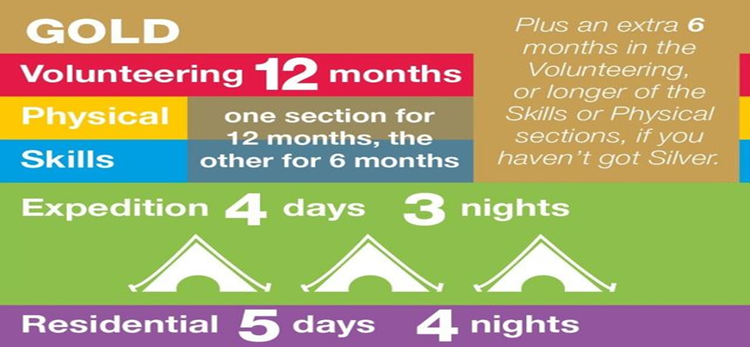
Training has been taking place every Wednesday since the start of the academic year and our expedition dates are as follows:
|
Date
|
Event
|
|
15 – 18 April 2026
|
Gold Practice Expedition
|
|
17 - 21 June 2026
|
Gold Qualifying
|
Yesterday, our Gold students headed out for a training day at The Roaches in The Peak District where they learnt navigation, orienteering and map reading skills.
 If you wish to have any more information about The Duke of Edinburgh’s Award, please contact jbarrett@northleamington.co.uk If you wish to have any more information about The Duke of Edinburgh’s Award, please contact jbarrett@northleamington.co.uk
|
|
|
|
|